Beginner’s Guide to Creating a Sustainable Edible Balcony Garden

Yes, even in the city, it’s possible to grow your own food. If you’re just getting started, this helpful guide will give you tips & strategies for creating a sustainable edible balcony garden that will brighten your surroundings while enhancing your meals with homegrown goodness!
Key Takeaways:
- Even the smallest balcony space can be transformed into a productive food garden with proper planning and sustainable practices
- Growing edibles on your balcony reduces your carbon footprint while providing fresh organic produce steps away from your kitchen
- Self-watering containers and vertical growing systems maximize limited space while conserving water resources
- The right combination of leafy greens, herbs, and compact vegetables can provide harvests year-round with minimal maintenance
- Creating an edible balcony garden offers therapeutic benefits, connecting urban dwellers with nature and the food production process
Transforming your balcony into a thriving edible garden is easier than you might think. With some basic knowledge and creative planning, even the tiniest outdoor space can become a vibrant growing space that nourishes both body and soul!
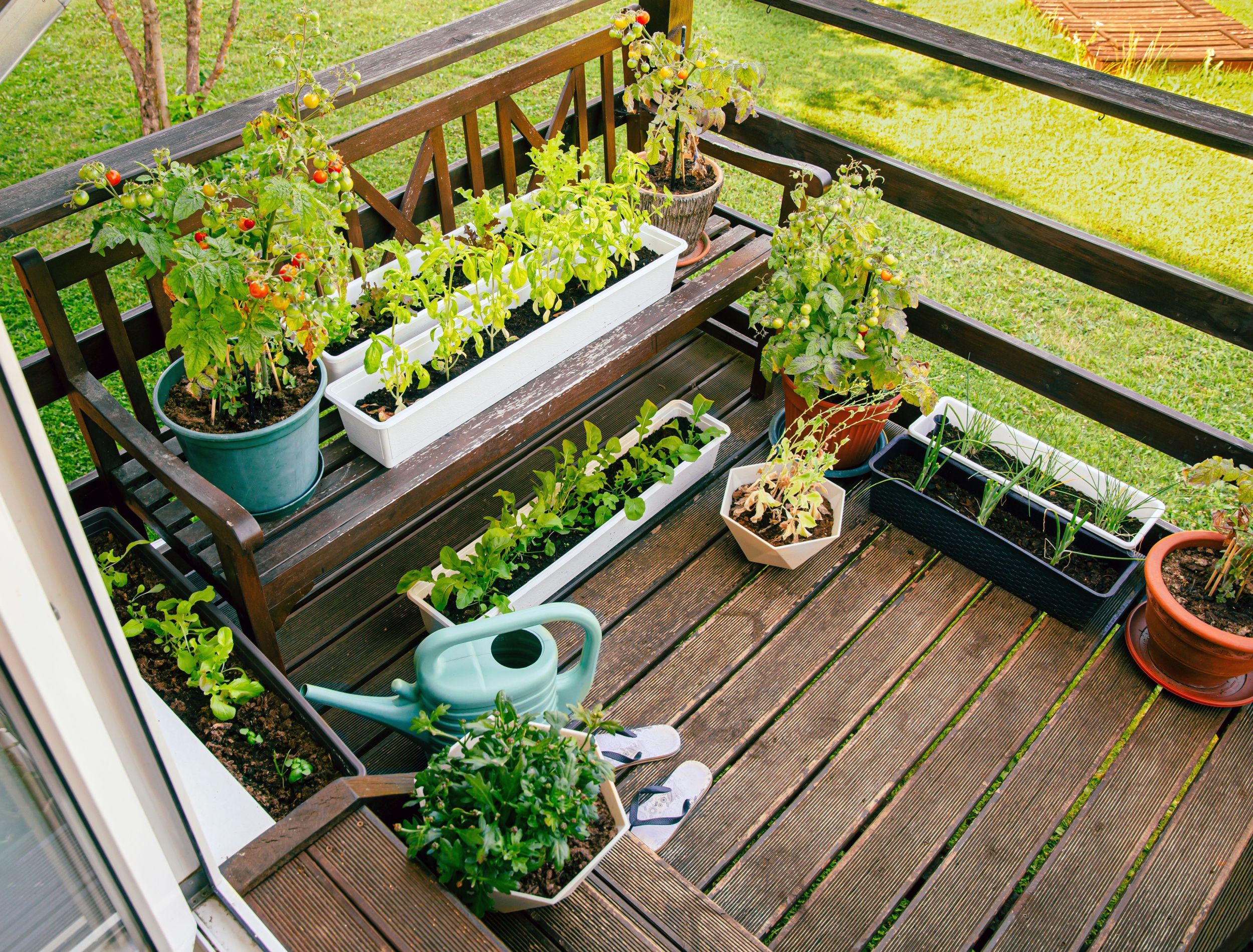
Image from www.backyardboss.net.
Urban gardening isn’t just a trend—it’s a practical solution for city living that brings multiple benefits to your lifestyle and the environment. Whether you have a sunny south-facing balcony or a shadier spot, there’s a world of edible plants waiting to thrive in your care!
Turn Your Tiny Space into a Food-Producing Paradise
Limited space is no barrier to growing food. In fact, container gardening on a balcony offers several advantages over traditional gardening. You can control the soil quality completely, position plants for optimal sun exposure, and manage pests more effectively in a confined space. The key is thinking vertically and making smart choices about containers and plant varieties.
The most successful balcony gardens start with a clear plan that considers space constraints and growing conditions. Rather than trying to replicate a ground-level garden, embrace the unique opportunities of balcony growing—vertical spaces, hanging options, railing planters, and stackable containers that maximize your growing area.
Why Growing Food on Your Balcony Makes Perfect Sense
Balcony gardens bridge the gap between urban living and food production, creating a sustainable solution for city dwellers who want to reconnect with natural processes. When you grow food at home, you’re taking a meaningful step toward personal food security while developing valuable skills that have sustained humans for generations.
Fresh Organic Produce at Your Fingertips
Nothing compares to the flavor of vegetables harvested minutes before eating! Store-bought produce often travels hundreds or even thousands of miles before reaching your plate, losing freshness and nutritional value along the way. A balcony garden eliminates food miles completely—your harvest travels mere steps to your kitchen!
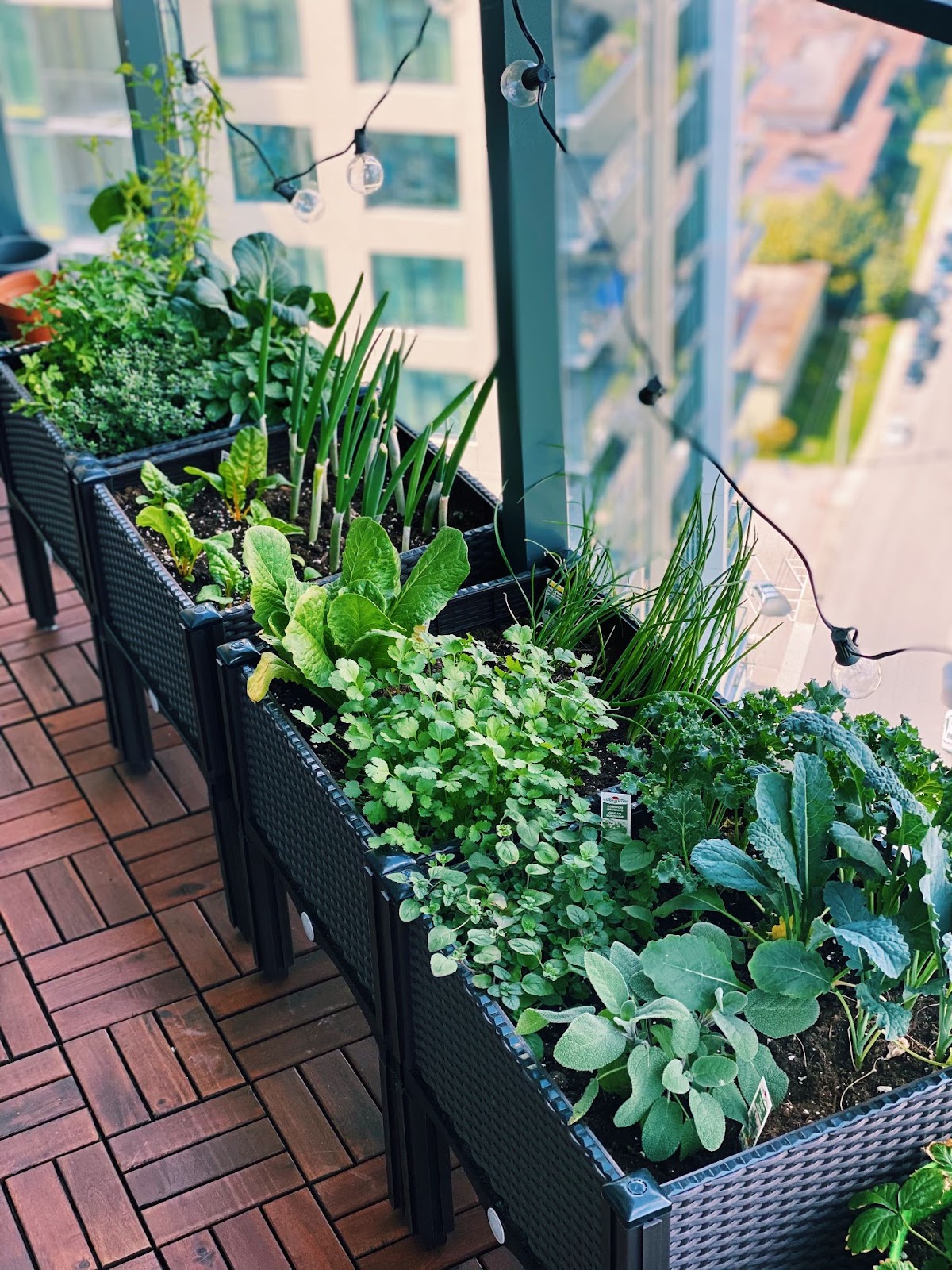
Image from tiffycooks.com.
Growing your own food also means you control exactly what goes into it. No mystery pesticides or chemical fertilizers necessary—your balcony garden can be as organic as you choose. This control over growing methods is especially valuable for leafy greens and soft fruits, which typically have high pesticide loads when conventionally grown.
Many balcony gardeners report that their home-grown herbs and vegetables have substantially more flavor than store-bought equivalents. This intensity comes from harvesting at peak ripeness and growing varieties chosen for taste rather than shipping durability.
Reduce Your Carbon Footprint
Home-grown food dramatically reduces the environmental impact of your diet. Commercial agriculture involves substantial energy inputs for cultivation, processing, packaging, refrigeration, and transportation—all eliminated when you grow food steps from your kitchen. Even a small balcony garden producing herbs and salad greens can significantly reduce your household’s food-related carbon emissions.
- Eliminates packaging waste from store-bought produce
- Reduces transportation emissions associated with food distribution
- Creates a micro-climate that helps cool your apartment in summer
- Allows composting of kitchen scraps, diverting waste from landfills
- Provides habitat for beneficial insects in urban environments
Save Money on Grocery Bills
The economics of a balcony garden make compelling sense. A single basil plant costing a few dollars (or less if you start it from seed) can provide the equivalent of dozens of store-bought herb packages over its lifetime. High-value crops like cherry tomatoes, salad greens, and specialty herbs offer the best return on investment, often paying for themselves within a single growing season.
Beyond direct savings, growing food builds resilience against fluctuating food prices and supply chain disruptions. Your balcony becomes a reliable source of fresh food regardless of market conditions. The financial benefits extend further when you consider the health advantages of increased vegetable consumption and the reduced need for store-bought produce.
Therapeutic Benefits of Tending Plants
Perhaps the most immediate benefit of balcony gardening is its effect on mental well-being. Numerous studies confirm what gardeners intuitively know—working with plants reduces stress hormones and promotes relaxation. The simple acts of watering, pruning, and harvesting create moments of mindfulness in otherwise busy days.
Growing food connects us to natural cycles and seasonal changes that are easy to miss in urban environments. This connection grounds us in something larger than ourselves, providing perspective and patience. For many city dwellers, a balcony garden becomes a vital touchpoint with nature that enriches daily life immeasurably!
Assess Your Balcony’s Growing Potential
Before purchasing a single seed or container, take time to analyze your balcony’s specific conditions. Understanding your microclimate is crucial for plant selection and positioning. Successful balcony gardeners work with their space’s natural advantages rather than fighting against limitations.
Mapping Sun Patterns Throughout the Day
Sunlight is the most critical factor for most edible plants. Spend a day tracking how sunlight moves across your balcony, noting full sun areas versus shaded spots. Most fruiting plants like tomatoes and peppers need at least 6-8 hours of direct sunlight, while many leafy greens and herbs can thrive with 4-6 hours or even partial shade.
Remember that seasonal changes affect sun patterns—a balcony that’s sunny in summer might be completely shaded in winter as the sun’s path shifts. If possible, observe your space through different seasons before finalizing your garden plan. Taking photos at different times throughout the day can help you visualize light patterns more clearly when planning plant placement.

Image from howtosetupbalconygarden.home.blog.
Wind Exposure and Protection Strategies
Wind presents unique challenges for balcony gardens, especially at higher elevations. Strong winds accelerate water evaporation from soil and can physically damage delicate plants. Note which directions receive the strongest winds and plan protective measures accordingly.
“I underestimated wind effects on my 10th-floor balcony garden. After losing several seedlings to drying winds, I installed a bamboo screen on the windward side. This simple windbreak made an enormous difference—my water usage dropped by nearly half, and plants grew much more vigorously.” — Jennifer McDonald, Urban Balcony Gardener
Strategic windbreaks can transform a challenging space into a protected growing environment. Consider installing lattice panels, canvas screens, or even strategic placement of taller plants to shield more delicate species. These barriers not only protect plants but also create microclimates that can extend your growing season significantly.
Weight Considerations and Building Regulations
Before enthusiastically filling your balcony with soil-filled containers, verify weight limitations with your building management. Wet soil is surprisingly heavy—a single cubic foot can weigh 100 pounds or more. Many buildings have specific regulations about balcony use that may affect your garden plans.
Distribute weight evenly across your balcony rather than concentrating heavy containers in one area. Consider lightweight alternatives like fiber containers, fabric grow bags, and specialized soil mixes that include perlite or vermiculite to reduce overall weight while maintaining plant health. These thoughtful adjustments ensure your garden remains both productive and structurally sound.
Measuring Available Space for Maximum Efficiency
Map your balcony dimensions accurately, noting not just floor space but vertical opportunities like walls and railings. Remember to leave pathways for maintenance access and comfortable seating if you plan to enjoy your garden oasis. A detailed space plan helps avoid overcrowding, which can lead to poor air circulation and increased disease problems.
Think three-dimensionally when assessing your space. The volume above your balcony floor offers tremendous growing potential through hanging baskets, wall-mounted planters, and vertical growing systems. Even the smallest balconies can support surprisingly productive gardens when vertical space is fully utilized.
Essential Containers for Edible Balcony Gardens
Container selection directly impacts plant health, maintenance requirements, and overall garden aesthetics. The right containers make the difference between struggling plants that need constant attention and a thriving garden that largely cares for itself. Prioritize function over form initially, though many practical options are also visually appealing.
1. Self-Watering Containers
Self-watering containers represent the single most important advancement for balcony gardeners. These ingenious planters incorporate a water reservoir below the soil level, allowing plants to draw moisture as needed through capillary action. The result is more consistent soil moisture, reduced water consumption, and significantly less daily maintenance.
These containers are particularly valuable for balcony gardeners who work long hours or travel occasionally. Plants can typically go 3-7 days between refills, depending on weather conditions and plant size. While the initial cost is higher than standard pots, the time savings and improved plant health make them an excellent long-term investment for serious balcony gardeners.
2. Vertical Garden Systems
Vertical growing systems transform limited floor space into abundant growing area by utilizing wall space. Options range from simple pocket planters to sophisticated hydroponic towers that can support dozens of plants in a few square feet. The key advantage is maximizing growing capacity without sacrificing floor space for movement and seating.
When selecting vertical systems, consider light exposure carefully. Plants at different heights may receive significantly different light levels, requiring thoughtful placement of sun-loving and shade-tolerant varieties. Ensure your vertical system allows easy access for harvesting and maintenance—beautiful but inaccessible plants quickly become frustrating.

Image from thecottagepeach.com.
3. Hanging Baskets and Wall Planters
Hanging baskets and wall-mounted containers effectively multiply your growing space by utilizing areas above railings and along walls. These containers work beautifully for trailing crops like strawberries, cherry tomatoes, and herbs like thyme and oregano. Position them where they won’t shade other plants unless that shading is intentional for heat-sensitive crops.
When using hanging containers, remember that they dry out more quickly than ground-level pots due to increased air circulation and often shallower soil depth. Choose options with adequate soil capacity and consider incorporating water-retentive materials like coconut coir or water-absorbing crystals to reduce watering frequency.
4. Recycled and Upcycled Container Options
Embracing sustainability often means repurposing existing materials as growing containers. Food-grade buckets, wooden crates, and even dresser drawers can become productive growing vessels with proper preparation. Ensure any repurposed container provides adequate drainage and hasn’t contained toxic materials that could leach into soil.
Creating drainage holes is essential for any repurposed container. Generally, one drainage hole per 4-6 inches of container width is sufficient. Line wooden containers with landscape fabric to extend their lifespan and prevent soil from washing out through cracks. For metal containers, consider adding a plastic liner to prevent potential metal leaching and root burning from heat conduction. For more tips on container gardening, check out this beginner balcony garden guide.
5. Specialized Vegetable Planters
Purpose-designed planters for specific crops can dramatically improve yields in small spaces. Potato grow bags, strawberry towers, and tomato planters with integrated supports make growing these popular crops significantly easier on a balcony. These specialized containers optimize growing conditions for their intended crops while minimizing space requirements.
While these planters often carry premium prices, their specialized features can make them worthwhile investments for crops you grow repeatedly. Look for durable construction that will last multiple seasons, and consider how easily they can be stored during the off-season if your space is limited. For more tips on maximizing space, explore our vertical gardening resources.
Create the Perfect Growing Medium
Container gardening success begins with proper soil—or more accurately, a soilless growing medium optimized for container conditions. The growing medium provides not just nutrients but also appropriate moisture retention, drainage, and oxygen for root development. This foundation determines whether plants merely survive or truly thrive in your balcony garden.

Image from earthbox.com.
Quality Potting Mix vs. Garden Soil
Never use garden soil directly in containers—this common beginner mistake leads to compaction, poor drainage, and potential introduction of pests and diseases. Garden soil is designed to work in the ground where it’s part of a larger ecosystem with natural drainage and beneficial organisms. In containers, it quickly becomes dense and airless, suffocating plant roots and promoting root diseases.
Quality potting mixes are specifically formulated for container growing, with components that maintain structural integrity, provide adequate drainage, and retain appropriate moisture. Look for mixes labeled for vegetable growing, which typically have a balanced initial nutrient content appropriate for food crops. The investment in proper potting mix pays dividends in plant health and productivity throughout the growing season.
DIY Organic Potting Mix Recipe
Creating your own potting mix allows precise control over ingredients while often reducing costs for larger gardens. A basic organic potting mix can be made by combining equal parts coconut coir (or peat moss), coarse vermiculite or perlite, and high-quality compost. This balanced mix provides excellent moisture retention while maintaining necessary air pockets for healthy root development.
For edible plants, enhance your basic mix with natural amendments like worm castings, kelp meal, and rock dust to provide slow-release nutrients throughout the growing season. These organic additions support not just the plants but the beneficial microorganisms that create a living soil ecosystem even in containers. Adjust your mix for specific crops—add more drainage material for Mediterranean herbs like rosemary and thyme, or increase organic matter for heavy feeders like tomatoes.
Store unused potting mix in sealed containers to preserve microbial life and prevent contamination from weed seeds or pests. Even the best mix will compact somewhat over time, so plan to replace or significantly refresh your container soil annually for optimal results.
Small-Space Composting Solutions
Creating your own compost in a limited space might seem impossible, but several compact systems make it entirely feasible. Bokashi bins, worm composters, and small tumbling units can process kitchen scraps efficiently without odors or pests. These systems typically require just one to two square feet of space while converting waste into valuable growing medium.
Vermicomposting (worm composting) works particularly well for balcony gardeners, as the systems can be kept indoors or outdoors depending on climate. Red wiggler worms process food scraps quickly in a well-maintained bin, producing nutrient-rich worm castings that act as a powerful, balanced fertilizer for container plants. A single pound of worms can process several pounds of kitchen waste monthly while taking up minimal space.
“My stackable worm bin sits in a corner of my balcony and processes nearly all my kitchen scraps. The resulting compost tea and castings have dramatically improved my vegetable yields while reducing my waste output. It’s been the single most impactful addition to my sustainable balcony garden system.” — Carlos Mendez, Apartment Gardener
For those concerned about potential odors, bokashi fermentation offers an excellent alternative. This anaerobic process uses beneficial microbes to quickly ferment food waste (including meat and dairy that traditional composting can’t handle). The resulting pre-compost can then be buried in your container soil or further processed in a small outdoor composter.
Top Edible Plants for Beginner Balcony Gardeners
Success breeds enthusiasm in gardening, so beginning with plants that readily thrive in containers gives you the confidence to expand your growing repertoire. The ideal starter plants offer high yields, resistance to common problems, and straightforward care requirements. Many also provide continuous harvests throughout the growing season, maximizing returns from limited space.

Image from www.pinterest.com.
Focus initially on crops that are expensive or lose flavor quickly when purchased from stores. Fresh herbs, salad greens, and vine-ripened tomatoes offer dramatically superior flavor compared to their commercial counterparts, providing immediate and noticeable benefits from your gardening efforts.
Leafy Greens for Continuous Harvests
Leafy greens deliver exceptional value in balcony gardens, providing continuous “cut and come again” harvests from a single planting. Varieties like loose-leaf lettuce, arugula, spinach, and Asian greens like bok choy and tatsoi thrive in containers at least 6 inches deep. Most leafy greens prefer cooler temperatures, making them perfect for spring and fall growing, or partially shaded locations during summer.
Swiss chard and kale offer remarkable longevity in containers, often producing for months from a single planting. These nutritional powerhouses can handle temperature fluctuations that challenge more delicate greens, making them valuable components of a sustainable balcony garden. Harvest outer leaves regularly while leaving the central growing point intact for continuous production.
Herbs That Thrive in Containers
Herbs deliver exceptional value in balcony gardens, with many species actually performing better in containers than in open ground. Mediterranean herbs like rosemary, thyme, sage, and oregano prefer the excellent drainage containers provide. These perennial herbs can thrive for years in appropriate containers, requiring minimal care beyond occasional harvesting and watering.
Annual herbs like basil, cilantro, and dill grow quickly from seed and provide abundant harvests throughout their growing season. Basil particularly excels in containers, with a single well-maintained plant producing enough leaves for multiple meals weekly. Mint family herbs (including mint, lemon balm, and shiso) grow so vigorously they’re actually better contained in pots to prevent them from becoming invasive.
For maximum productivity, position herbs where you’ll see and reach them easily during meal preparation. Having herbs directly accessible while cooking dramatically increases their use and appreciation, maximizing the practical benefits of your garden.
Compact Vegetable Varieties
Plant breeders have developed numerous vegetable varieties specifically for container growing, offering full-sized harvests from compact plants. Look for varieties labeled as “bush,” “patio,” or “container” types when selecting seeds or seedlings. These specialized varieties have been bred to thrive in the unique conditions of container gardens while maintaining excellent flavor and productivity.
Cherry tomatoes are superstars for balcony gardens, producing abundant harvests over a long season from relatively compact plants. Varieties like ‘Tiny Tim,’ ‘Tumbling Tom,’ and ‘Balcony Yellow’ have been specifically developed for container culture, producing full-flavored fruits on plants that require minimal space. Similar breeding work has created excellent container varieties of peppers, eggplants, cucumbers, and even zucchini that produce full-sized harvests from remarkably compact plants.
Dwarf Fruit Trees and Berry Bushes
Even fruit production is possible on balconies with specially bred dwarf varieties and columnars that grow vertically rather than spreading. Dwarf citrus trees like Meyer lemon, kumquat, and calamondin thrive in large containers and can be overwintered indoors in colder climates. These productive trees often become the centerpiece of a balcony garden, providing ornamental value alongside their harvests!
Berry bushes adapted for container growing include compact blueberry varieties, dwarf raspberries, and ever-bearing strawberries. These perennial plants offer increasing harvests year after year as they mature, providing excellent return on investment. Alpine strawberries are particularly well-suited to balcony growing, producing small, intensely flavored berries throughout the growing season from attractive compact plants that thrive in containers or hanging baskets.
Edible Flowers for Beauty and Flavor
Edible flowers serve multiple functions in the balcony garden, attracting pollinators while providing colorful, flavorful additions to meals. Nasturtiums grow quickly and produce peppery-flavored flowers and leaves for months, thriving in hanging baskets or trailing over container edges. Their bright blooms add visual interest while their edible components add zesty flavor to salads and garnishes.
Other productive edible flowers include calendula (pot marigold), whose petals add color to salads and rice dishes; borage, with cucumber-flavored blue star-shaped flowers; and pansies, whose delicate blooms make beautiful dessert decorations! These dual-purpose plants maximize value from limited space while enhancing the aesthetic appeal of your balcony garden.
Sustainable Watering Systems That Save Time and Resources
Watering represents the most time-consuming and resource-intensive aspect of balcony gardening. Container plants typically require more frequent watering than ground-planted counterparts, as their limited soil volume dries more quickly. Implementing efficient watering systems not only conserves water but also ensures more consistent soil moisture, directly improving plant health and productivity.

Image from blog.gardenuity.com.
The goal is to establish systems that maintain optimal moisture levels with minimal intervention. This approach conserves water, reduces your maintenance time, and creates healthier plants through consistent moisture levels. Even small investments in efficient watering systems typically pay dividends in reduced water usage and improved plant performance.
Drip Irrigation Setup for Busy Gardeners
Drip irrigation represents the most efficient watering method for balcony gardens, delivering water directly to soil at a controlled rate that minimizes evaporation and runoff. Simple gravity-fed systems can be created using a reservoir placed above plant level, connected to drip emitters via flexible tubing. These systems eliminate the need for daily watering while ensuring each plant receives precisely the moisture it needs.
For more sophisticated control, timer-operated drip systems connect to standard faucets and automatically water at scheduled intervals. These systems are particularly valuable for busy gardeners or those who travel occasionally, as they maintain consistent soil moisture regardless of the gardener’s schedule. Modern smart timers can even adjust watering based on weather conditions, further optimizing water usage.
When setting up drip irrigation, group plants with similar water needs on the same watering line. This arrangement allows customized irrigation schedules for different plant types, preventing both under and overwatering while maximizing resource efficiency. For those interested in efficient watering solutions, consider exploring the best drip irrigation kits for container gardens.
Rainwater Collection on a Small Scale
Even small balconies can incorporate rainwater harvesting through compact collection systems. Folding rain barrels, collapsible water tanks, and specialized rain chains can collect significant amounts of water from even limited roof catchment areas. This free resource is ideal for plants, as rainwater lacks the chlorine and mineral content often found in municipal water supplies.
For balconies without direct access to rainfall, consider collecting water from indoor sources like dehumidifiers, air conditioners, and even cooking water used for pasta or vegetables (once cooled). These otherwise wasted water sources can provide significant supplemental moisture for container plants while reducing overall household water consumption.
Water Conservation Techniques
Beyond irrigation systems, multiple strategies can dramatically reduce water needs in a container garden. Mulching container surfaces with materials like coconut coir, straw, or decorative stones significantly reduces evaporation, keeping soil moisture consistent for longer periods. Even a thin mulch layer can reduce watering frequency by 30-50% during hot weather.
Incorporating water-retentive materials into potting mix creates additional moisture reserves plants can access between waterings. Products like water-storing crystals (hydrogels) and water-retentive coconut coir provide plant-available moisture without creating the soggy conditions that lead to root diseases. These materials are particularly valuable in hanging baskets and smaller containers that dry quickly in warm conditions.
Natural Pest Management in Confined Spaces
Balcony gardens typically experience fewer pest problems than ground-level gardens, as physical elevation creates a natural barrier to many crawling insects. However, compact growing environments can allow problems to spread quickly once established. Proactive prevention and close observation are key to maintaining a healthy ecosystem that naturally suppresses potential pest issues.
The cornerstone of sustainable pest management is creating a balanced environment where beneficial organisms can thrive alongside your plants. This holistic approach replaces reactive chemical treatments with proactive ecosystem management, resulting in a more resilient garden that largely self-regulates pest populations.
Companion Planting Strategies
Strategic plant combinations can significantly reduce pest problems while enhancing growth and flavor. Aromatic herbs like basil planted alongside tomatoes deter tomato hornworms while improving tomato flavor. Similarly, marigolds interplanted throughout the garden release compounds that repel multiple pest species while attracting beneficial pollinators with their bright blooms.
Even in limited space, companion planting offers substantial benefits. Consider these proven combinations for balcony gardens: basil with tomatoes, nasturtiums with cucumbers, chives with carrots, and calendula with most vegetables. These synergistic pairings maximize the protective benefits of diversity even in small growing spaces!
- Basil deters flies and mosquitoes while potentially improving tomato flavor
- Marigolds release thiopene, which repels nematodes and many insect pests
- Nasturtiums act as trap crops for aphids, drawing them away from vegetables
- Chives and other alliums deter aphids and Japanese beetles with their sulfur compounds
- Calendula attracts beneficial insects like ladybugs and lacewings that prey on common pests
Homemade Organic Pest Solutions
When intervention becomes necessary, gentle homemade solutions provide effective control without introducing harmful chemicals to your edible garden. A basic soap spray—created by mixing 1 tablespoon of pure castile soap in a quart of water—effectively controls soft-bodied insects like aphids and whiteflies by disrupting their protective outer coating. This solution works on contact while leaving no harmful residue on edible plants.
For fungal issues common in humid conditions, a preventative spray of diluted compost tea strengthens plants’ natural defenses. Create this beneficial brew by steeping finished compost in water for 24-48 hours, then straining and diluting the resulting liquid before applying it as a foliar spray. The beneficial microorganisms in the tea colonize leaf surfaces, creating a protective barrier against pathogenic fungi.

Image from botanicalpaperworks.com.
Beneficial Insects for Your Balcony Ecosystem
Even small balcony gardens can support beneficial insects that provide natural pest control. Ladybugs, lacewings, hoverflies, and predatory mites can be attracted by including small-flowered plants like sweet alyssum, cosmos, and herb blossoms in your garden design. These beneficial predators consume significant quantities of common pests while requiring no care or management from the gardener.
For persistent pest issues, beneficial insects can be purchased for release in your garden. Ladybugs, predatory mites, and beneficial nematodes are readily available from garden suppliers and can quickly bring challenging pest outbreaks under control. When releasing purchased beneficials, follow supplier instructions carefully for timing and environmental conditions to maximize their effectiveness and establishment.
Seasonal Planning for Year-Round Harvests
Thoughtful seasonal planning transforms a balcony garden from a summer hobby into a year-round food production system. By understanding seasonal transitions and preparing accordingly, you can maintain continuous harvests despite changing conditions. This approach maximizes the productivity of your space while providing ongoing connection to natural cycles.
The key to year-round harvests is anticipating seasonal changes rather than reacting to them. Each season offers unique growing opportunities when properly leveraged, allowing continuous production through appropriate plant selection and protection strategies. Even in regions with harsh winters, properly planned balcony gardens may be able to provide fresh harvests throughout the year.
Spring Planting Calendar
Spring offers the excitement of beginning a new growing season, but timing is critical for success. Begin cold-tolerant crops like spinach, peas, and radishes as soon as nighttime temperatures consistently stay above freezing. These early crops thrive in the cool, bright conditions of early spring, often producing harvests before summer plantings even begin.
Create a succession planting schedule that staggers sowings every 2-3 weeks throughout spring. This approach prevents harvest gluts while ensuring continuous production. As spring progresses and temperatures rise, transition to heat-loving crops like tomatoes, peppers, and basil, but wait until nighttime temperatures reliably remain above 50°F (10°C) before placing these sensitive plants outdoors permanently.
Summer Maintenance Schedule
Summer brings peak growth but also increased challenges from heat, pests, and vacation absences. Establish a consistent maintenance routine that includes daily checks for water needs, weekly feeding with organic fertilizers, and regular harvesting to encourage continued production. Morning maintenance provides the best opportunity to spot potential problems before heat stress compounds them.
Pay particular attention to container moisture during summer heat waves, as plants may require twice-daily watering during extreme conditions. Consider temporary shade cloth for sensitive crops during the hottest periods, especially if your balcony receives intense afternoon sun. This simple protection can prevent blossom drop in fruiting plants and bolting in leafy greens, significantly extending their productive season.
| Summer Task | Frequency | Notes |
|---|---|---|
| Watering check | Daily (morning) | Additional afternoon check during heat waves |
| Harvesting | 2-3 times weekly | Morning harvest provides best flavor and shelf life |
| Fertilizing | Weekly | Half-strength organic liquid fertilizer |
| Pest monitoring | Twice weekly | Check leaf undersides and growing tips |
| Pruning/training | As needed | Keep air circulating through plants |
During summer vacations, self-watering containers and automated irrigation systems become invaluable. For shorter absences, clustering plants in shade and setting up wicking systems with reservoirs can maintain moisture levels for several days without intervention. These strategies allow you to maintain your garden despite summer travel plans.

Image from www.familyhandyman.com
Fall Extension Techniques
Fall offers excellent growing conditions for many crops as temperatures moderate and pest pressure decreases. Begin transitioning your garden in late summer by removing exhausted summer crops and replanting with fall-appropriate varieties like kale, chard, carrots, and cool-season herbs. These plantings often produce well into early winter with minimal protection, significantly extending your harvest season.
Winter Protection Methods
Even in cold climates, winter harvests are possible with appropriate protection and plant selection! Construct mini-greenhouses using clear plastic over simple frames over your containers to create protected growing environments for cold-hardy crops. These simple structures can maintain temperatures 10-15°F warmer than ambient conditions, often allowing continued harvests of kale, mâche, and certain herbs throughout winter.
For extreme winter conditions, consider moving selected plants indoors to south-facing windows. Herbs like rosemary, thyme, and chives transition well to indoor growing, as do compact greens like leaf lettuce and microgreens. These indoor edibles provide fresh harvests during winter months while reconnecting you with growing during the dormant season!
Space-Maximizing Garden Designs
Effective space utilization transforms even the smallest balcony into a productive growing area. Strategic design considers not just horizontal surface area but vertical space, hanging opportunities, railing space, and even wall surfaces. This three-dimensional approach can triple or quadruple your effective growing area compared to conventional container arrangements.
The most successful balcony gardens integrate beauty with productivity, creating spaces that nourish both body and soul! Thoughtful design ensures your garden remains an inviting place to spend time, not just a production facility. This balance encourages regular interaction with your plants, which directly improves both maintenance and harvest utilization.
Vertical Growing Systems
Vertical growing transforms limited floor space into abundant growing area by utilizing wall space and vertical structures. Options range from commercial systems like living walls and tower gardens to DIY solutions using repurposed materials. The key advantage is maximizing growing capacity without sacrificing floor space for movement and seating, allowing substantial production even on tiny balconies. For more ideas, explore our vertical gardening resources here.

Image from finecraftguild.com.
Tiered Container Arrangements
Staggered container heights create efficient growing environments by allowing more plants access to sunlight while minimizing the footprint of your garden. Simple shelving units, plant stands, or even overturned containers can create elevations that allow strategic placement of sun-loving plants at the top tier with shade-tolerant varieties below. This arrangement maximizes light utilization while creating microclimates that benefit different plant types.
Interplanting Compatible Crops
Interplanting—growing multiple compatible crops in the same container—maximizes productivity while creating beneficial plant relationships. Classic combinations include the Native American “Three Sisters” (corn, beans, and squash) adapted for containers, or fast-growing radishes planted alongside slower-developing carrots. These polycultures use space more efficiently than monocultures while often reducing pest issues through increased biodiversity.
Beyond space efficiency, interplanting creates visual interest and extended harvest periods from single containers. Consider combining upright plants with trailing varieties, or pairing plants with different maturation times to maintain continuous production. These thoughtful combinations transform simple containers into complex, productive ecosystems that evolve throughout the growing season.
From Seed to Plate: Harvesting and Using Your Bounty
The ultimate reward of balcony gardening comes in the harvest—transforming your growing efforts into delicious, nutritious meals! Learning proper harvesting techniques not only maximizes yield but also improves flavor and extends the productive life of your plants. This final stage completes the cycle of sustainable food production, connecting growing efforts directly to nourishment.
Succession Planting for Continuous Yields
Succession planting—staggering seed starting and replanting throughout the season—ensures continuous harvests without gaps or gluts. Rather than planting an entire container of lettuce at once, sow small amounts every 1-2 weeks to maintain steady production. Similarly, promptly replant areas where crops have finished producing to maintain continuous garden productivity throughout the growing season.
Proper Harvesting Techniques
Harvesting methods significantly impact both flavor and future yields. Most leafy greens perform best with “cut and come again” harvesting—removing outer leaves while leaving the growing center intact to continue producing. This approach provides regular harvests over many weeks from a single planting, maximizing production from limited space.
For herbs, regular harvesting actually increases production by stimulating branching and new growth. Harvest herbs in the morning after dew has dried but before heat builds, when essential oil concentration peaks. Use sharp scissors or pruners to make clean cuts that heal quickly, preventing disease entry points while encouraging rapid regrowth.
Simple Preservation Methods for Small Harvests
Small-batch preservation methods allow balcony gardeners to extend the usefulness of harvest peaks. Herbs can be easily dried by hanging small bunches in a well-ventilated area, or frozen in ice cube trays with water or olive oil for later use in cooking. These simple preservation techniques capture peak flavor while preventing waste during productive periods.
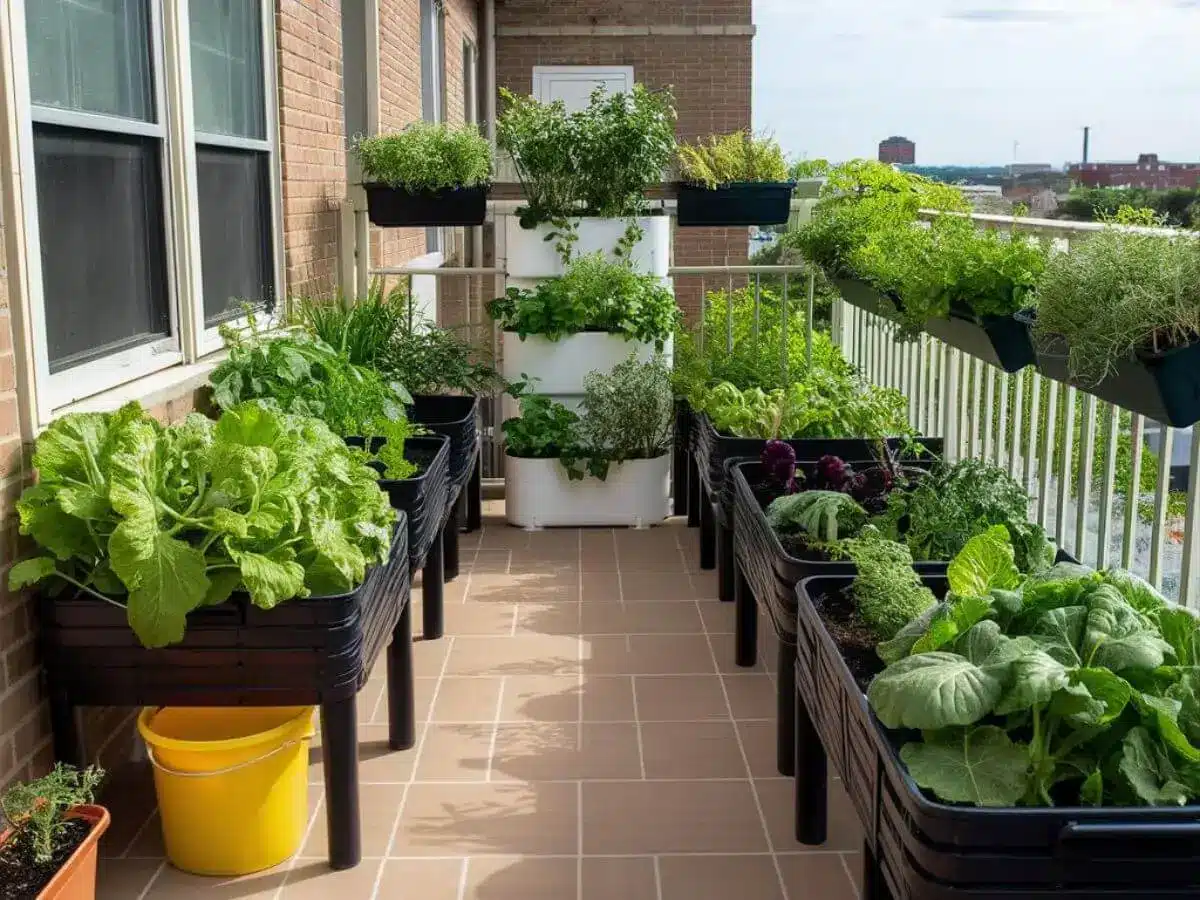
Image from ecofriendlybliss.com.
Grow Your Garden and Your Skills
A balcony garden is a living laboratory that evolves with your growing skills and changing interests. Begin with easy successes, then gradually expand your repertoire as confidence and experience grow. Document successes and challenges each season, creating a personalized growing guide specific to your unique conditions that becomes more valuable with each passing year.
Remember that every garden—no matter how small—contributes to a more sustainable food system while connecting you to natural cycles and the profound satisfaction of growing food! Your balcony garden represents not just a food source but a statement about reclaiming food production at the most local level possible. As your garden grows, so too will your connection to seasonal rhythms, environmental awareness, and the simple joy of working with living systems.
Frequently Asked Questions
As you begin your balcony gardening journey, questions will likely arise about specific challenges and opportunities. These common questions address the most frequent concerns of beginning balcony gardeners, providing practical solutions to typical challenges. Remember that regional variations in climate and growing conditions may require adjustments to these general recommendations.
The learning process is ongoing for all gardeners, regardless of experience level. Each growing season brings new insights and opportunities for refinement, creating an engaging pursuit that evolves with your interests and skills. The questions below provide starting points for your own experimentation and discovery.
How much sunlight do edible plants need on a balcony?
Most fruiting plants like tomatoes, peppers, and eggplants require at least 6-8 hours of direct sunlight daily for optimal production. Leafy greens and many herbs can thrive with 4-6 hours of direct sun or bright indirect light, making them suitable for less sunny balconies. Root vegetables generally need moderate sunlight (5-6 hours), while many herbs like mint, parsley, and cilantro can produce well with just 3-4 hours of direct sun supplemented by bright indirect light.
What are the easiest vegetables to grow for absolute beginners?
Leafy greens like lettuce, arugula, and spinach offer quick, reliable harvests with minimal care, making them perfect starter crops. Herbs including basil, chives, mint, and parsley are similarly forgiving while providing immediate culinary benefits. Cherry tomatoes, particularly varieties bred specifically for containers like ‘Tiny Tim’ or ‘Balcony Red,’ offer satisfying harvests with modest care requirements and take well to container growing.
Green onions (scallions) deserve special mention for beginners, as they can be regrown repeatedly from store-bought bulbs. Simply plant the white root ends with about an inch of the stem in containers, and they’ll regrow multiple times, providing ongoing harvests with almost no initial investment or special care!
Microgreens offer another foolproof entry point, growing from seed to harvest in just 7-14 days in shallow containers indoors or out. These nutrient-dense seedlings require minimal space, investment, or gardening knowledge while providing gourmet ingredients for salads, sandwiches, and garnishes.
For beginners concerned about limited time for garden care, drought-tolerant herbs like rosemary, thyme, and sage forgive occasional neglect while providing aromatic harvests for months. These Mediterranean natives actually prefer drier conditions, making them perfect for busy gardeners who might sometimes forget watering!
How do I prevent my balcony garden from becoming too heavy?
Lightweight containers significantly reduce overall weight without compromising plant health. Fiber containers, fabric grow bags, and modern composites offer substantial weight savings compared to traditional ceramic or concrete planters. For larger plantings, consider hollow containers with false bottoms that create the appearance of deep soil while actually containing a layer of lightweight materials like packing peanuts or empty plastic bottles in the lower portion.
Soil weight can be reduced by incorporating lightweight materials like perlite, vermiculite, or coir into your potting mix. These amendments improve drainage and aeration while reducing overall weight by up to 30% compared to standard potting soil. Commercial lightweight potting mixes specifically formulated for balconies and rooftop gardens offer another convenient option, often weighing 30-50% less than conventional mixes while providing excellent growing conditions.
Can I grow food on a north-facing balcony?
North-facing balconies can successfully produce leafy greens, many herbs, and shade-tolerant vegetables despite limited direct sunlight. Focus on crops naturally adapted to woodland edges and partial shade, including lettuce, arugula, spinach, kale, mint, parsley, cilantro, and Asian greens like bok choy and tatsoi. These plants can thrive with as little as 3-4 hours of direct sun or with bright indirect light throughout the day, making them suitable for northern exposures.
How do I keep my edible garden productive during winter months?
Cold frames and mini-greenhouse structures extend the growing season significantly by capturing solar heat and protecting plants from frost. These simple structures—essentially transparent boxes placed over plants—can maintain temperatures 10-15°F above ambient conditions, allowing continued growth of cold-hardy crops like kale, spinach, and certain lettuces throughout winter in many climates. Supplement with season extension fabrics like row cover or frost blankets during extreme cold periods for additional protection.
Featured Image from apartmenttherapy.info.

Related Posts
- [Video] Which Compost Style Is Right for You?
- [Infographic] How to Build a Living Wall
- Edible Landscaping Ideas for Urban Gardens & Spaces
- The Topsy Turvy Tomato Planter: Upside Down Wonders for Balcony Gardens
- How to Select The Right Grow Light for Your Indoor Plants
- 7 Rules For A Great Tomato Harvest


