Best Root Vegetable Garden Tools: Broadfork Soil Cultivation Tips & Guide

A broadfork is a great way to improve your garden soil without tilling – and is especially helpful when growing root vegetables. Learn about some of the benefits of using a broadfork, & how to use one in your garden…
Key Takeaways:
- A broadfork is a must-have tool for root vegetable gardening, offering better soil aeration and drainage.
- Using a broadfork improves soil quality by maintaining its structure and promoting microbial activity.
- Broadforks are more environmentally friendly than traditional tillers, reducing soil compaction.
- Choose the right broadfork by considering factors like size, material, and brand reputation.
- Proper use of a broadfork involves preparing the soil and using the correct technique to maximize benefits.
The Broadfork: An Essential Tool for Root Vegetable Gardening
When it comes to growing root vegetables like carrots, potatoes, and beets, the condition of your soil is paramount. A broadfork can be your best ally in ensuring that your garden soil remains rich, loose, and full of life! This tool, with its long handles and sturdy tines, allows you to aerate the soil deeply without disturbing its natural layers. This means better drainage, more room for roots to grow, and a healthier garden overall.

Image from www.leevalley.com.
Benefits of Using a Broadfork
The broadfork is more than just a simple gardening tool; it’s a game-changer! One of its primary benefits is how it helps maintain the soil structure. Unlike traditional tillers, which churn the soil and mix its layers, the broadfork gently lifts and aerates. This process keeps the soil’s natural layers intact, promoting healthier plant growth.
Moreover, using a broadfork encourages better water infiltration and retention. This is crucial for root vegetables, which require consistent moisture levels. By improving the soil’s ability to absorb and hold water, a broadfork can help your plants thrive even during dry spells.
How the Broadfork Enhances Soil Quality
Healthy soil is teeming with life, and a broadfork plays a vital role in sustaining that life. When you use a broadfork, you create pockets of air within the soil, which are essential for the survival of beneficial microorganisms. These tiny helpers break down organic matter, releasing nutrients that your plants need to grow strong and healthy.
Besides that, a broadfork helps reduce soil compaction. Compacted soil can suffocate roots and limit their growth. By loosening the soil, you provide your plants with the space they need to spread out and access the nutrients they require. The result is a more robust and productive garden.
Most importantly, broadforking is a sustainable practice. It minimizes soil disturbance and preserves the natural ecosystem within your garden. This not only benefits your plants but also supports the overall health of your garden environment.
Maximizing Benefits from Using a Broadfork and Other Tools
To truly maximize the benefits of using a broadfork, it’s essential to integrate it into a comprehensive gardening strategy. By focusing on soil health and proper tool usage, you can create an environment where your vegetables will flourish.
Reducing soil compaction naturally is one of the most significant advantages of using a broadfork. This tool allows you to aerate the soil without disturbing its natural structure, which is crucial for maintaining soil health.
- Regularly aerate the soil to improve drainage and root growth.
- Incorporate organic matter like compost to enrich the soil.
- Use complementary tools to enhance the effectiveness of the broadfork.
By following these guidelines, you’ll be able to enjoy a bountiful harvest of while promoting sustainable gardening practices! The broadfork, when used correctly, is an invaluable tool that can transform your gardening experience and lead to healthier, more productive plants.

Image from www.amazon.com.
Reducing Soil Compaction Naturally
Reducing soil compaction is crucial for the health of your garden, and a broadfork is an excellent tool for this purpose. Unlike heavy machinery, which can compact the soil further, a broadfork gently loosens the soil without disturbing its structure. This allows roots to penetrate deeper and access the nutrients they need.
By using a broadfork, you can create an environment where air and water move freely through the soil. This not only benefits your plants but also supports the beneficial microorganisms that live in the soil. These organisms play a vital role in breaking down organic matter and releasing nutrients, which helps your plants grow stronger and healthier.
Improving Aeration and Drainage in Soil
Proper aeration and drainage are essential for a successful garden. When soil is well-aerated, it allows oxygen to reach plant roots and supports healthy microbial activity. A broadfork can help achieve this by creating air channels in the soil, which improves its overall structure.
- Regularly aerate your soil using a broadfork to promote healthy root growth.
- Add organic matter like compost to enhance soil fertility and drainage.
- Monitor soil moisture levels to prevent waterlogging and root rot.
Improving drainage is equally important, especially for root vegetables that are sensitive to excess moisture. By using a broadfork, you can ensure that water moves efficiently through the soil, preventing waterlogged conditions that can harm your plants.
Most importantly, consistent use of a broadfork will lead to healthier soil over time. This means better drainage, more robust plant growth, and ultimately, a more productive garden.
Encouraging Healthy Root Growth
Healthy root growth is the foundation of a thriving garden. When roots have access to the air, water, and nutrients they need, plants can grow to their full potential. A broadfork is instrumental in creating the ideal conditions for root growth by loosening the soil and allowing roots to spread out and explore.
Comparative Advantages Over Traditional Tools
When comparing a broadfork to traditional gardening tools like shovels and tillers, the advantages become clear. While shovels are great for digging, they often require significant physical effort and can disrupt the soil structure. Tillers, on the other hand, may be easier to use but can lead to over-aeration and erosion.
With a broadfork, you get the best of both worlds. It requires less effort than a shovel and causes less disruption than a tiller. Additionally, broadforks are quieter and more environmentally friendly, as they don’t rely on gas or electricity. This makes them an excellent choice for gardeners who are looking to reduce their carbon footprint.
If you’re serious about growing healthy root vegetables (or no-till gardening in general), investing in a broadfork is a smart move. It’s a tool that not only enhances your garden’s productivity but also aligns with sustainable gardening practices.
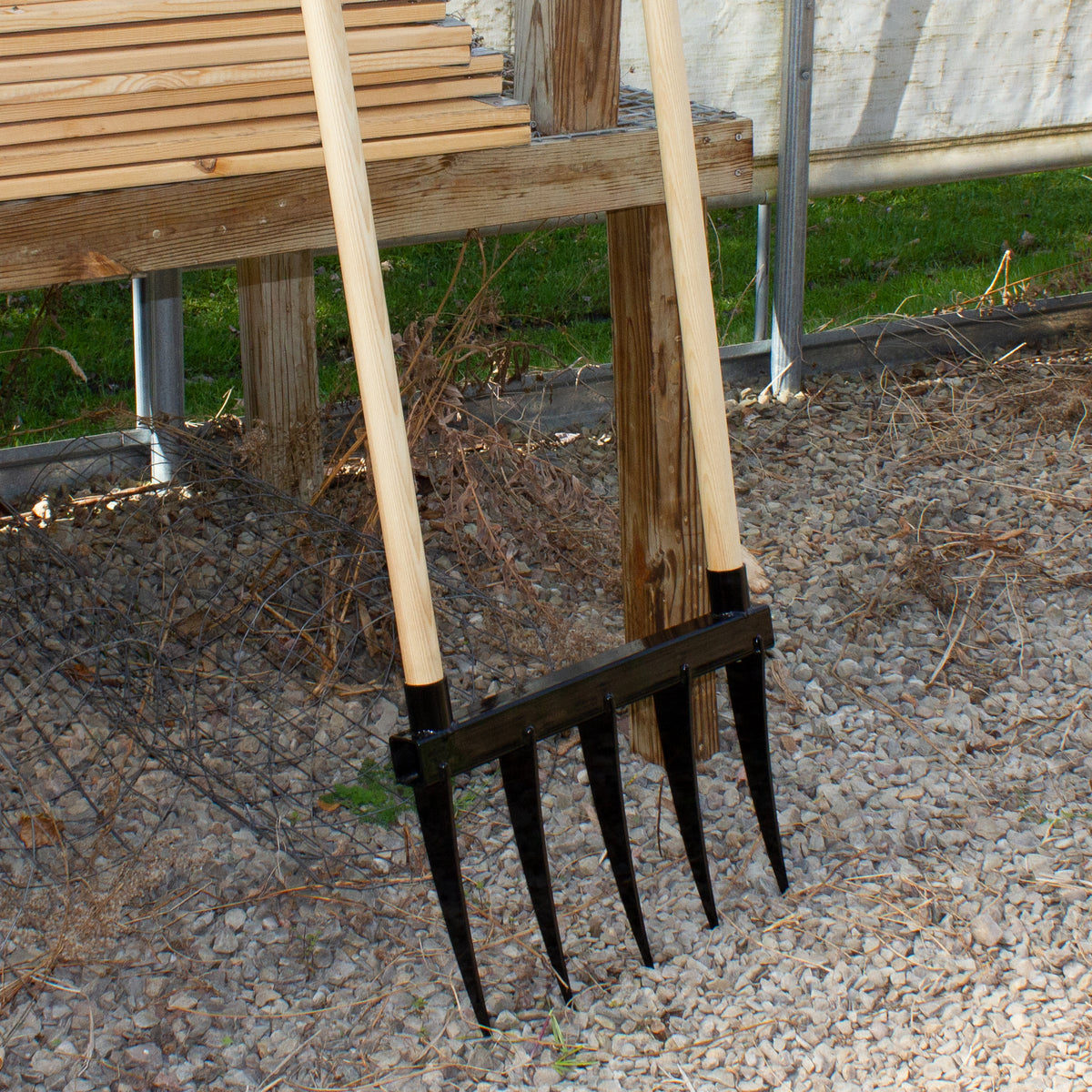
Image from www.rawrutes.com.
Choosing the Right Broadfork for Your Garden
Now that you understand the benefits of using a broadfork, it’s time to choose the right one for your garden. With so many options available, it can be challenging to decide which broadfork is best suited for your needs. However, by considering a few key factors, you can make an informed decision that will serve you well for years to come.
Factors to Consider: Size and Material
When selecting a broadfork, the size is an important consideration. A broadfork that is too large may be difficult to maneuver, especially in a small garden. Conversely, a tool that is too small may not penetrate the soil deeply enough to be effective. Ideally, you should choose a broadfork that matches your height and strength, allowing you to use it comfortably.
The material of the broadfork is another important factor. Most broadforks are made from steel or aluminum. Steel is more durable and can handle tougher soils, but it is also heavier. Aluminum is lighter and easier to handle, making it a good choice for those who prefer a less strenuous gardening experience. For more information on how to choose and use a broadfork, you can refer to this guide on how to use a broadfork.
Besides size and material, consider the design of the handles and tines. Ergonomic handles can make the tool more comfortable to use, while sharp, sturdy tines will penetrate the soil more easily. Take the time to try out different models if possible, to find the one that feels right for you.
Effective Broadfork Soil Cultivation Tips
Using a broadfork effectively can transform your gardening experience. The key lies in understanding how to prepare your soil and use the tool properly. With a few simple tips, you can ensure that your soil remains healthy and conducive to growing robust and healthy vegetables.
First, it’s important to recognize the signs of compacted soil. If water pools on the surface or if roots seem stunted, it may be time to aerate with your broadfork. This tool can help break up compacted layers, allowing air, water, and nutrients to reach the roots more effectively.
Preparing Your Garden Bed
Before you start using the broadfork, take some time to prepare your garden bed. Remove any large rocks or debris that might hinder the tool’s movement. It’s also a good idea to add a layer of compost to the soil surface. This will not only enrich the soil but also make it easier to penetrate with the broadfork.
Next, mark the area you plan to work on. Having a clear outline of your garden bed will help you stay organized and ensure that you cover the entire area evenly. Remember, the goal is to gently lift and aerate the soil without turning it over completely.
Proper Technique for Using a Broadfork
Using a broadfork is all about technique. Start by positioning the tool at the edge of your garden bed. Push the tines into the soil with your foot, applying even pressure. Once the tines are fully inserted, pull back on the handles to lift the soil slightly. This action creates air pockets and loosens the soil without disturbing its structure.

Image from bullytools.com.
Timing Cultivation for Optimal Results
Timing is crucial when it comes to using a broadfork. The best time to aerate your soil is in the early spring or late fall, when the soil is moist but not waterlogged. This ensures that the soil is pliable enough to work with but not so wet that it compacts further.
Integrating Other Tools for Root Vegetables
While the broadfork is an invaluable tool – especially for root vegetable gardening, it works best when used in conjunction with other gardening tools. By integrating complementary tools into your routine, you can create an ideal growing environment for your plants.
Complementary Tools to the Broadfork
In addition to the broadfork, consider using a rake to smooth out the soil surface after aerating. This helps level the soil, making it easier to plant seeds or seedlings. A garden fork can also be useful for mixing in compost or other soil amendments.
Besides that, a hand trowel is essential for planting root vegetable seeds at the correct depth, helping ensure that the seeds have enough soil coverage to germinate successfully without being buried too deeply.
Caring for and Maintaining Your Gardening Tools
To get the most out of your gardening tools, it’s important to maintain them properly. After each use, clean your broadfork and other tools to remove soil and debris. This prevents rust and keeps the tools in good working condition.
Sharpen the tines of your broadfork regularly to ensure they penetrate the soil easily. Store your tools in a dry, sheltered place to protect them from the elements. By taking care of your tools, you’ll extend their lifespan and improve your gardening efficiency.
- Clean tools after each use to prevent rust.
- Sharpen blades and tines regularly for better performance.
- Store tools in a dry place to avoid damage from moisture.
With these tips in mind, you’ll be well-equipped to cultivate a thriving garden using your broadfork and other essential tools! Remember, the key to success lies in understanding your soil’s needs and providing it with the right care and attention.
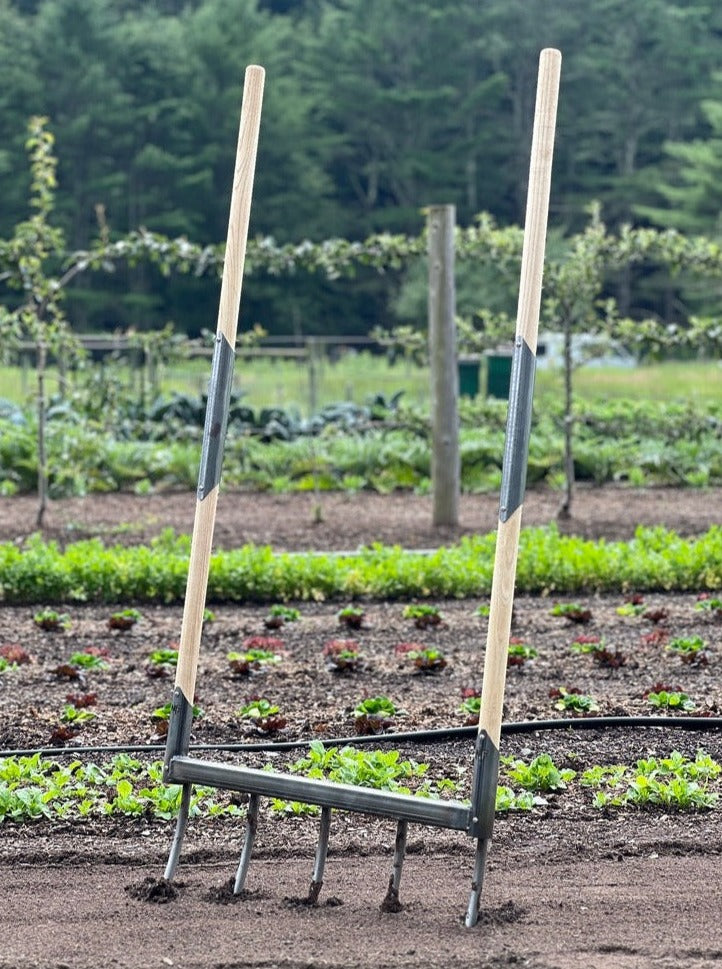
Image from neversinktools.com.
Frequently Asked Questions
Many gardeners have questions about using a broadfork and its benefits. Here are some of the most common inquiries, along with clear and concise answers to help you make the most of this valuable tool.
Is a broadfork necessary for all gardens?
While a broadfork is incredibly beneficial for gardens with compacted or clay soils, it may not be necessary for every garden. If your soil is already loose and well-drained, you might not need a broadfork. However, it can still be a useful tool for maintaining soil health and promoting root growth.
For gardeners who practice no-till or regenerative gardening, a broadfork is an essential tool that aligns with these methods. It allows you to aerate the soil without disturbing its natural structure, which is key to maintaining a healthy garden ecosystem.
How often should I use a broadfork in my garden?
The frequency of using a broadfork depends on your soil’s condition and your gardening goals. For most gardens, aerating the soil once or twice a year is sufficient. Ideally, you should use a broadfork in early spring or late fall when the soil is moist but not too wet.
If your soil is particularly compacted, you may need to use the broadfork more frequently to gradually improve its structure. Regular use will lead to healthier soil over time, reducing the need for frequent aeration in the future.
Can children use broadforks safely?
Yes, children can use broadforks safely with proper supervision and guidance. It’s important to choose a broadfork that is appropriately sized for the child and to teach them the correct technique for using it. Encourage them to wear sturdy shoes and gloves for added safety.
What is the average lifespan of a broadfork?
As with most tools, the lifespan of a broadfork depends on its quality and how well it is maintained. A well-made broadfork can last for many years, even decades, if cared for properly. Regular cleaning, sharpening of the tines, and proper storage will help extend its lifespan.
Investing in a high-quality broadfork from a reputable brand can also ensure durability and long-term performance. Look for models with strong, rust-resistant materials and ergonomic designs for ease of use.
Are there any alternatives to a broadfork?
While a broadfork is a highly effective tool for soil aeration, there are alternatives if you don’t have access to one and don’t wish to purchase one. A garden fork can be used to aerate the soil, though it may not reach as deeply as a broadfork. Hand tools like trowels and hoes can also help with surface aeration and soil preparation.
However, these alternatives may require more effort and may not provide the same level of soil improvement as a broadfork. For gardeners serious about maintaining healthy soil, investing in a broadfork is a worthwhile decision.
- Garden forks can be used as an alternative for shallow aeration.
- Hand tools like trowels and hoes can assist in surface soil preparation.
- Consider renting a broadfork if purchasing one is not feasible.
In conclusion, a broadfork is an invaluable tool for gardeners looking to improve their soil and grow healthy vegetables. By understanding its benefits and proper usage, you can create a thriving garden that produces bountiful harvests year after year!
Featured Image from www.youtube.com.

Related Posts
-
 How to Grow An Apartment Container Garden In 5 Easy Steps
- How Good Is Your Soil? Take the Soil Test To Find Out!
- [Video] Unique & Tasty Boundary Plants for Your Garden
- The Perfect Soil Recipe for Raised Garden Boxes
- 6 Things to Know About Wicking Garden Beds
- One Amazingly Simple Way to Have a Weed-Free Garden


