Best Spinach Preservation Methods: Canning vs Freezing Comparison

What’s the best way to preserve spinach for long-term use? Here’s a detailed comparison of two of the best spinach preservation methods: canning versus freezing.
Key Takeaways:
- Freezing spinach retains most of its nutrients and is a relatively simple process.
- Pressure canning is essential for spinach to prevent bacterial growth and ensure long-term storage.
- Blanching spinach before freezing or canning helps preserve its color and texture.
- Both freezing and canning have their advantages, depending on your storage space and equipment.
- Choosing the right method depends on your personal preferences, available equipment, and storage needs.
Best Spinach Preservation Methods: Canning vs Freezing Comparison
Why Preserve Spinach?
Spinach is a nutrient-rich vegetable, but it has a short shelf life. Preserving spinach ensures you can enjoy its benefits year-round without losing its nutritional value. Besides that, having preserved spinach on hand makes meal preparation quicker and more convenient.

Image from juliasalbum.com.
Optimal Freshness and Nutritional Value
- Spinach is packed with vitamins A, C, and K, as well as iron and calcium.
- Preserving spinach helps retain these essential nutrients.
- Proper preservation methods prevent spoilage and maintain the vegetable’s quality.
When you preserve spinach correctly, you lock in its nutritional benefits, making it a healthy addition to your diet even months after harvesting. Most importantly, proper preservation methods prevent spoilage and maintain the vegetable’s quality.
Long-term Storage
Preserving spinach allows you to store it for extended periods, reducing waste and ensuring you always have a healthy option available. Whether you choose canning or freezing, both methods provide long-term storage solutions that keep spinach fresh and safe to eat.
Convenience and Availability
Having preserved spinach readily available in your pantry or freezer means you can quickly add it to your meals without worrying about spoilage. This convenience is particularly beneficial during the off-season when fresh spinach may not be readily available or is more expensive. For more tips, check out these top 10 methods for preserving your garden bounty.
Canning Spinach
Supplies Needed for Canning
To can spinach, you’ll need a few essential supplies. These include:
- Pressure canner
- Canning jars (mason jars)
- Canning lids and bands
- Large pot for blanching
- Canning salt (optional)
- Tongs and jar lifter (here’s a handy canning essentials kit that has all the necessary utensils included)
Having the right equipment is crucial to ensure a safe and effective canning process. Make sure your canning jars are free of cracks and chips, and always use new lids to ensure a proper seal.
Step-by-Step Process for Canning
Canning spinach might seem daunting, but by following these steps, you’ll achieve great results:
- Wash the spinach thoroughly to remove any dirt or debris.
- Blanch the spinach in boiling water for about 2 minutes, then transfer it to an ice bath to stop the cooking process.
- Pack the blanched spinach into sterilized canning jars, leaving about 1 inch of headspace at the top.
- Add canning salt if desired (1/2 teaspoon per quart-sized jar).
- Pour boiling water over the spinach, maintaining the 1-inch headspace.
- Remove air bubbles by running a non-metallic spatula around the inside of the jar.
- Wipe the jar rims with a clean, damp cloth and place the lids on the jars.
- Screw the bands on until fingertip-tight.
- Place the jars in the pressure canner, following the manufacturer’s instructions for processing times and pressure levels.
By following this procedure, you’ll have successfully canned spinach at home using a pressure canner! Store the jars in a cool, dark place and enjoy your preserved spinach throughout the year.

Image from www.youtube.com.
Advantages of Canning Spinach
Canning spinach offers several benefits:
- Long shelf life: Canned spinach can last for up to a year when stored properly.
- Convenience: Ready-to-use canned spinach saves time in meal preparation.
- Preservation of nutrients: Canning retains most of the spinach’s nutritional value.
Besides these advantages, canning also allows you to control the ingredients, ensuring no preservatives or additives are included. This makes home-canned spinach a healthier option compared to store-bought varieties.
Common Challenges and How to Overcome Them
Canning spinach can come with its own set of challenges. Here are some common issues and how to address them:
- Discoloration: Spinach may discolor during the canning process. To minimize this, use the proper processing time and store your jars in a cool, dark place.
- Seal failure: Ensure jar rims are clean and free of debris before placing the lids. Always use new lids to ensure a proper seal.
- Overprocessing: Follow the recommended processing times and pressure levels to prevent overcooking the spinach.
By addressing these challenges, you can improve your canning results and enjoy delicious, preserved spinach all year round. For more tips on preserving your garden produce, check out these top 10 methods for preserving your garden bounty.
Freezing Spinach
Freezing spinach is a great way to preserve its nutrients and flavor without the need for extensive equipment. It’s a relatively simple process that can be done quickly, making it a popular choice for many home cooks.
Supplies Needed for Freezing
To freeze spinach, you’ll need the following supplies:
- Fresh spinach
- Large pot for blanching
- Ice water bath
- Freezer bags or airtight containers
- Paper towels or a salad spinner
Having these supplies ready will streamline the freezing process and ensure your spinach is well-preserved.

Image from www.theblurrylime.com.
Step-by-Step Process for Freezing
Follow these steps to freeze spinach effectively:
- Wash the spinach thoroughly to remove any dirt or debris.
- Blanch the spinach in boiling water for about 2 minutes. Blanching helps preserve the color and texture.
- Immediately transfer the blanched spinach to an ice water bath to stop the cooking process.
- Drain the spinach and dry it using paper towels or a salad spinner.
- Pack the spinach into freezer bags or airtight containers, removing as much air as possible.
- Label the bags or containers with the date and contents.
- Place the spinach in the freezer, where it can be stored for up to a year.
By following these steps, you can ensure that your frozen spinach retains its quality and nutritional value.
Advantages of Freezing Spinach
Freezing spinach offers several benefits:
- Retains most of the nutrients: Freezing spinach preserves its vitamins and minerals.
- Convenience: Frozen spinach is easy to use in recipes, saving time in meal preparation.
- Long shelf life: Frozen spinach can last up to a year, reducing waste and ensuring you always have a healthy option available.
Additionally, freezing spinach allows you to preserve large quantities quickly, making it an efficient method for those with limited time.
Common Challenges and How to Overcome Them
Freezing spinach can come with its own set of challenges. Here are some common issues and how to address them: Freezing spinach can sometimes lead to loss of texture and flavor, but following proper techniques can help maintain its quality.
- Freezer burn: To prevent freezer burn, ensure that you remove as much air as possible from the freezer bags or containers.
- Loss of texture: Blanching the spinach before freezing helps maintain its texture.
- Clumping: To avoid clumping, freeze the spinach in a single layer on a baking sheet before transferring it to freezer bags or containers.
By addressing these challenges, you can improve your freezing results and enjoy high-quality frozen spinach. For more information, check out this essential guide to freezing garden produce.
Detailed Comparison: Canning vs Freezing
When deciding between canning and freezing spinach, it’s essential to consider several factors, including nutritional value retention, texture and flavor differences, storage duration, and the time and effort required.
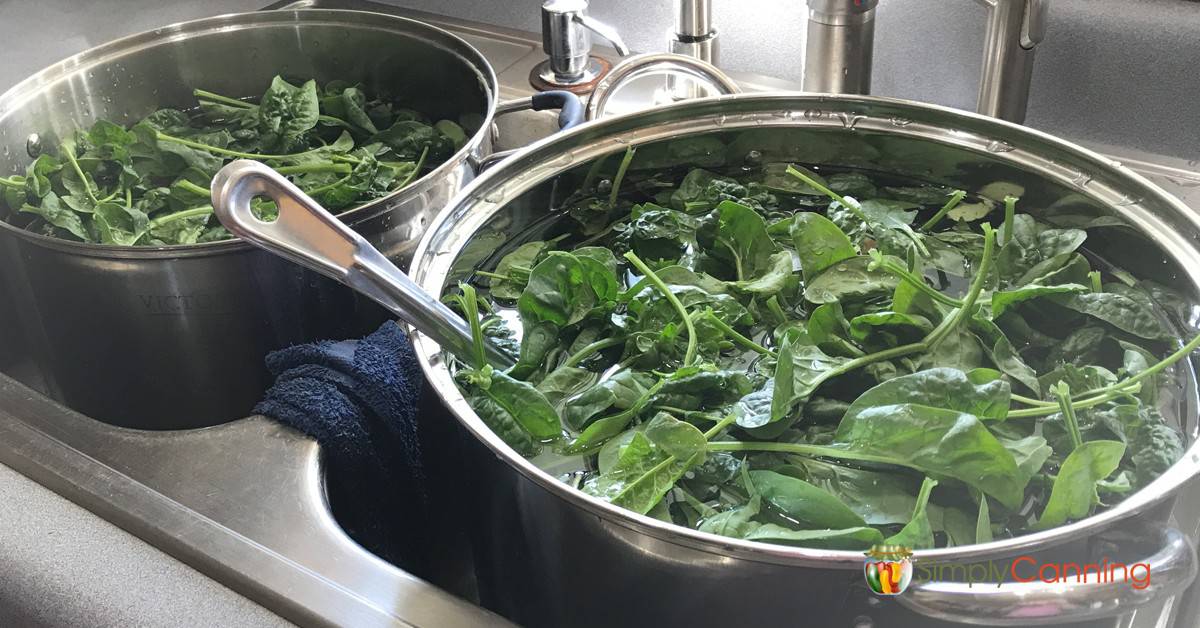
Image from www.simplycanning.com.
Nutritional Value Retention
Both canning and freezing help preserve the nutritional value of spinach, but there are some differences:
- Canning: While canning retains most of the nutrients, some vitamins, particularly vitamin C, may be lost during the heating process.
- Freezing: Freezing spinach retains most of its vitamins and minerals, making it a slightly better option for nutrient preservation.
Texture and Flavor Differences
The preservation method you choose can affect the texture and flavor of spinach:
- Canning: Canned spinach tends to be softer and may have a slightly altered flavor due to the canning process.
- Freezing: Frozen spinach maintains a more natural texture and flavor, especially when blanched before freezing.
Storage Duration and Conditions
Consider how long you need to store the spinach and the available storage conditions:
- Canning: Canned spinach can be stored for up to a year in a cool, dark place.
- Freezing: Frozen spinach also lasts up to a year but requires freezer space.
Time and Effort Required
Evaluate the time and effort needed for each preservation method:
- Canning: Canning is more time-consuming and requires specific equipment, such as a pressure canner.
- Freezing: Freezing is quicker and requires less specialized equipment, making it a more accessible option for many.
Best Use Cases for Each Method
Both methods have their ideal use cases.
- Canning: Best for those who have the necessary equipment and want to store spinach without relying on freezer space.
- Freezing: Ideal for those who need a quick and easy preservation method and have ample freezer space.
Choosing the Right Method for You
When deciding between canning and freezing spinach, consider your personal preferences, lifestyle, and available resources. Ask yourself the following questions:
- Do you have the necessary equipment for canning?
- Do you have enough freezer space for frozen spinach?
- How much time do you have to dedicate to the preservation process?
By evaluating these factors, you can choose the method that best suits your needs and ensures you can enjoy preserved spinach year-round. For more information, check out this guide on how to store and preserve spinach.
Whether you opt for canning or freezing, both methods offer excellent ways to preserve spinach and make the most of this nutritious vegetable.
Personal Preferences and Lifestyle
Your lifestyle and preferences play a significant role in choosing the right preservation method. If you prefer a quick and straightforward process, freezing might be the best option for you. On the other hand, if you enjoy the art of canning and have the time to dedicate to it, canning can be a rewarding experience.
Available Equipment
The equipment you have on hand will also influence your decision. Canning requires a pressure canner, canning jars, and other specialized tools. If you already own these items or are willing to invest in them, canning is a viable option. Freezing, however, requires minimal equipment, making it more accessible for many people.
Space and Storage Considerations
Consider the storage space available in your home. Canned spinach can be stored in a pantry or cupboard, while frozen spinach requires freezer space. If you have limited freezer space, canning might be the better choice. Conversely, if your pantry is full but you have extra freezer space, freezing could be the way to go.

Image from thefreerangelife.com.
Final Thoughts
Both canning and freezing are excellent spinach preservation methods. Each method has its advantages and challenges, but ultimately, the best method for you depends on your personal preferences, available equipment, and storage space. By understanding the differences between these preservation methods, you can make an informed decision and enjoy your preserved spinach all year long.
Get Started with Confidence
Now that you have a comprehensive understanding of both canning and freezing spinach, it’s time to get started! Gather your supplies, follow the steps outlined in this guide, and soon you’ll have a stockpile of preserved spinach ready to use in your favorite recipes. Happy preserving!
Frequently Asked Questions:
How long does canned spinach last?
Canned spinach can last up to a year when stored in a cool, dark place. Ensure that the jars are properly sealed and free from any cracks or damage to maintain the quality and safety of the preserved spinach. For more tips on preserving your garden produce, check out these top 10 methods.
Can I freeze spinach without blanching?
While you can freeze spinach without blanching, it’s not recommended. Blanching helps preserve the color, texture, and nutritional value of the spinach. If you choose to skip blanching, the spinach may become mushy and lose some of its nutrients.
Is it safe to use regular jars for canning spinach?
No, it’s not safe to use regular jars for canning spinach. Canning jars, also known as mason jars, are specifically designed to withstand the high temperatures and pressures involved in the canning process. Using regular jars can result in breakage and contamination.
Does freezing preserve the nutrients in spinach?
Yes, freezing spinach preserves most of the nutrients. Blanching the spinach before freezing helps lock in the vitamins and minerals, ensuring that the spinach remains a healthy addition to your diet even after months of storage.
Whether you choose to can or freeze your spinach, both methods offer excellent ways to preserve this nutritious vegetable. By following the guidelines and tips provided in this article, you’ll be well on your way to enjoying your own home-preserved spinach whenever you need it.
Featured Image from www.therusticelk.com.

Related Posts
-
 7 Best Ways to Preserve Vegetables Without a Refrigerator
- Best Homemade Salsa Recipe & Canning Guide
- What To Do With An Excessive Garden Harvest
- Sweet & Savory Mediterranean Baked Sweet Potatoes Recipe
- [Video] 6 Tips for Extending Your Summer Vegetable Harvest
- [Video] Enjoy Year-Round Salads From Your Garden


