How Do You Get Rid of Stink Bugs? A Sustainable Control Guide

Stink bugs attacking your garden? Learn how to remove stink bugs without crushing them, seal entry points, & protect crops with sustainable methods.
The best stink bug control is not simply a stronger spray. When readers ask us, “How do you get rid of stink bugs?” we typically recommend four steps: identify the insect, remove it without crushing it, seal household entry points, and monitor vulnerable plants. In many gardens, hand-picking, egg removal, and properly installed barriers can limit damage while protecting pollinators and beneficial insects.
In This Article:
- How Do You Get Rid of Stink Bugs? Follow This Control Plan
- Identify the Stink Bug Before You Remove It
- How to Get Rid of Stink Bugs in the House Without Crushing Them
- What Attracts Stink Bugs—and What Will Keep Them Out?
- How to Get Rid of Stink Bugs in the Garden Naturally
- Protect Tomatoes, Peppers, Beans, Corn, Squash, and Fruit Trees
- Which Stink Bug Remedies Work—and Which Are Mostly Hype?
- Stink Bug Safety and Odor Cleanup
- FAQ
- Build a More Resilient Garden
How Do You Get Rid of Stink Bugs? Follow This Control Plan
When another stink bug appears shortly after the first one was removed, killing the visible insect will not address the source. We recommend identifying it, capturing it carefully, closing potential entry points, and checking for further activity.
Indoor control depends mainly on capture and structural exclusion. Garden control calls for crop inspection, hand removal, physical barriers, and action based on confirmed feeding damage.
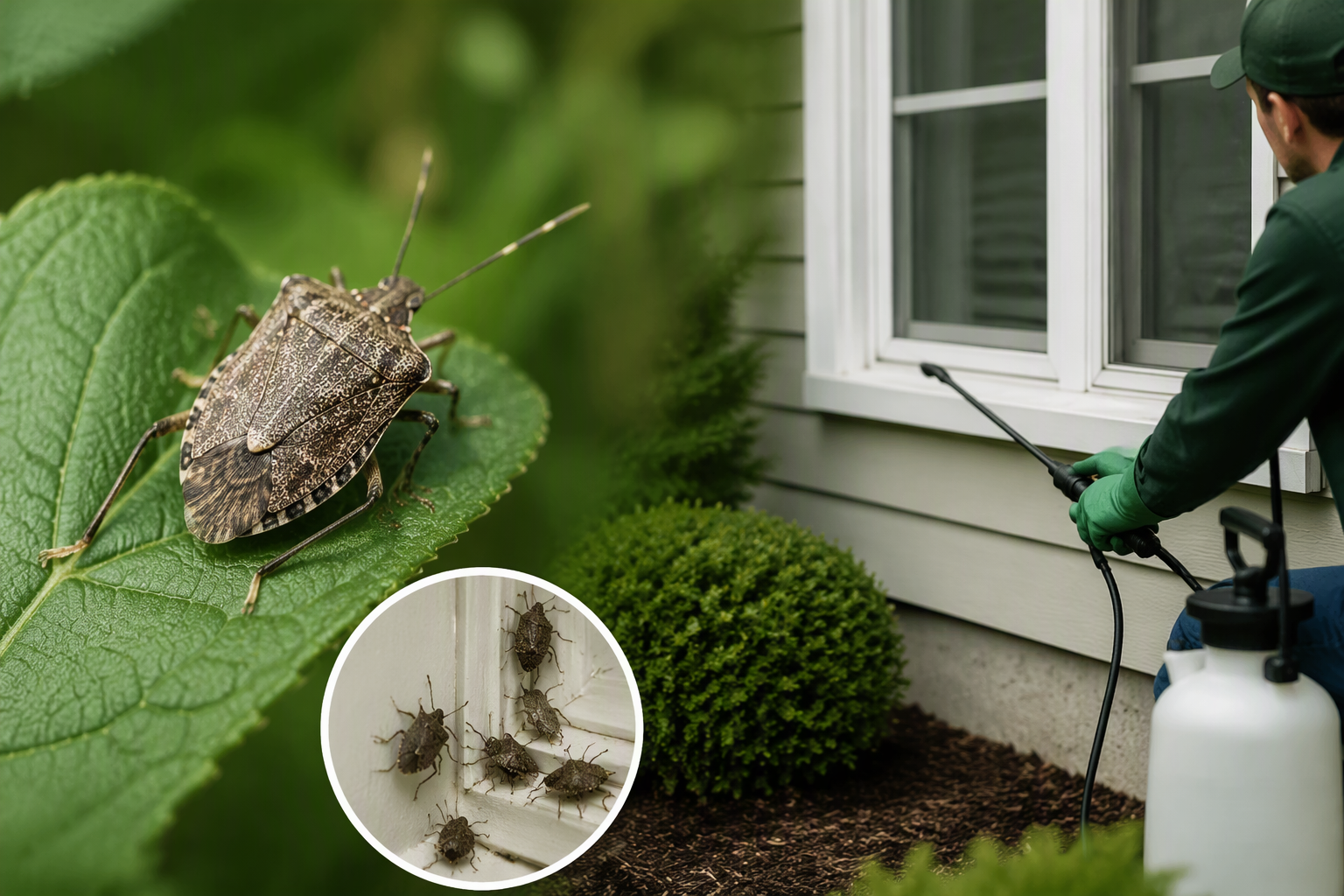
Identify, remove, exclude, and monitor
Use this sequence:
- Identify: Determine whether the insect is a plant-feeding pest or a beneficial predator.
- Remove: Capture indoor bugs with a cup or vacuum. Hand-pick confirmed garden pests and their eggs.
- Exclude: Seal household gaps or protect susceptible crops with fine netting.
- Monitor: Recheck entry points, leaf undersides, developing fruit, and garden edges.
This approach reduces unnecessary pesticide use around edible crops, children, pets, pollinators, and natural enemies.
Why removing visible bugs may not be enough
Stink bugs seek stable, sheltered places as temperatures fall. Some enter gaps around windows, doors, siding, vents, and utility lines before spending the colder months in protected cavities. Indoor warmth can later draw them out.
In gardens, adults can fly onto plants, while overlooked eggs may hatch. No scented repellent or one-time treatment can compensate for open structural gaps or unprotected crops.
Identify the Stink Bug Before You Remove It
Stink bugs generally have broad, shield-shaped bodies and piercing-sucking mouthparts. Their barrel-shaped eggs often occur in clusters under leaves, and nymphs change in color and markings as they mature.
Important Note: Not every shield-shaped insect is a crop pest. Some predatory stink bugs feed on caterpillars and other unwanted insects.
Brown marmorated stink bugs and other plant feeders
Brown marmorated stink bugs typically have mottled brown bodies, pale bands on the antennae, and alternating light and dark markings along the abdominal edge. Plant-feeding species may be seen with their mouthparts inserted into fruit, pods, stems, or seeds.
Species vary by region. When identification is uncertain, we recommend comparing clear photographs with regional Cooperative Extension resources.
Beneficial predatory stink bugs
An insect feeding on a caterpillar or another insect may be helping the garden. Before removing it, observe what its mouthparts are attached to.
Preserving predators is one reason we discourage routine broad-spectrum spraying. Such treatments may harm useful insects without preventing more stink bugs from arriving!
Eggs, nymphs, and crop injury
Inspect leaf undersides for egg clusters and groups of young nymphs. Confirm the species before destroying eggs because beneficial stink bugs also reproduce on plants.
Possible feeding damage includes:
- Pale or discolored spots
- Dimpled or malformed fruit
- Corky tissue beneath fruit skin
- Damaged kernels or seeds
- Poorly developed fruit or seeds
What About Stink Bugs in the House?
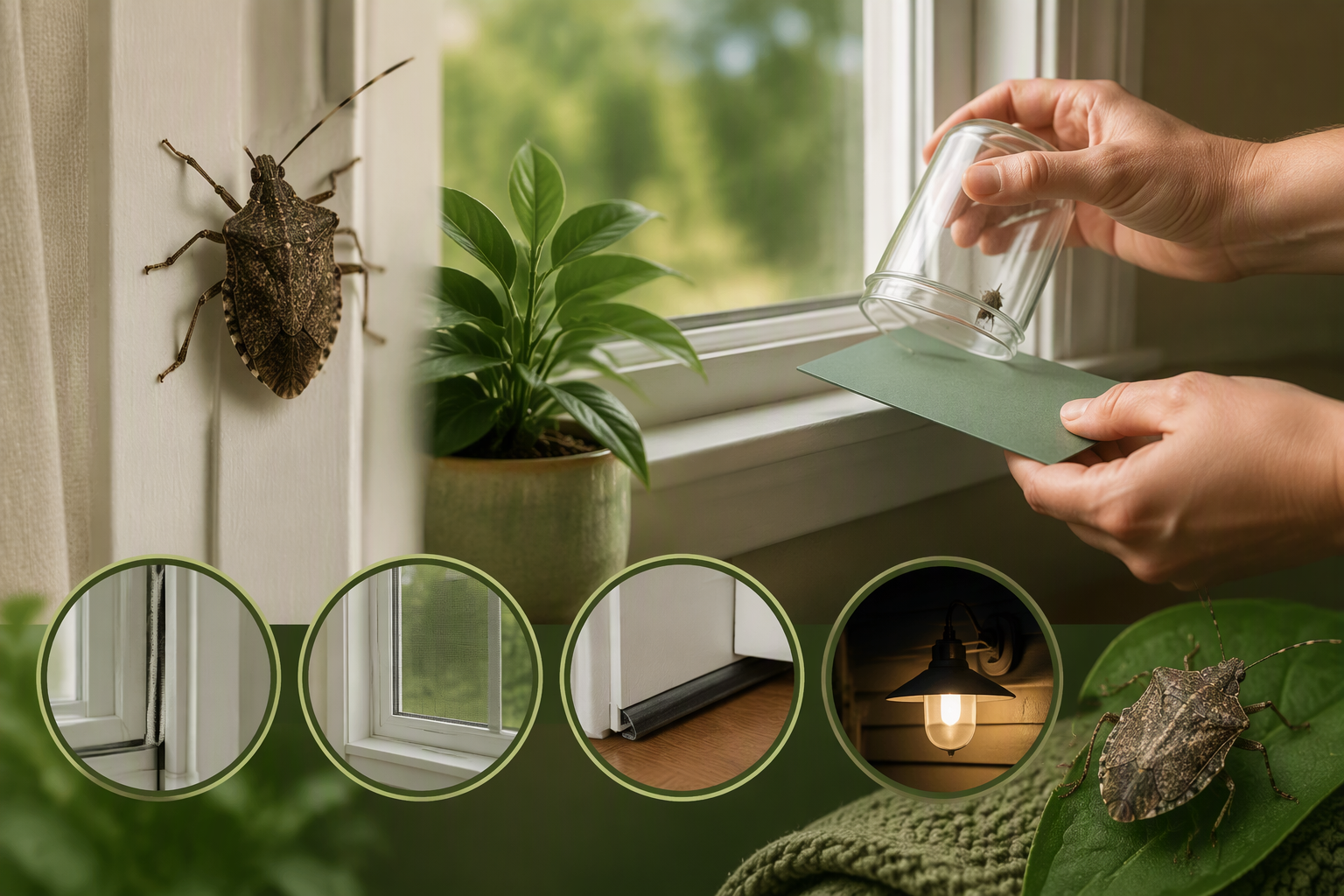
Sometimes, stink bugs may find their way indoors, where they can create odors or feed on indoor plants. Capture indoor stink bugs rather than crushing them, which can release their defensive odor. A cup and stiff card, a lidded jar, or a vacuum can remove exposed insects without applying an indoor pesticide.
Foggers and surface sprays do not repair the openings through which stink bugs entered.
Cup, card, and soapy-water removal
Place a cup or jar over the insect and slide stiff paper underneath. Transfer the bug to a covered container containing water and a small amount of dish soap.
Label the container, keep it away from children and pets, and never use a vessel that could be mistaken for a drinking container.
Vacuuming without spreading the smell
Use gentle suction to reduce the chance of crushing the insect in the hose. A disposable vacuum bag or a vacuum reserved for pest cleanup can make disposal easier.
Empty captured bugs promptly into soapy water or a sealed outdoor bag. Clean reusable components according to the manufacturer’s instructions and replace odor-contaminated disposable bags.
Should stink bugs be flushed?
Flushing is unnecessary and uses more water than other disposal methods. We prefer a covered soapy-water container or a sealed outdoor disposal bag.
What Attracts Stink Bugs—and What Will Keep Them Out?
Stink bugs look for protected spaces when temperatures fall. Sun-warmed walls and exterior or indoor lights can draw them toward a building, but physical exclusion is the most dependable preventive measure.
Why they gather near windows and doors
Windows and doors provide light as well as possible entry gaps. Once indoors, stink bugs may move toward bright windows while trying to get outside.
Their presence does not necessarily mean they are reproducing in the home. They likely entered earlier and later emerged from a sheltered cavity.
An exterior exclusion checklist
Inspect:
- Window screens, frames, and trim
- Door sweeps and weatherstripping
- Siding, fascia, soffits, and rooflines
- Attic, foundation, and crawl-space vents
- Chimney flashing and screened openings
- Gaps around pipes, cables, and utilities
Use durable caulk on stationary gaps, weatherstripping around moving joints, and suitable mesh over vents. Replace damaged screens, but never block combustion vents or openings needed for safe ventilation.
Make repairs before seasonal activity when possible. Reducing unnecessary exterior lighting may help, but it cannot replace sealing. Bugs already inside walls or attics may continue to emerge after repairs.
How to Get Rid of Stink Bugs in the Garden Naturally
A natural control plan combines identification, regular scouting, egg removal, hand-picking, barriers, and damage tracking. Inspect leaf undersides, stems, developing fruit, and garden edges. Cooler mornings can make slow-moving insects easier to collect.
Seeing one stink bug without crop injury does not always justify treatment. A measured approach also applies to other garden pests, including these organic methods for getting rid of pill bugs.
Remove adults, nymphs, and confirmed egg clusters
Hold a container of soapy water beneath the insect, then tap or pick it into the liquid. After confirming the species, scrape egg clusters into the container or clip the affected section of leaf. Stink bug eggs typically appear in clusters and may be white, tan, or even pink.
Remove rotting produce and manage weedy host plants where practical. Avoid spraying open flowers or the entire plant to address a small, localized problem.

Use netting without blocking pollination
Install fine insect netting before stink bugs reach the crop, and secure every edge. Even a small opening may let mobile adults underneath.
Open or remove barriers when insect-pollinated plants flower unless the crop will be hand-pollinated. Closed netting may protect squash foliage, for example, but it can also keep bees away from blossoms.
Protect natural enemies
A varied planting of regionally appropriate flowers can support spiders, predatory insects, parasitoids, and other natural enemies. Avoid treating a mixed garden simply because an unfamiliar insect appears.
This principle also guides our advice on controlling Japanese beetles in an organic garden.
Protect Tomatoes, Peppers, Beans, Corn, Squash, and Fruit Trees
Stink bug feeding can damage developing fruit, seeds, pods, and kernels. Focus inspections on the plant parts forming the harvest.
Tomatoes and peppers
Check fruit shoulders, stems, nearby leaves, and clustered fruit. Look for insects, eggs, pale spots, dimpling, or corky tissue beneath the skin.
Hand removal is practical in small gardens. Fine netting may help where plant size and pollination needs make coverage manageable.
Beans, corn, and squash
Inspect bean pods and corn ears while seeds and kernels are developing, especially near bed edges. Cover squash before flowering, then provide pollinator access unless hand-pollinating.
Fruit trees
Monitor developing fruit and perimeter trees, where incoming insects may first appear. For small trees, fruit bags or securely fitted netting may offer targeted protection. Manageable pruning can also make inspection easier.
Which Stink Bug Remedies Work—and Which Are Mostly Hype?
We group common remedies by what they can realistically accomplish:
- Dependable for a specific job: Exclusion, capture, scouting, hand removal, and correctly installed netting
- Situational: Insecticidal soap, neem products, and kaolin clay
- Poor substitutes for exclusion: Essential oils, garlic, mint, and dryer sheets
A strong smell does not prove that a remedy will prevent reinvasion.
Reliable methods
Exclusion offers the strongest household prevention. Cups, vacuums, and soapy water remove insects already indoors. In gardens, scouting, hand-picking, and secured netting directly address pest access and activity.
Limited treatment options
Insecticidal soap generally requires direct contact and may affect beneficial insects. Neem is a label-dependent option rather than a guaranteed answer for adult stink bugs. Kaolin clay may discourage feeding, but it leaves residue and requires appropriate coverage.
Follow the label’s crop listing, directions, harvest restrictions, pollinator precautions, and local regulations. A product should not be used on an edible crop unless the label specifically permits it.
Weak substitutes
Garlic, mint, essential oils, and dryer sheets may have limited or short-lived effects. They cannot compensate for damaged screens, structural gaps, or crops left accessible to incoming insects.

Stink Bug Safety and Odor Cleanup
Stink bugs are primarily nuisance and crop pests. Their defensive secretions can be unpleasant and may irritate sensitive skin, so avoid crushing them or handling them unnecessarily.
Cleaning odor and residue
Ventilate the room, then:
- Wash exposed skin with soap and water.
- Blot washable fabric and pretreat it with mild detergent.
- Test wall-cleaning products in an inconspicuous area.
- Clean vacuum parts according to the manufacturer’s directions.
- Replace contaminated disposable vacuum bags.
Avoid aggressive rubbing, which may spread residue through fabric.
When to seek expert help
Ask a regional Extension office or pest professional for identification when the species is unclear. Structural assistance may be useful when insects repeatedly enter through inaccessible rooflines, attics, siding, or utility penetrations.
For gardens, consider additional intervention when confirmed feeding continues to cause serious damage despite physical controls.
FAQ
What will keep stink bugs out?
Repair screens, install door sweeps, replace worn weatherstripping, seal stationary gaps, and cover vents with suitable mesh. Reducing unnecessary lighting can support these measures, but sealing entry points remains the priority. For gardens, covering smaller plants with fine insect netting works well when pollinators don’t require access.
Are stink bugs harmful to pets?
Stink bugs are best kept away from pets because mouthing an insect may cause irritation or digestive discomfort. Keep captured bugs and soapy-water containers inaccessible, and contact a veterinarian if concerning symptoms develop.
How long can stink bugs survive indoors?
Survival depends on the species, life stage, temperature, humidity, and access to shelter. Rather than waiting for them to disappear, we recommend removing visible insects and sealing the openings behind recurring activity.
What are the different types of stink bugs?
The group includes invasive and native plant feeders as well as beneficial predators. Because their appearances can overlap, use markings, feeding behavior, and regional Extension photographs to support identification.
What kills stink bugs without causing an odor?
Capture the insect with a cup and card or vacuum it gently, then transfer it to a covered container of soapy water. This avoids crushing the bug and reduces the chance of releasing its odor indoors.
Build a More Resilient Garden
Put the identify-remove-exclude-monitor plan to work before reaching for a spray. For more practical, pollinator-conscious pest control ideas, explore our archives.


