Maximize Your Balcony Garden: Saving Space with Compact Plant Varieties

Make the most of your balcony garden harvest with these space-saving tips & compact plant varieties…
Key Takeaways: Compact Plants That Thrive on Any Balcony
- Dwarf and patio varieties are specifically bred for container life and outperform standard plants in small spaces — making them the smartest starting point for any balcony garden.
- Your balcony’s sunlight exposure is the single most important factor in deciding what you can grow — most vegetables need at least 6–8 hours of direct sun daily.
- Vertical gardening with wall-mounted planters, trellises, and hanging baskets can dramatically multiply your growing space without taking up a single extra square foot of floor space.
- Container depth matters more than most beginners realize — plant the wrong vegetable in a shallow pot and you’ll get rootbound plants and disappointing harvests.
- Keep reading to discover which compact varieties produce the biggest yields in the smallest pots — including one fruit that thrives in a hanging basket and practically takes care of itself.
You don’t need a backyard to grow your own food — a balcony, the right plants, and a little know-how are all it takes!
Balcony gardening has exploded in popularity among apartment dwellers and urban homeowners alike. The barrier to entry is low, the rewards are high, and modern plant breeding has made it easier than ever. Varieties that once needed sprawling garden beds have been reimagined for pots, rails, and vertical walls. Whether your balcony gets full sun all afternoon or just a few hours of morning light, there’s a productive, compact plant built for exactly that condition.
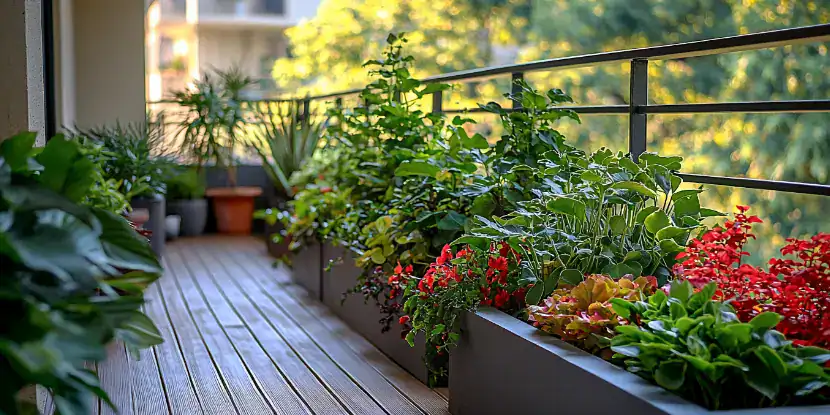
Image from blog.anawaltlumber.com.
The difference between a thriving balcony garden and a disappointing one almost always comes down to knowledge before you plant — not effort after.
Your Balcony Can Be a Garden — Here’s What You Need to Know First
Before you buy a single seed or pot, two things will define your entire balcony garden: how much sunlight your space gets and whether you’re using plants actually designed for container growing. Get these two things right, and everything else becomes manageable.
How Much Sunlight Does Your Balcony Actually Get?
Spend one full day observing your balcony before you plant anything. Track when direct sun hits your space and when it disappears. Most vegetables and fruiting plants — tomatoes, peppers, strawberries — need a minimum of 6 to 8 hours of direct sunlight daily to produce well. If your balcony only gets 3 to 4 hours, you’re not out of options, but your plant list changes significantly.
Shaded or partially shaded balconies are ideal territory for leafy greens like lettuce, Swiss chard, and spinach, as well as herbs like mint, parsley, and cilantro. These plants actively prefer cooler, lower-light conditions and will bolt quickly in full afternoon sun. According to Katie Rotella, spokesperson for Ball Horticultural, understanding your sunlight situation before picking out plantings is the single most important step in narrowing down what will actually thrive in your environment.
You can also use reflective surfaces — light-colored walls, mirrors, or metallic containers — to bounce additional light onto plants in shadier corners. It’s a simple trick that makes a real difference in tighter urban spaces! For more tips on maximizing light in small garden spaces, check out this guide.
Why Compact and Dwarf Varieties Outperform Standard Plants in Containers
Standard tomato plants can reach 6 feet tall with root systems that need deep, wide ground soil to support them. Put one in a 10-inch pot on a balcony and it’ll struggle practically from week one. Compact and dwarf varieties are genetically different — they’ve been bred specifically to grow smaller root systems, shorter stems, and concentrated fruiting habits that suit container volumes perfectly.
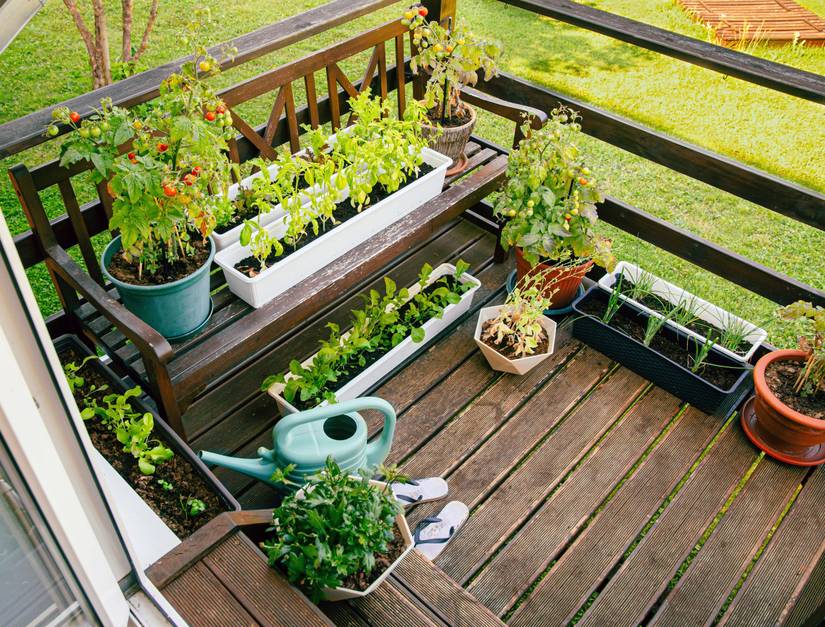
Image from www.backyardboss.net.
The result is a plant that doesn’t spend its energy fighting its environment. It fruits earlier, stays manageable, and doesn’t require constant pruning to stay within bounds. As Ryan McEnany, communications specialist for Bailey Nurseries, notes, many varieties today are grown specifically for containers — meaning the guesswork has already been done for you by plant breeders.
Read the Plant Tag Before You Buy
The plant tag is your most reliable source of truth. Look for words like “patio,” “dwarf,” “bush,” “compact,” or “container” on the label — these signal the plant has been selected or bred for small-space growing. Tags also tell you the mature size, sunlight requirements, and spacing needs, all of which matter enormously when you’re working with limited square footage.
The Best Compact Vegetables for Balcony Containers
Vegetables are where balcony gardening gets genuinely exciting! Harvesting a handful of cherry tomatoes or a crisp lettuce leaf from your own balcony hits differently than anything from a grocery store. Here are some compact varieties that deliver the best results in the smallest footprints.
Patio Tomatoes: Big Harvests in Small Pots
Patio tomato varieties were designed for exactly this situation. Varieties like Tumbling Tom, Tiny Tim, and Patio F1 stay under 18 inches tall, produce abundantly, and thrive in containers as small as 10 to 12 inches in diameter. They’re determinate growers, meaning they reach a set size and then focus all their energy into fruiting — no endless staking or pruning required.
For best results, use a container that’s at least 12 inches deep to give roots enough room to anchor and feed the plant through its fruiting season. These varieties will produce fruit consistently from midsummer through fall if kept in full sun and watered when the top inch of soil dries out.

Image from www.burpee.com.
One underrated trick: place your tomato container against a south- or west-facing wall. The reflected heat accelerates ripening and boosts overall yield, especially in cooler climates or on higher-floor balconies where wind can lower temperatures.
Peppers: Ideal for Compact Container Growth
Peppers are one of the most naturally container-friendly vegetables you can grow! Their root systems are modest, their growth habit is tidy, and both sweet and hot varieties perform well in pots. Compact options worth growing include:
- Lunchbox Peppers — sweet, snack-sized fruits on plants that stay under 2 feet
- Pot-a-Peno — a dwarf jalapeño variety bred specifically for containers
- Redskin Pepper — a compact sweet pepper that produces full-sized fruits
- Chenzo — a mini bell pepper variety with heavy yields in small pots
Peppers love heat, so a sunny balcony is ideal. They also benefit from a slightly smaller pot than you might expect — a 2 to 3-gallon container is often enough for most compact varieties, which keeps them from sitting in overly wet soil between waterings.
Lettuce and Swiss Chard: Fast-Growing Greens for Shallow Pots
Lettuce is arguably the most beginner-friendly balcony crop in existence. It grows fast, needs shallow containers, tolerates partial shade, and can be harvested as cut-and-come-again leaves within 3 to 4 weeks of planting. Swiss chard follows the same logic but adds a striking visual element with stems in red, yellow, and white — making it as ornamental as it is edible.
Quick Reference: Lettuce Varieties for Balcony Containers
Variety Container Depth Needed Sun Requirement Days to Harvest Tom Thumb 6 inches Partial to full sun 45–55 days Little Gem 6–8 inches Partial sun 50–60 days Salad Bowl 6 inches Partial shade 45–50 days Buttercrunch 6–8 inches Partial to full sun 55–65 days
The cut-and-come-again harvesting method is key to getting the most from lettuce on a balcony. Instead of pulling the whole plant, trim leaves from the outside working inward, leaving the central growing point intact. The plant regrows and you can harvest multiple times from the same container throughout the season.
Swiss chard handles heat and cold better than lettuce, making it a more reliable choice if your balcony temperatures swing dramatically. Bright Lights Swiss Chard is a standout variety — it’s compact, colorful, and produces edible leaves for months with minimal care.
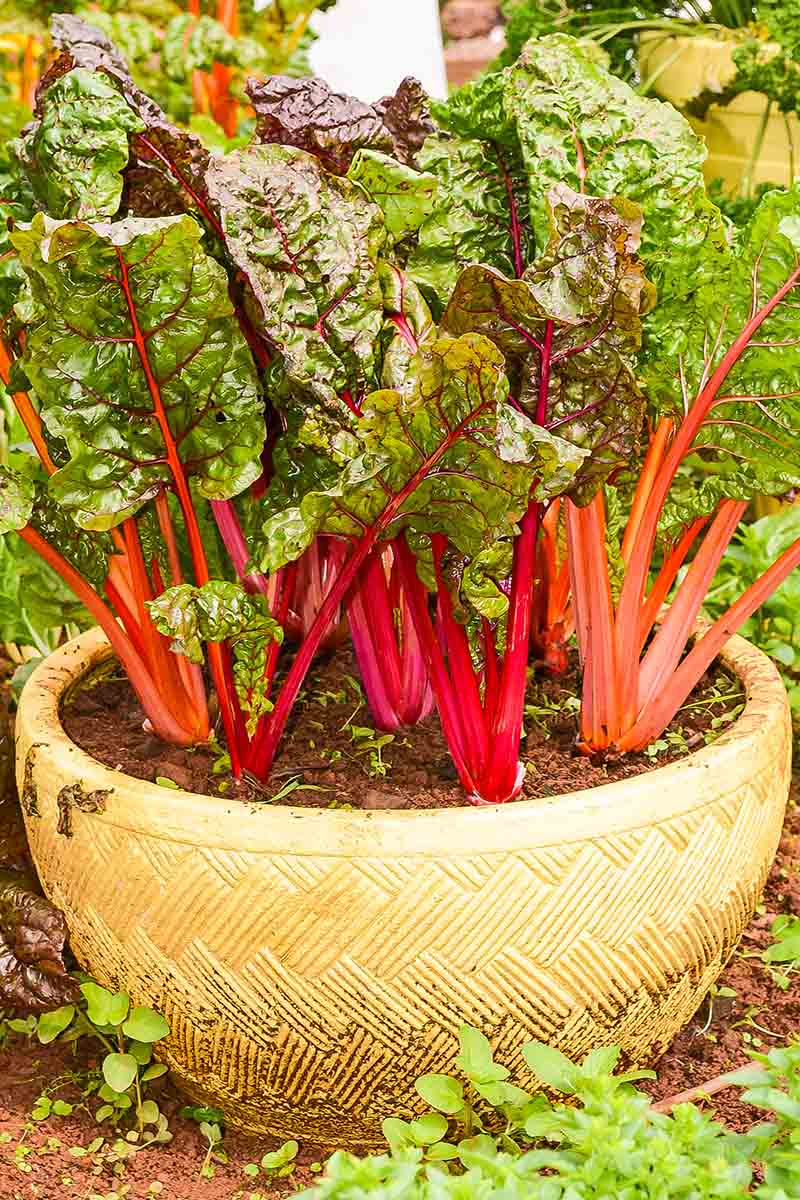
Image from gardenerspath.com.
The Right Pot Depth for Each Vegetable
Pot depth is one of the most overlooked factors in balcony vegetable gardening. A rootbound plant stops producing well, and no amount of watering or fertilizing fixes that once it happens. As Ryan McEnany of Bailey Nurseries specifically advises, making sure your pot is deep enough to prevent rootbound conditions is critical before you plant. Here’s a practical guide:
- Lettuce and herbs: 6 inches minimum
- Peppers and compact tomatoes: 12 inches minimum
- Swiss chard and spinach: 8–10 inches
- Strawberries: 8 inches minimum
- Cucumbers and peas (vertical): 12–14 inches
Herbs and Fruits Worth Growing on a Balcony
Herbs and fruits round out a balcony garden beautifully — they’re productive, compact by nature, and bring sensory richness to your space with fragrance, color, and flavor! A small cluster of herb pots near your door means fresh garnishes are always within arm’s reach, and a few strawberry plants in a hanging basket can become a summer ritual all on their own.
Basil and Thyme: Low-Maintenance and High-Reward
Basil and thyme are the two herbs most worth starting with on any balcony. Basil grows fast, smells incredible, and produces continuously when you harvest correctly — always pinching from the top, never stripping lower leaves first. Thyme is practically indestructible, tolerates drought better than almost any other herb, and thrives in smaller pots where other plants would struggle. Both need full sun and well-draining soil, and neither will demand much of your time once established.
The key to keeping basil productive all season is preventing it from flowering. The moment basil bolts and sets flowers, leaf production slows and the flavor turns bitter. Pinch off any flower buds as soon as they appear — check weekly during midsummer when heat triggers bolting quickly. Pair basil with thyme in a 12-inch window box and you have a high-yield herb garden that takes up almost no space at all!
Strawberries: The Perfect Balcony Fruit
Strawberries are one of the best-kept secrets of balcony gardening. They stay compact, they trail beautifully over the edge of a hanging basket, and everbearing varieties like Albion and Seascape produce fruit from late spring all the way through fall rather than just a single early-summer flush. A hanging basket planted with strawberries gives you both a productive food source and a genuinely attractive display — the trailing stems with white flowers and red fruit are hard to beat visually!
Use an 8-inch deep container at minimum and make sure it drains freely. Strawberries are extremely sensitive to waterlogged roots — sitting in soggy soil even for a day or two can trigger crown rot and kill the plant quickly. Feed them with a potassium-rich liquid fertilizer every two weeks once flowering begins to encourage fruit set, and you’ll be picking fresh strawberries straight off your balcony railing all summer! For more ideas on what to grow, check out these balcony vegetable garden tips.
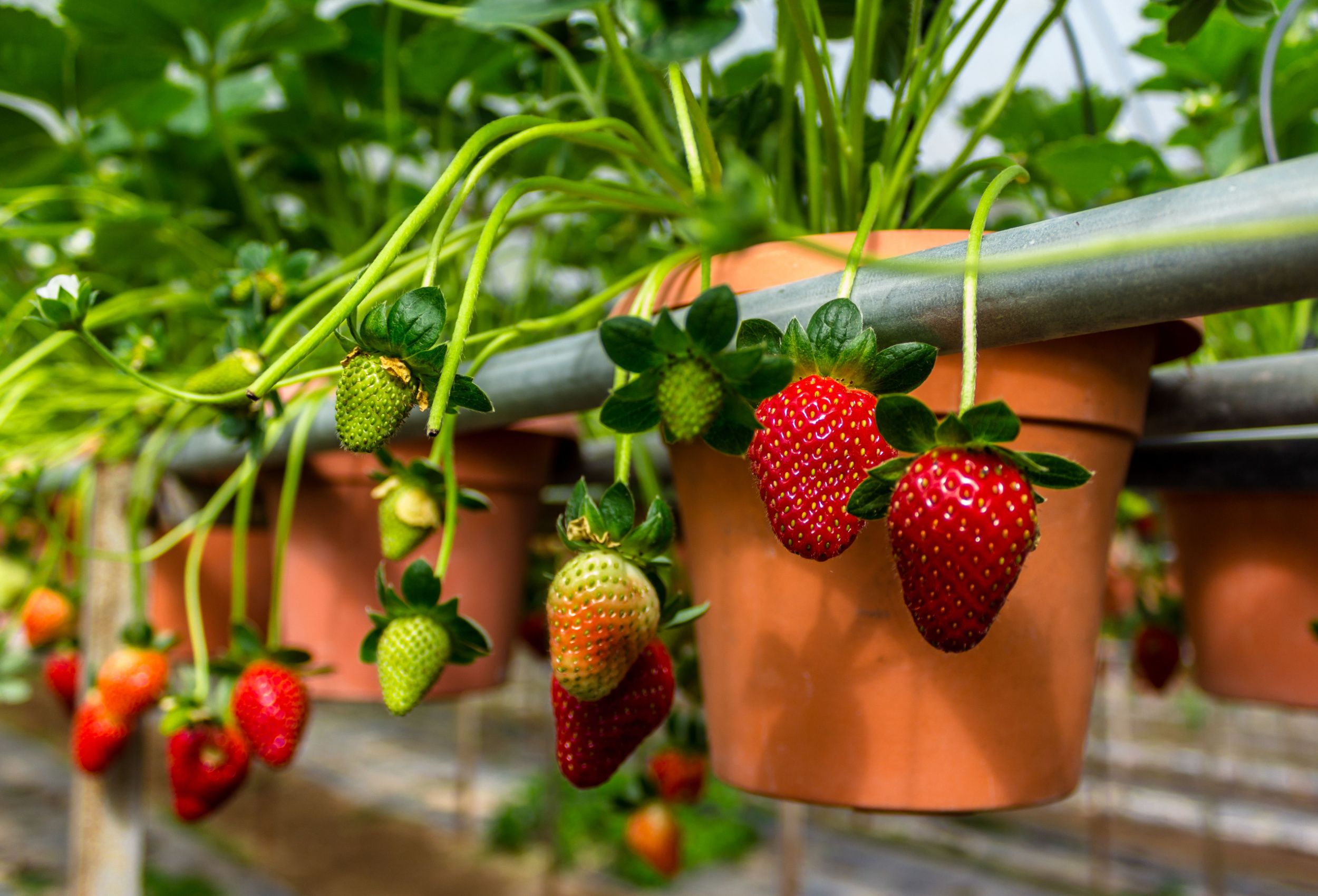
Image from www.backyardboss.net.
Vertical Gardening Makes Every Inch Count
Floor space on a balcony is finite, but vertical space is almost always underused. The moment you start thinking about your walls, railings, and overhead structures as growing surfaces, your effective garden area multiplies dramatically without adding a single extra square foot of floor space!
Vertical gardening isn’t just about aesthetics — it’s a genuinely practical strategy. Growing upward improves air circulation around plants, which reduces the risk of fungal disease. It increases each plant’s access to sunlight by removing lower leaves from shade cast by neighboring pots. And it lets you grow vining crops like cucumbers, peas, and beans that would be completely impractical in ground-level containers without some kind of support structure.
The approach works equally well for edibles and ornamentals. A trellis of climbing beans beside a wall-mounted row of herb pockets creates a layered, lush garden that looks intentional and designed — not improvised. It’s the kind of setup that makes visitors stop and ask how you fit so much into such a small space!
Wall-Mounted Planters and Hanging Baskets
Wall-mounted planters are one of the highest-impact additions you can make to a balcony garden. Systems like the Umbra Trigg Wall-Mounted Planter or modular fabric pocket systems let you grow herbs, strawberries, and trailing flowers across a vertical surface that would otherwise be bare wall. A single 3-foot section of wall fitted with a pocket planter can hold 6 to 9 individual plants — the equivalent of 6 to 9 pots that would otherwise crowd your floor.
Hanging baskets work on a different principle — they suspend growing space from overhead hooks or railing brackets, keeping floor space completely clear beneath them. The Lechuza Balconera Color Self-Watering Railing Planter is a well-regarded option that mounts directly to most standard balcony railings and includes a built-in water reservoir that buffers against the quick-drying tendency of exposed containers. Trailing plants like strawberries, nasturtiums, and cherry tomato varieties like Tumbling Tom were practically made for this type of application.

Image from foodgardening.mequoda.com.
When loading any wall or overhead structure with planters, always check the weight rating of your mounting hardware. Wet soil is significantly heavier than dry — a standard 10-inch hanging basket fully watered can weigh 15 to 20 pounds. Use stainless steel or powder-coated hooks rated for at least 30 to 40 pounds to maintain a safe safety margin.
Trellises for Peas, Beans, and Cucumbers
A trellis transforms a compact balcony container into a vertical growing column that produces many times more food per square foot than a ground-level pot. Bush beans stay self-contained, but climbing varieties like Kentucky Wonder Pole Beans or Sugar Snap Peas will climb 4 to 6 feet of trellis netting and produce continuously when harvested regularly. Compact cucumber varieties like Bush Pickle and Spacemaster climb well and fruit heavily in a 12-inch container with a simple bamboo teepee or wire mesh panel behind them. Place your trellis container against a wall or railing so the structure has something to lean against, and train new growth upward every few days as the season progresses.
Tiered Shelving and Stackable Planters
Tiered plant shelving is one of the most practical investments for a balcony garden. A three-tier metal plant stand like the Outsunny 3-Tier Outdoor Plant Stand lets you stack six to nine containers in the footprint of a single large pot, creating a graduated display that ensures every plant gets reasonable light exposure without shading out its neighbors. Position taller plants at the back or top and low-growing herbs and lettuce at the front and bottom for the most efficient light distribution.
Stackable planters like the Bloem Saturn Stackable Planter work on a similar principle but integrate the growing containers directly into the stacking structure. Each tier holds a separate plant, and the whole unit takes up less than one square foot of floor space. These work exceptionally well for strawberries, herbs, and lettuce — crops that don’t need deep root space but benefit enormously from the airflow and drainage that the tiered structure naturally provides.

Image from www.homedepot.com.
Container Selection and Soil Setup
The container you choose and the soil you fill it with are the foundation of everything that happens in your balcony garden. Get these right, and your plants have every advantage. Get them wrong — wrong material, wrong drainage, wrong soil mix — and no amount of care will compensate. This is where many first-time balcony gardeners lose momentum, and it’s also where a little upfront knowledge makes a significant difference.
Best Lightweight Materials: Plastic, Fiberglass, and Resin
Weight matters on a balcony more than it does in a ground-level garden. Most residential balconies have a load-bearing limit, and a collection of heavy ceramic or terracotta pots filled with dense garden soil can add up faster than you’d expect. Plastic, fiberglass, and resin containers are the practical solution — they’re weather-resistant, retain moisture better than terracotta, come in sizes from 6-inch window boxes to 20-gallon statement planters, and weigh a fraction of their ceramic equivalents. High-quality resin planters like the Crescent Garden TruDrop Self-Watering Planter are virtually indistinguishable from stone or ceramic at a glance, so you don’t have to sacrifice aesthetics for practicality. For more ideas on maximizing your balcony space, check out these gardening tips for balconies.
Drainage Holes Are Non-Negotiable
Every container in your balcony garden needs drainage holes — no exceptions. Waterlogged soil is the single most common cause of plant failure in container gardening. It cuts off oxygen to roots, creates conditions for root rot, and stresses plants in ways that fertilizer and sunlight cannot reverse. If you fall in love with a decorative pot that has no drainage holes, use it as a cachepot — place a properly draining plastic nursery pot inside it, and simply remove it for watering. Never pour gravel in the bottom of a container without drainage holes as a substitute — this is a persistent myth that actually raises the waterlogged zone higher into the root area, making the problem worse.
Feeding Your Plants With Organic Fertilizer and Compost
Container plants exhaust their nutrients faster than garden-bed plants because watering gradually flushes nutrients out through the drainage holes. A premium potting mix will sustain your plants for the first four to six weeks, but after that, regular feeding becomes essential. Mix a slow-release granular fertilizer like Organic Plant Magic Smart-Release Plant Food into your potting mix at planting time, then supplement with a liquid feed every two weeks through the growing season. For edible plants, a potassium-rich liquid fertilizer during flowering and fruiting — such as Espoma Organic Concentrated Tomato Plant Food — produces noticeably better yields and more intensely flavored harvests than nitrogen-heavy feeds that push leafy growth at the expense of fruit.

Image from www.amazon.com.
Watering Your Balcony Garden Without Overcomplicating It
Watering is where most balcony gardens succeed or fail — not because it’s complicated, but because container plants have no buffer. Unlike in-ground plants that can draw moisture from surrounding soil, a potted plant lives entirely on what you give it. Too little and it wilts; too much and the roots suffocate. The good news is that once you understand the rhythm, watering becomes second nature within a week or two.
How Often to Water Container Plants
The standard rule is simple: check the top inch of soil. If it feels dry to the touch, water thoroughly until it drains freely from the bottom of the pot. If it still feels moist, leave it alone and check again tomorrow. During hot summer days, balcony containers — especially smaller ones in full sun — may need watering once or even twice daily. In cooler weather or during overcast spells, that same container might only need water every two to three days.
Dark-colored containers and terracotta pots dry out faster than light-colored plastic or resin ones because they absorb more heat – and terracotta pots wick moisture through their small pores. If your balcony faces west or south and gets intense afternoon sun, switching to lighter-colored containers or wrapping dark pots in reflective material can meaningfully reduce how often you need to water — especially important if you travel or work long hours during the summer growing season.
Drip Irrigation and Self-Watering Containers Worth Considering
If consistent daily watering isn’t realistic for your schedule, two solutions make balcony gardening genuinely manageable without sacrificing plant health. Drip irrigation systems like the Gardena Micro-Drip System connect directly to an outdoor tap, deliver water slowly to each pot on a timer, and can be programmed to run once or twice daily regardless of whether you’re home. Self-watering containers like the Lechuza Balconera Color or the Crescent Garden TruDrop include built-in water reservoirs that plants draw from as needed, extending the time between manual watering sessions to several days or even a week in mild conditions. Both approaches are worth the modest investment if you want a low-maintenance setup that still produces reliably.
- Gardena Micro-Drip System — programmable timer, connects to a standard outdoor tap, scalable for multiple containers
- Lechuza Balconera Color Railing Planter — integrated reservoir with water level indicator, mounts to standard balcony railings
- Crescent Garden TruDrop Self-Watering Planter — reservoir holds enough water for up to two weeks in mild weather
- Blumat Automatic Plant Waterers — ceramic stakes that release water slowly based on soil moisture, no electricity or timer needed
Whatever system you choose, always monitor your plants visually in the first week of use. Every balcony has different sun exposure, wind conditions, and temperature patterns, and your system will likely need minor adjustment before it settles into a reliable rhythm that suits your specific setup.

Image of Crescent Garden TruDrop Pinch Self Watering Square Planter from www.crescentgarden.com.
One final tip that experienced container gardeners swear by: water in the morning whenever possible. Morning watering gives foliage time to dry during the day, which significantly reduces the risk of fungal diseases like powdery mildew and botrytis that thrive on wet leaves overnight. Evening watering is fine in a pinch, but keeping leaves dry after dark is a habit worth building from the start.
Your Balcony Garden Starts With One Good Plant Choice
The most paralyzing mistake new balcony gardeners make is trying to grow everything at once. Starting with one or two compact varieties that suit your specific sunlight conditions builds confidence, teaches you the rhythm of container care, and produces results that make you want to expand next season. Every experienced balcony gardener started somewhere small — and the ones who stuck with it almost always trace their success back to one plant that worked unexpectedly well. Here are a few options to try, based on your space and growing conditions:
- Full sun balcony (6+ hours): Start with Tumbling Tom Cherry Tomatoes in a 12-inch pot
- Partial sun balcony (3–5 hours): Start with Little Gem Lettuce in a 6-inch window box
- Shaded balcony (under 3 hours): Start with Mint or Parsley in a 6–8 inch pot
- Limited floor space: Start with Albion Everbearing Strawberries in a hanging basket
- Total beginners: Start with Basil — it grows fast, responds visibly to care, and rewards you with something you can actually use in the kitchen within weeks
Once you have one success under your belt, scaling up becomes intuitive. You’ll understand how your balcony’s sunlight shifts through the seasons, how your containers dry out relative to each other, and which plants fit your schedule and cooking habits. That knowledge is more valuable than any plant list — it’s what turns a balcony with a few pots into a genuine, productive garden that grows alongside you year after year!
Think of your first season as a paid education. Even if something fails — and something might — you’re learning exactly what your specific balcony needs. The plants that struggle tell you just as much as the ones that thrive. Keep notes, even rough ones. What you planted, when you watered, what the harvest was like. Gardeners who journal even casually can improve dramatically faster than those who rely on memory alone.
The balcony garden of your imagination — lush, productive, beautiful — is genuinely achievable. It doesn’t require a large space, a large budget, or years of experience. It requires the right plants for your conditions, containers that drain properly, consistent watering, and the willingness to start before you maybe feel fully ready.

Image from foodgardening.mequoda.com.
Frequently Asked Questions
Balcony gardening raises a lot of practical questions, especially for first-timers navigating the intersection of limited space, container care, and plant selection. The questions below cover the most common sticking points — answered directly so you can move forward with confidence.
What are the best compact plants for a small balcony garden?
The best compact plants for a small balcony garden include patio tomato varieties like Tumbling Tom and Tiny Tim, dwarf peppers like Pot-a-Peno and Lunchbox Peppers, lettuce varieties like Little Gem and Tom Thumb, everbearing strawberries like Albion, and herbs like basil and thyme. These have all been specifically selected or bred for container growing and produce well in the limited root volume of balcony pots. For purely ornamental spaces, compact hydrangeas and trailing nasturtiums are excellent additions that require minimal care.
How deep do containers need to be for balcony vegetables?
Container depth requirements vary by plant. Lettuce and most herbs need a minimum of 6 inches. Swiss chard and spinach need 8 to 10 inches. Compact tomatoes and peppers need at least 12 inches. Cucumbers and climbing beans grown vertically need 12 to 14 inches. Strawberries perform well in 8-inch containers. Going deeper than the minimum is always fine — going shallower leads to rootbound plants that stop producing well mid-season.
Can I grow tomatoes on a balcony with limited sunlight?
Tomatoes are genuinely sun-hungry plants and don’t perform well with less than 6 hours of direct sun daily. If your balcony gets fewer than 6 hours, standard tomato varieties will produce poorly and be prone to disease. In low-light conditions, switch your focus to lettuce, spinach, Swiss chard, mint, parsley, and other leafy greens that actively prefer partial shade. These crops will dramatically outperform tomatoes in the same low-light conditions and provide a more satisfying and productive harvest for your effort.
How do I stop my balcony pots from getting waterlogged?
Preventing waterlogged containers comes down to three things: drainage holes in every pot, a quality free-draining potting mix (never garden soil, which compacts in containers), and not overwatering. Always allow the top inch of soil to dry out before watering again. If a plant is sitting in a saucer, empty the saucer 30 minutes after watering so the pot isn’t reabsorbing pooled water. Avoid the common myth of adding gravel to the bottom of pots without drainage holes — this actually raises the saturated zone higher into the root area and makes waterlogging worse, not better.
What is the easiest vegetable to grow on a balcony for beginners?
Lettuce is the easiest vegetable to start with on a balcony. It germinates quickly, tolerates partial shade, grows in shallow containers, and can be harvested as cut-and-come-again leaves within three to four weeks of planting. There’s very little that can go wrong with lettuce in a container — it’s forgiving of inconsistent watering, doesn’t require fertilizing in its first few weeks, and produces results fast enough to keep a beginner motivated. Once you’ve grown lettuce successfully, the confidence and rhythm you’ve developed transfers naturally to more demanding crops like tomatoes and peppers.
Radishes are an equally valid beginner choice — they’re ready to harvest in as little as 25 days from seed, grow in 6-inch containers, and require almost no intervention between planting and harvesting. Growing radishes alongside lettuce gives you two fast, rewarding crops running simultaneously, which is a great way to start developing the instincts that every experienced balcony gardener relies on!
Whichever vegetable you start with, the single most important thing is to begin. A balcony garden improves every season as you learn your space, refine your plant selection, and develop a care routine that fits your lifestyle. Explore our expert resources for urban and container gardening here to keep building on your knowledge and get the most out of every square foot of your balcony!
Featured Image from ecofriendlybliss.com.


