Rainwater Harvesting Tips & Benefits for Urban Gardening

Learn how to take advantage of the free resource that falls from the sky to benefit your urban garden with these rainwater harvesting tips…
Key Takeaways:
- Rainwater harvesting can reduce your water bill by up to 50%.
- It helps conserve water and reduces dependency on municipal water supplies.
- Rainwater is free from chemicals, making it ideal for plants.
- Harvesting rainwater reduces stormwater runoff and pollution.
- Setting up a rainwater harvesting system is simple and cost-effective.
How Rainwater Harvesting Can Revolutionize Urban Gardening
Urban gardening has become a popular way for city dwellers to reconnect with nature, grow their own food, and contribute to a greener environment. One of the most effective ways to enhance your urban garden is through rainwater harvesting. This sustainable gardening technique not only saves money but also promotes sustainability and may even improve plant health!

Image from homeguide.com.
Why Urban Gardeners Should Care About Rainwater Harvesting
Water is a precious resource, especially in urban areas where demand is high and supply can be limited. By harvesting rainwater, you can reduce your reliance on municipal water systems and ensure a consistent water supply for your garden. This is particularly important during dry seasons or periods of water restrictions.
Besides that, rainwater is free from the chemicals and additives commonly found in tap water. This makes it a healthier option for your plants, leading to better growth and yield. Furthermore, rainwater harvesting can help mitigate flooding and reduce the strain on stormwater systems, contributing to a cleaner and more sustainable urban environment.
- Conserves water and reduces utility bills
- Provides chemical-free water for plants
- Reduces stormwater runoff and pollution
- Promotes sustainability
What is Rainwater Harvesting?
Rainwater harvesting is the process of collecting and storing rainwater for later use. This can be done using a variety of methods, from simple rain barrels to more complex systems involving gutters, downspouts, and storage tanks. The collected water can then be used for irrigation, flushing toilets, washing cars, and even drinking if properly treated.

Image from www.treehugger.com.
Benefits of Rainwater Harvesting
Water Conservation and Sustainability
Water conservation is one of the primary benefits of rainwater harvesting. By capturing and storing rainwater, you can significantly reduce your household’s water consumption. This not only helps conserve a valuable resource but also reduces your environmental footprint.
- Reduces reliance on municipal water supplies
- Helps conserve water during droughts
- Supports sustainable living practices
Most importantly, using rainwater for your garden means you’re making the most of a natural resource that would otherwise go to waste. This aligns with the principles of sustainable living and helps create a more resilient urban ecosystem.
Cost Savings for Urban Gardeners
Another significant benefit of rainwater harvesting is the potential for cost savings. By using collected rainwater for your garden, you can reduce your water bill by up to 50%. This is especially beneficial for urban gardeners who need a consistent water supply for their plants.
Besides that, rainwater harvesting systems are relatively inexpensive to set up. A basic rain barrel can cost as little as $50, and more advanced systems can often be installed for a few hundred dollars. Over time, the savings on your water bill can more than offset the initial investment.
Reduction in Stormwater Runoff and Pollution
Urban areas are prone to stormwater runoff, which can carry pollutants into rivers and streams. By capturing rainwater, you can help reduce this runoff and minimize pollution. This is particularly important in cities where stormwater systems are often overwhelmed during heavy rains.
Moreover, reducing stormwater runoff helps prevent flooding and soil erosion, creating a healthier and more stable environment for your garden. It’s a win-win situation that benefits both your garden and the broader community! Learn more about gardening with rainwater.
Improvements in Plant Health and Growth
Rainwater is naturally soft and free from the chemicals found in tap water, such as chlorine and fluoride. This makes it an ideal choice for watering your plants, leading to healthier growth and better yields. Plants watered with rainwater tend to be more vibrant and resilient, making your urban garden more productive and beautiful!
Furthermore, using rainwater can help improve soil health. Over time, the chemicals in tap water can build up in the soil, affecting its structure and nutrient content. Rainwater, on the other hand, is gentle on the soil and can help maintain its natural balance.

Image from www.treehugger.com.
Installing and Maintaining Gutters and Downspouts
The first step in setting up a rainwater harvesting system is to ensure that your gutters and downspouts are in good condition. Gutters should be free from debris, such as leaves and twigs, that can block the flow of water. Regular maintenance is crucial to keep the system functioning efficiently.
To install gutters, start by measuring the length of your roofline and cutting the gutters to fit. Attach the gutters to the roof using brackets, ensuring they have a slight slope to direct water towards the downspouts. Next, install downspouts at strategic locations to channel the water into your storage tanks or barrels.
Besides regular cleaning, inspect your gutters and downspouts for any signs of damage or wear. Replace any broken or rusted sections promptly to prevent leaks and ensure the system remains effective.
Building a Simple Rain Garden
A rain garden is a shallow, planted depression that captures and absorbs rainwater runoff from roofs, driveways, and other surfaces. It’s an excellent way to manage stormwater and create a beautiful, functional space in your garden.
To build a rain garden, start by selecting a low-lying area in your yard that naturally collects water. Dig a shallow basin, around 6-12 inches deep, and amend the soil with compost to improve drainage. Choose native plants that thrive in wet conditions, such as ferns, sedges, and wildflowers.
Plant your rain garden with a mix of grasses, perennials, and shrubs to create a diverse and resilient ecosystem. Mulch the garden to help retain moisture and suppress weeds. Over time, your rain garden will become a thriving habitat that supports local wildlife and enhances your urban garden’s beauty!
Using Green Roofs to Capture Rainwater
Green roofs are another innovative way to capture rainwater and create additional green space in urban environments. These roofs are covered with vegetation and a growing medium, which absorb rainwater and provide insulation.
To install a green roof, you’ll need a waterproof membrane to protect the building structure, a drainage layer to manage excess water, and a growing medium to support plant growth. Choose drought-tolerant plants that can withstand the harsh conditions of a rooftop environment.
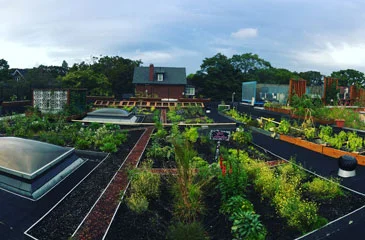
Image from greenroofs.org and used with no modifications.
Green roofs not only capture rainwater but also reduce heat island effects, improve air quality, and provide habitat for pollinators. They are a sustainable and aesthetically pleasing addition to any urban garden!
Designing Your Rainwater Harvesting System
Designing an effective rainwater harvesting system involves careful planning and consideration of various factors, including the collection area, storage options, and distribution methods. A well-designed system can maximize water collection and ensure a reliable supply for your garden.
Choosing the Right Collection Area
The collection area is the surface from which you capture rainwater, typically the roof of your home or another structure. The size and material of the roof will determine how much water you can collect. For example, a metal roof will generally yield more water than a shingle roof due to its smoother surface.
Calculate the potential water yield by multiplying the roof area by the average annual rainfall in your region. This will give you an estimate of how much water you can collect and help you determine the size of your storage tanks.
Transport and Storage Options
- Rain Barrels: Simple and affordable, rain barrels can be placed under downspouts to collect and store rainwater. They typically hold 50-100 gallons and are ideal for small gardens.
- Cisterns: Larger storage tanks that can hold hundreds or even thousands of gallons of water. Cisterns can be installed above or below ground and are suitable for larger gardens or households with higher water needs.
- Bladders: Flexible storage containers that can be placed in crawl spaces or other unused areas. Bladders are a versatile option for urban gardeners with limited space.
Choose a storage option that fits your space and water needs. Ensure that all storage containers are covered and any openings are screened to prevent mosquito breeding and debris contamination. For more information, you can visit Robin Greenfield’s guide on rainwater harvesting.
Setting Up a Distribution System
Once you’ve collected and stored rainwater, you’ll need a system to distribute it to your garden. This can be as simple as using a watering can or as complex as an automated drip irrigation system.
For small gardens, a basic setup with a hose and spigot attached to your rain barrel may suffice. For larger gardens, consider installing a pump to move water from your storage tank to an irrigation system. Drip irrigation is particularly efficient, as it delivers water directly to the plant roots, minimizing evaporation and runoff.
Besides that, you can also use gravity-fed systems, which rely on the natural slope of the land to distribute water. These systems are the ultimate in energy efficiency and are also easy to maintain.

Image from www.chaitanyaproducts.com.
Maintenance of Rainwater Harvesting Systems
Regular maintenance is essential to keep your rainwater harvesting system functioning effectively. This includes cleaning, inspecting for leaks, and ensuring all components are in good working order.
Spring Cleaning for Barrels and Tanks
At the beginning of the gardening season, thoroughly clean your rain barrels and storage tanks. Remove any debris, algae, or sediment that may have accumulated over the winter. Use a mixture of water and vinegar or a mild bleach solution to disinfect the containers, then rinse thoroughly.
Check the screens and filters on your gutters and downspouts to ensure they are free from blockages. Clean or replace them as needed to maintain optimal water flow.
Checking for Leaks and Ensuring Proper Seals
Inspect your entire rainwater harvesting system for any signs of leaks or damage. Check the connections between gutters, downspouts, and storage containers for tight seals. Replace any worn or damaged parts to prevent water loss.
Ensure that all lids and covers are securely fastened to prevent contamination and evaporation. Regularly check for any cracks or splits in your storage containers and repair them promptly.
Winterizing Your System
As winter approaches, it’s crucial to prepare your rainwater harvesting system for the cold weather. Freezing temperatures can cause water to expand, potentially damaging your storage containers and pipes. Proper winterization ensures your system remains in good condition and is ready for use when spring arrives.
Start by emptying all rain barrels and storage tanks. Disconnect hoses and drain any remaining water to prevent freezing and cracking. Store your barrels upside down or cover them to keep out debris and moisture.
Insulate any exposed pipes or fittings with foam insulation or heat tape. This will protect them from freezing temperatures and minimize the risk of damage. Additionally, consider installing a bypass system to divert water away from your storage containers during the winter months.
Real-Life Examples & Success Stories
Rainwater harvesting has been successfully implemented in a number of large urban garden settings, demonstrating its benefits and feasibility. Let’s explore some real-life examples and success stories that highlight the positive impact of rainwater harvesting on urban gardening.
New York City’s Urban Gardens
In New York City, community gardens have embraced rainwater harvesting to enhance their sustainability. The Water Resources Group, a collaboration of community gardening and environmental organizations, has helped build demonstration rainwater harvesting systems in over 20 community gardens. These systems collectively divert around 250,000 gallons of rainwater from NYC sewers each year, reducing the strain on the city’s stormwater infrastructure and providing a valuable water source for the gardens.
Seattle’s Residential Rain Barrels Program
Seattle Public Utilities has launched a highly successful residential rain barrels program to promote water conservation. The program offers residents the opportunity to purchase rain barrels at a subsidized price, making it affordable for homeowners to start harvesting rainwater. This initiative has led to widespread adoption of rainwater harvesting in Seattle, reducing water bills and promoting sustainable gardening practices.
Toronto’s Downspout Disconnection Initiative
In Toronto, the city’s Downspout Disconnection Initiative encourages homeowners to disconnect their downspouts from the municipal sewer system and redirect rainwater to their gardens or rain barrels. This initiative helps reduce stormwater runoff, prevent basement flooding, and promote water conservation. Homeowners who participate in the program receive guidance and support from the city, making it easy to implement rainwater harvesting solutions.
Frequently Asked Questions
Rainwater harvesting can be a new concept for many urban gardeners, and it’s natural to have questions. Here are some frequently asked questions to help you get started and make the most of your rainwater harvesting system.
Is rainwater safe for all plants?
Yes, rainwater is generally safe for all plants. In fact, it’s often better for plants than tap water because it doesn’t contain chemicals like chlorine and fluoride. These chemicals, commonly found in municipal water supplies, can sometimes harm sensitive plants. Rainwater is naturally soft and free from these additives, making it an ideal choice for your garden.
- However, if you live in an area with high air pollution, it’s a good idea to let the first flush of rainwater run off before collecting it. This helps wash away any pollutants that may have accumulated on your roof.
- Always ensure that your rainwater harvesting system is clean and well-maintained to prevent contamination.
How much rainwater can I collect annually?
The amount of rainwater you can collect annually depends on several factors, including the size of your collection area (usually your roof) and the average annual rainfall in your region. To estimate your potential water yield, you can use the following formula:
Water Yield (gallons) = Roof Area (square feet) × Annual Rainfall (inches) × 0.623.
For example, if you have a 1,000 square foot roof and your area receives 30 inches of rain per year, you can potentially collect:
1,000 sq ft × 30 in × 0.623 = 18,690 gallons of water annually
Keep in mind that not all rainwater will be captured, as some will be lost to evaporation, splashing, and inefficiencies in the system. However, this formula provides a good estimate of your potential water yield.
Featured Image from www.farmersalmanac.com and used with no modifications.


