Sustainable Gardening Guide: How to Grow Organic Broccoli Raab

Learn how to grow organic broccoli raab in spring or fall for a tasty, productive, & quick garden harvest!
Key Takeaways: Growing Organic Broccoli Raab
- Broccoli raab (rapini) is a fast-maturing cool-season crop that goes from seed to harvest in as little as 40 to 45 days, making it one of the most rewarding vegetables for organic gardeners.
- Nitrogen-rich soil is the secret weapon for a productive broccoli raab harvest — compost and aged manure are your best organic allies here.
- Timing is everything: plant too late in spring or too early in summer and your crop will bolt before you ever get to taste it.
- This crop can be harvested twice — once in spring and again in fall — giving you two full growing windows every single year.
- Broccoli raab has a naturally bitter flavor that most gardeners don’t know how to tame — and there’s a simple trick that makes all the difference at the dinner table.
Broccoli raab is the cool-season crop that experienced organic gardeners keep coming back to — and once you grow it yourself, you’ll immediately understand why.
Also known as rapini, broccoletti, cime di rapa, broccoli rape, and rabe, this fast-growing leafy green is a staple of Italian and Mediterranean cuisine. Despite its name, it’s not closely related to standard broccoli. It’s actually a member of the Brassica rapa family — more closely related to turnips than to the broccoli you’re probably used to growing.
What Exactly Is Broccoli Raab?
Broccoli raab is grown primarily for its tender shoots, small flower buds, and leafy greens — all of which are edible. Unlike heading broccoli, it never forms a large central crown. Instead, it produces clusters of small florets on long stalks, which you harvest before the flowers fully open.

Image from www.simplyrecipes.com.
Broccoli Raab vs. Regular Broccoli: Key Differences
The confusion between broccoli raab and regular broccoli is completely understandable, but these are very different plants at the table and in the garden. Standard broccoli (Brassica oleracea) takes significantly longer to mature — often 80 to 100 days — while broccoli raab can be ready to eat in just 40 to 45 days from sowing. The flavor profile is also distinct: broccoli raab carries a bold, slightly bitter, peppery taste that regular broccoli simply doesn’t have. In the garden, broccoli raab grows taller and more open, reaching up to 30 inches in height with a looser, more leafy structure.
Why Organic Gardeners Love This Crop
There are very practical reasons why broccoli raab consistently earns a spot in organic kitchen gardens. It thrives without synthetic inputs, responds beautifully to compost-based feeding, and fits naturally into a crop rotation plan that benefits surrounding plants. Here’s what makes it a standout choice for sustainable growing:
- Matures in just 40 to 45 days, freeing up bed space quickly for successive plantings
- Grows well in USDA Hardiness Zones 3 through 10 as a cool-season annual
- Produces in both spring and fall, giving you two harvests per year
- Tolerates partial shade, though full sun produces higher yields
- Works well in raised beds, containers, and traditional garden beds
- Responds strongly to compost tea and organic side dressings
This combination of speed, flexibility, and low-input growing makes broccoli raab ideal for gardeners who want a high return on minimal effort. For more tips on maximizing your harvest, check out this video on doubling your garden harvest without more space.
When to Plant Broccoli Raab for the Best Results
Getting your timing right is the single most important factor in a successful broccoli raab harvest. This is a cool-season crop that bolts quickly — meaning it rushes to flower and turns bitter — when temperatures climb too high. Plant it in the right window and you’ll be rewarded with tender, flavorful shoots. Miss that window and you’ll be watching it flower before it’s even worth harvesting.

Image from www.wikihow.com.
Broccoli raab thrives in temperatures between 40°F and 60°F (4°C to 15°C). Those cool growing conditions are what develop its signature flavor and keep it from bolting prematurely. You have two optimal planting windows each year: early spring and late summer into fall.
Planting Windows at a Glance
Spring: Sow seeds directly outdoors approximately 4 weeks before your last expected frost date. If starting indoors, sow 2 to 4 weeks before the last frost date and transplant out once conditions are right.
Fall: Count backward from your first expected fall frost date. Sow seeds outdoors 6 to 8 weeks before that date to allow enough time for full maturity before cold sets in hard.
Indoors: Start seeds inside 2 to 4 weeks before the last frost date for spring planting to get a head start on the season.
Spring Planting Windows by Climate Zone
In cooler northern zones (USDA Zones 3 to 5), spring planting typically falls between late March and mid-April, with direct sowing possible once the soil can be worked. In moderate zones (Zones 6 to 7), February to early March is the sweet spot. Gardeners in warmer southern zones (Zones 8 to 10) often skip spring planting entirely and focus on fall and even winter growing seasons, where temperatures stay in that ideal 40°F to 60°F range for longer periods.
Fall Planting for a Second Harvest
The fall planting window is often overlooked, but for many organic gardeners it actually produces the best-tasting broccoli raab of the year! As temperatures drop through autumn, the cool air concentrates the plant’s sugars and softens the natural bitterness of the greens. Sow your fall crop 6 to 8 weeks before your first expected frost and you’ll be harvesting well into the cooler months.

Image from www.theitaliangardenproject.com.
Temperature Ranges That Produce the Best Flavor
The flavor of broccoli raab is directly tied to growing temperature. Plants grown in soil that’s consistently between 45°F and 60°F produce the most balanced flavor — sharp and slightly bitter without being overwhelming. When temperatures push above 70°F, the plant bolts, the stems toughen, and the bitterness becomes much more pronounced. Cool nights are your biggest asset with this crop. For more tips on growing cool-weather greens, check out this guide to growing organic arugula.
How to Prepare Your Soil the Organic Way
Broccoli raab is a heavy feeder, and the foundation of a successful organic grow is always the soil. Before a single seed goes in the ground, your goal is to build a rich, well-draining growing environment that delivers a steady supply of nutrients — especially nitrogen — throughout the plant’s fast growth cycle.
Start by working your bed to a depth of at least 8 to 10 inches. Broccoli raab has a moderately deep root system and needs loose, friable soil to establish quickly. Compacted soil slows germination and limits nutrient uptake — two things you absolutely want to avoid with a crop that’s racing toward maturity in under 45 days.
Your soil pH should sit between 6.0 and 7.0 for optimal growth. A simple organic soil test will confirm where your beds are starting from. If your pH is too low (acidic), work in agricultural lime. If it’s too high (alkaline), sulfur or peat moss can bring it into range.
| Soil Amendment | Purpose | Application Rate |
|---|---|---|
| Aged Compost | Adds organic matter, improves drainage, feeds soil biology | 2 to 4 inches worked into top 8 inches of soil |
| Aged Manure | Boosts nitrogen levels naturally | 1 to 2 inches blended into bed before planting |
| Balanced Organic Fertilizer | Supplies broad-spectrum nutrients at planting | Per product label, worked into soil before sowing |
| Agricultural Lime | Raises pH in acidic soils | Per soil test recommendation |
Why Nitrogen-Rich Soil Matters for Broccoli Raab
Nitrogen is the driving nutrient behind broccoli raab’s leafy, fast growth. Without adequate nitrogen, the plants grow slowly, produce fewer shoots, and develop pale, undersized leaves. Because this crop matures so quickly, it needs that nitrogen available and accessible from the very beginning of its growth cycle — not gradually released over months like some slower-growing crops.
Organic nitrogen sources are ideal here because they feed the soil biology at the same time they feed the plant. Aged manure is one of the most effective options, releasing nitrogen steadily while also improving soil structure. Blood meal is another fast-acting organic nitrogen source for gardeners who need a quick correction before planting.
Using Compost and Manure Instead of Synthetic Fertilizers
Synthetic fertilizers can push fast, lush growth in broccoli raab, but they do nothing for your soil long-term — and for organic gardeners, that matters. Compost is the backbone of sustainable soil building. Incorporating 2 to 4 inches of finished compost into your beds before planting gives you a slow, steady release of nutrients that works in sync with the plant’s growth timeline. Aged manure — worked in alongside the compost — gives an additional nitrogen boost without the risk of burning roots the way fresh manure can. For more tips, check out this guide on preparing soil for spring planting using organic fertilizers.
Planting Broccoli Raab Seeds: Step-by-Step
Direct sowing is the preferred method for broccoli raab, and for good reason — this crop germinates quickly and doesn’t love having its roots disturbed. When conditions are right, seeds germinate in just 5 to 7 days. That said, it can also do very well when started indoors to extend the growing season. For example, if planting for the fall, the weather may still be too hot for planting broccoli raab outdoors in late summer, so it may work better to start your seedlings indoors, and transplant them outdoors as the hot weather begins to moderate. Whether you’re sowing into a raised bed, a traditional garden row, or a container, the process is straightforward and forgiving for first-time growers.
Prepare your bed by raking the surface smooth after working in your compost and amendments. You want a fine, crumbly seedbed — not clumpy or compacted — so seeds make good contact with the soil. Broadcast sow or plant in rows, then lightly cover the seeds. Water gently with a fine mist so you don’t displace the seeds before they’ve had a chance to settle in.

Image from patioofpots.blogspot.com.
Correct Seed Depth and Spacing for Strong Germination
Sow seeds at a depth of ¼ to ½ inch, placing them approximately 1 inch apart in rows spaced 8 to 12 inches apart. If you’re broadcasting seed across a wide bed rather than planting in rows, aim for an even distribution and thin later once seedlings are established. Consistent seed depth is one of the most overlooked factors in achieving uniform germination — seeds placed too shallow dry out quickly, while seeds too deep struggle to push through the soil surface.
Thinning Seedlings Without Damaging Neighboring Plants
Once seedlings reach about 2 inches tall, thin them to a final spacing of 6 inches apart. Rather than pulling seedlings out — which can disturb the roots of neighboring plants — use small scissors or garden snips to cut the unwanted seedlings at soil level. The thinnings are completely edible and taste fantastic in salads or stir-fries, so nothing goes to waste!
Container and Raised Bed Planting Tips
Broccoli raab adapts well to container growing provided your pot is at least 8 to 12 inches deep with strong drainage. Use a high-quality organic potting mix blended with compost, and plan to water more frequently than you would in a ground bed since containers dry out faster. In raised beds, the naturally improved drainage and warmer soil temperatures speed up germination — but keep a close eye on moisture in hot spells, since raised beds can also dry out more quickly than in-ground planting.
Organic Care and Maintenance During the Growing Season
Once your broccoli raab is established and growing, maintenance is refreshingly simple. This is not a high-fuss crop. The three pillars of in-season organic care are consistent moisture, light feeding, and good mulching — and if you get those three things right, the plants largely take care of themselves.
How Often to Water for Steady, Consistent Growth
Broccoli raab needs moderate, consistent moisture throughout its growing cycle. Inconsistent watering — wet then dry, wet then dry — stresses the plant and accelerates bolting, which is the last thing you want. Aim to keep the soil evenly moist but never waterlogged. In most climates, this means watering once or twice per week, adjusting based on rainfall and temperature.
The best time to water is in the morning, which gives foliage time to dry before evening and reduces the risk of fungal issues. Water at the base of the plant rather than overhead wherever possible. A simple drip irrigation setup or a soaker hose running along your rows is ideal for organic broccoli raab growing — it conserves water, reduces disease pressure, and keeps your watering schedule effortless.
Feeding Plants with Compost Tea and Natural Fertilizers
If you built your soil well before planting, you may not need to feed your broccoli raab at all during its short growing window. However, for maximum production — especially in beds that have been heavily cropped — a foliar spray of compost tea or a light side dressing of finished compost applied midway through the growing season makes a noticeable difference in shoot production and leaf health. Apply compost tea every two to three weeks, or side-dress once with compost when plants reach about half their final height. Avoid heavy nitrogen applications late in the growth cycle, which can push leafy growth at the expense of shoot quality.
Mulching to Retain Moisture and Prevent Disease
A 2-inch layer of organic mulch — straw, shredded leaves, or wood chips — applied around the base of your broccoli raab plants does several jobs at once. It locks in soil moisture between waterings, moderates soil temperature during unexpected warm spells, and creates a barrier that reduces soil splash onto lower leaves, which is one of the primary pathways for soilborne diseases to infect brassica crops.
Keep mulch pulled back a couple of inches from the base of each plant to ensure good airflow at the stem. In fall plantings especially, mulching also provides a small degree of frost protection that can extend your harvest window by a week or two — a meaningful gain when you’re growing right up against the edge of the season.
The Best Broccoli Raab Varieties for Organic Gardens
Variety selection matters more than most new growers realize. Different broccoli raab varieties are bred for different seasons, bolt resistance levels, and flavor profiles — and choosing the right one for your growing window can be the difference between a stellar harvest and a crop that flowers before you ever get to the kitchen with it.
For organic gardeners, look for open-pollinated or heirloom varieties whenever possible. These can be saved for seed year after year, which deepens your seed independence and reduces your gardening costs over time. Many excellent organic broccoli raab varieties are available from seed companies like Botanical Interests and True Leaf Market, both of which carry certified organic options.
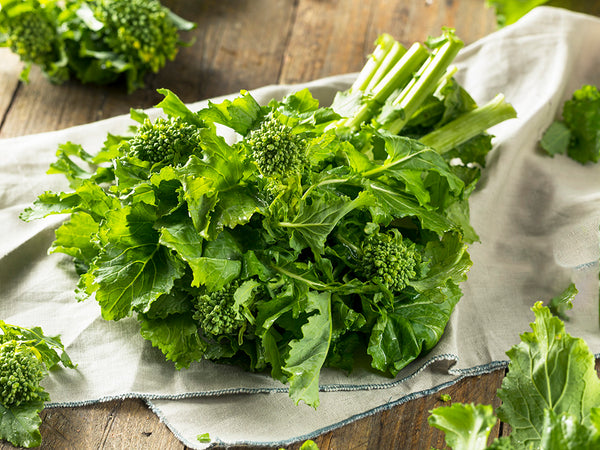
Image from natureandnurtureseeds.com.
Here’s a breakdown of the top varieties worth growing in an organic setting:
- Spring Raab (Spring Rabe): Bolt-resistant, ideal for spring planting, matures in 40 to 45 days, reaches up to 30 inches tall — one of the most reliable spring performers available
- Rapini: The classic Italian heirloom, bold bitter flavor, excellent for fall growing, widely available as certified organic seed
- Early Fall Raab: Specifically developed for autumn planting windows, matures slightly faster than standard varieties to beat early frosts
- Quarantina: A traditional Italian variety known for uniform shoot production and strong cold tolerance
Early Fall Raab: Best Variety for Autumn Harvests
Early Fall Raab is purpose-built for the fall growing window. It matures quickly enough to beat the first hard frost in most zones and produces an abundant flush of tender shoots with a flavor that’s noticeably more mellow than spring-grown varieties. For gardeners in Zones 5 through 7 who want to push their fall harvest as late as possible, this is the variety to reach for. Sow it 6 to 8 weeks before your first expected frost date and you’ll have shoots ready before temperatures drop hard.
Rapini: The Classic Italian Choice
Rapini is the variety that built broccoli raab’s culinary reputation across Italy and the Mediterranean. It has a more pronounced bitter flavor than modern bolt-resistant varieties — which is exactly what traditional rapini dishes like pasta with sausage and broccoli rabe are built around. Grow it in the fall for the best flavor development, as cool autumn temperatures soften and balance the natural bitterness that this variety is famous for. It’s widely available as certified organic seed, making it a natural fit for the sustainable organic garden.
How and When to Harvest Broccoli Raab
Harvesting broccoli raab at exactly the right moment is what separates a tender, flavorful crop from a tough, overly bitter one. The harvest window for this plant is narrow — and it moves fast. Once the flower buds begin to open and turn yellow, the quality drops off quickly. Timing your first cut correctly sets the tone for everything that follows.

Image from www.youtube.com.
The Right Plant Height to Trigger Your First Cut
Begin harvesting when your broccoli raab plants reach 6 to 8 inches tall and the central flower buds are fully formed but still tightly closed and deep green. This is the peak flavor and texture window. At this stage, the stems are still tender enough to eat without peeling, the buds are packed with flavor, and the leaves are at their most nutritious.
Do not wait for the flowers to open. Once you see even a hint of yellow in the buds, harvest immediately — the plant has already begun its bolt cycle. In warm weather, that window between “perfect” and “overripe” can be as short as two or three days, so check your plants daily as they approach maturity.
How to Cut for Continuous Regrowth
Use clean, sharp garden scissors or pruning snips to cut the central shoot 5 to 6 inches down the stem, just above a set of healthy side leaves. This cut triggers lateral shoot production, and within 7 to 10 days, new side shoots will emerge from the leaf axils below the cut. These secondary shoots are slightly smaller than the first central harvest but equally flavorful — sometimes more so, as the plant channels its energy into quality rather than size.
You can typically get two to three cuttings from a single broccoli raab plant before it exhausts itself and bolts completely. Keep harvesting consistently and don’t let any shoots flower — once a plant successfully flowers, it reads its reproductive mission as complete and production slows dramatically. Sharp, clean tools kept sanitized between plants also prevent the spread of any fungal issues between cuttings.
How to Tame Broccoli Raab’s Bitter Flavor
Broccoli raab’s bold bitterness is part of its identity, but there’s one kitchen trick that transforms it entirely: blanching. Drop the freshly harvested shoots into a pot of heavily salted boiling water for 60 to 90 seconds, then transfer immediately into an ice bath to stop the cooking. This process draws out a significant portion of the glucosinolates responsible for the sharp bitterness, leaving behind a milder, more rounded flavor that works beautifully sautéed in olive oil with garlic, tossed into pasta, or served as a side with grilled proteins!
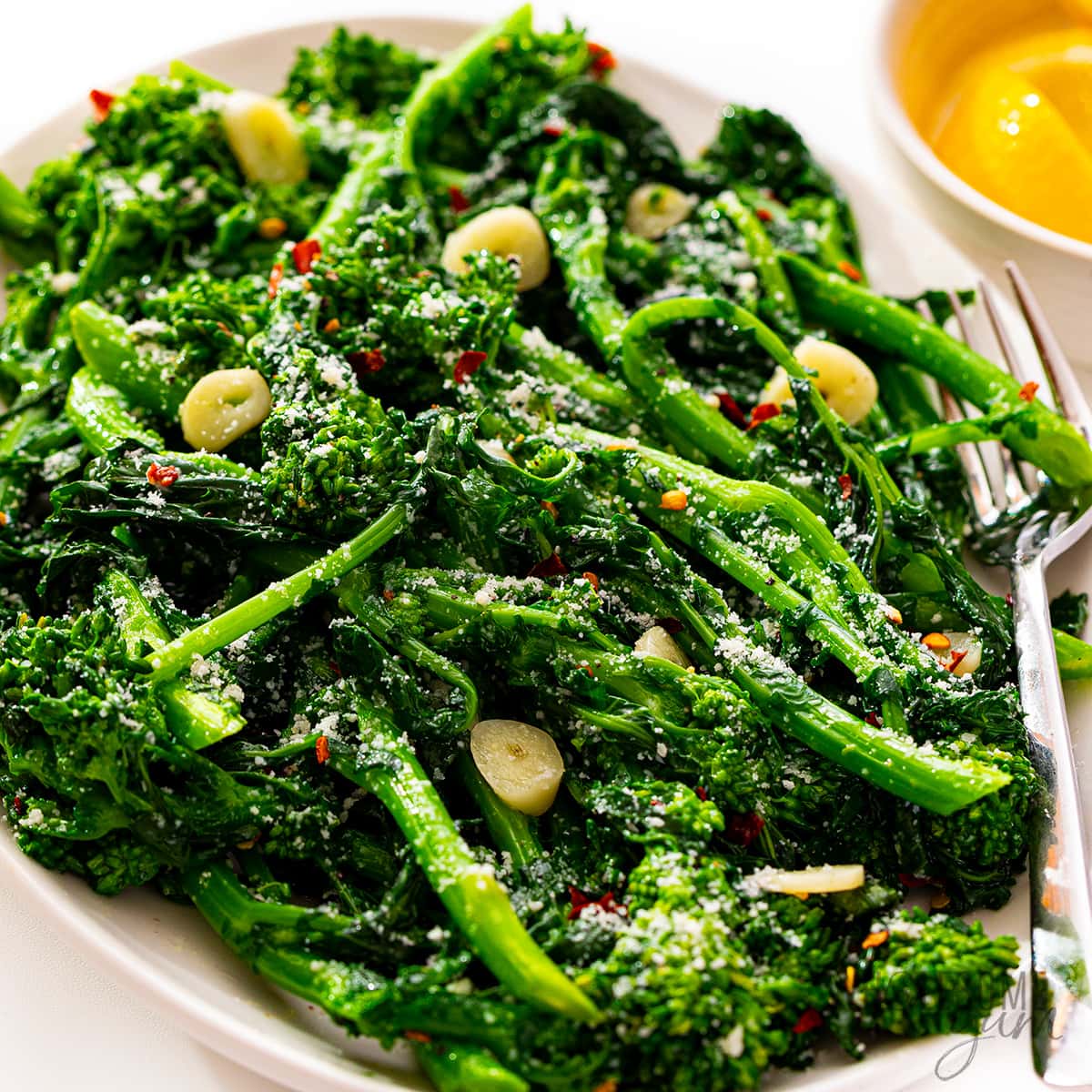
Image from www.wholesomeyum.com.
Harvesting before the flowers open also naturally reduces bitterness at the source — the more mature the plant, the more pronounced the bite. Growing broccoli raab through cool fall temperatures rather than warm spring conditions also produces measurably milder shoots, as the cold slows the plant’s glucosinolate production and concentrates its natural sugars instead.
Start Your Broccoli Raab Garden This Season
Broccoli raab rewards organic gardeners who understand its rhythm — cool soil, nitrogen-rich compost, consistent moisture, and a sharp pair of snips at harvest time. It’s fast, productive, and built for the kind of low-input, sustainable growing that builds better gardens over time. Whether you’re tucking it into a raised bed this spring, planning a fall succession planting, or growing it in containers on a sunny balcony, the investment of time and effort is minimal compared to the return you get at the table.
Start with a bolt-resistant variety like Spring Raab for your first planting, build your soil with aged compost and manure before sowing, and keep your harvest timing sharp. Do those three things and broccoli raab will become one of the most dependable crops in your organic garden rotation — year after year, season after season.
Frequently Asked Questions
Here are answers to the most common questions organic gardeners ask about growing broccoli raab from seed to harvest.
Is Broccoli Raab the Same as Rapini?
Yes — broccoli raab and rapini refer to the same plant. The name “rapini” is the Italian term used most commonly in culinary contexts, while “broccoli raab” or “broccoli rabe” is the name more widely used in American gardening and grocery contexts. Other regional names include broccoletti, cime di rapa, spring broccoli, and American gai lan. Regardless of the name on the seed packet, if it’s Brassica rapa grown for its shoots and buds, you’re growing the same plant!
Can Broccoli Raab Be Grown in Containers?
Yes, and it performs well in containers provided a few conditions are met. Use a pot that is at least 8 to 12 inches deep with solid drainage holes, fill it with a rich organic potting mix blended with finished compost, and position it in a spot that receives at least 6 hours of direct sun daily. Container-grown broccoli raab dries out faster than in-ground plants, so check soil moisture every one to two days and water before the top inch of soil becomes fully dry.
How Long Does Broccoli Raab Take to Grow from Seed to Harvest?
Broccoli raab matures in 40 to 45 days from sowing under ideal cool-season conditions. The Spring Raab variety is one of the fastest performers, consistently hitting that 40 to 45-day window. In warmer conditions the timeline shortens but so does quality — the plant rushes toward bolting rather than developing full shoot production. In cooler fall temperatures, maturity can extend slightly beyond 45 days, but the flavor payoff is often worth the extra wait.
Does Broccoli Raab Regrow After Cutting?
Yes — broccoli raab is a cut-and-come-again crop that produces lateral side shoots after the central stem is harvested. The key is cutting correctly: use clean, sharp snips to remove the main shoot 5 to 6 inches down the stem, leaving healthy leaf nodes below the cut. New shoots will emerge from those nodes within 7 to 10 days.
Most plants will produce two to three productive cuttings before slowing down significantly. After that final cutting, the plant typically shifts its energy fully toward flowering and seed production, at which point the growing cycle for that planting is complete. Pull spent plants and compost them — they’ll break down quickly and return their nutrients to your beds for the next succession planting.
To maintain a continuous harvest, practice succession sowing — sow a new short row every 10 to 14 days during your cool-season window. This staggers maturity dates and keeps fresh shoots coming to the kitchen over several weeks rather than all at once.
What Pests Commonly Affect Organic Broccoli Raab?
As a brassica, broccoli raab attracts the same pest pressure you’d expect from cabbage, kale, or cauliflower. The most common culprits in organic gardens are flea beetles, aphids, and cabbage loopers. Flea beetles are especially active in spring and leave small, scattered holes in the leaves. While they rarely kill plants outright, heavy flea beetle pressure on young seedlings can slow establishment significantly.
For organic pest management, row covers (such as lightweight floating fabric covers) placed immediately after sowing provide excellent protection against flea beetles, cabbage moths, and aphids without any chemical input. Remove covers briefly when checking on plants and replace promptly. For aphid infestations, a strong blast of water from a garden hose knocks colonies off leaves effectively, and introducing beneficial insects like ladybugs supports long-term aphid control naturally.
Caterpillar pressure from cabbage loopers and imported cabbageworms can be treated organically with Bacillus thuringiensis (Bt), a naturally occurring soil bacterium that targets caterpillar larvae specifically without harming beneficial insects, pollinators, or soil biology. Apply Bt in the early evening when caterpillars are most active and reapply after rain. Keeping your garden beds clear of debris and practicing crop rotation — never planting brassicas in the same bed two years running — significantly reduces pest and disease pressure over time.
Featured Image from gardenerspath.com.


