Sustainable Gardening Guide: How to Grow Organic Garlic At Home

Learn how to grow organic garlic in your own backyard to spice up your meals! It’s easy and with just a bit of space, you can grow a year’s worth of garlic for your culinary enjoyment…
Key Takeaways:
- Growing organic garlic at home ensures a pesticide-free, nutrient-rich harvest.
- Hardneck and softneck garlic varieties offer different flavors and storage capabilities.
- Garlic requires well-drained, fertile soil with plenty of organic matter.
- Plant garlic cloves in the fall for the best results.
- Mulching and proper watering are crucial for healthy garlic growth.
Sustainable Gardening Guide: How to Grow Organic Garlic At Home
Why Grow Your Own Organic Garlic?
Growing your own organic garlic is not just a rewarding gardening experience; it’s a step towards a more sustainable and healthy lifestyle! By cultivating garlic at home, you ensure that your produce is free from synthetic chemicals and rich in nutrients.
Homegrown garlic offers superior flavor compared to store-bought options. Besides that, it provides a sense of accomplishment and a connection to your food source! Most importantly, it supports biodiversity and soil health in your garden.
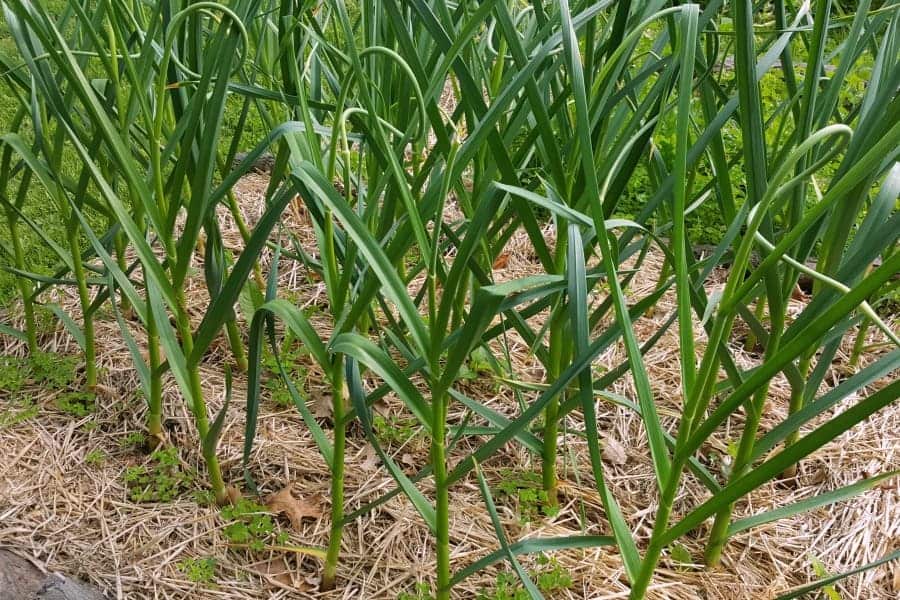
Image from www.earthfoodandfire.com.
Health Benefits of Homegrown Garlic
Garlic is renowned for its numerous health benefits. It’s packed with vitamins and minerals, including vitamin C, vitamin B6, and manganese. Additionally, garlic contains allicin, a compound known for its antibacterial and antiviral properties.
Eating garlic regularly can boost your immune system, reduce blood pressure, and improve cholesterol levels. When you grow garlic organically, you maximize these health benefits by avoiding harmful pesticides and fertilizers.
Environmental Impact of Growing Garlic Organically
Growing garlic organically has a positive impact on the environment. Organic gardening practices, such as using compost and natural pest control methods, enhance soil health and promote biodiversity. This approach reduces the need for synthetic chemicals, which can harm beneficial insects and contaminate water sources.
Moreover, by growing garlic at home, you reduce your carbon footprint. You eliminate the need for transportation and packaging associated with store-bought garlic. Therefore, organic gardening is a sustainable choice that benefits both your health and the planet!
Choosing the Right Garlic Varieties
Hardneck vs. Softneck Garlic
When selecting garlic varieties for your garden, you’ll encounter two main types: hardneck and softneck. Each type has its own characteristics and benefits.
Hardneck garlic produces a flower stalk called a scape and has fewer, larger cloves. It is known for its robust flavor and is easier to peel. However, it has a shorter storage life compared to softneck varieties.
Softneck garlic, on the other hand, does not produce a scape and has more, smaller cloves. It is milder in flavor and can be braided for storage. Softneck garlic generally has a longer shelf life, making it ideal for long-term storage.

Image from www.motherearthnews.com.
Popular Varieties for Home Gardens
There are many garlic varieties to choose from, each with unique flavors and growing requirements. Some popular hardneck varieties include:
- Rocambole: Known for its rich, complex flavor.
- Chesnok Red: Offers a sweet, mellow taste when cooked.
- German White: A robust variety with large cloves.
Popular softneck varieties include:
- Silverskin: Excellent for braiding and long-term storage.
- Artichoke: Known for its mild flavor and large bulbs.
- Inchelium Red: Offers a mild, slightly spicy taste.
Where to Source Organic Garlic Seed
To grow organic garlic, it’s essential to start with high-quality seed garlic. You can source organic garlic seed from reputable suppliers, local farmers’ markets, or online stores specializing in organic gardening supplies.
When purchasing seed garlic, look for certified organic options to ensure they are free from synthetic chemicals. Besides that, consider sourcing from local growers, as their garlic varieties are likely well-suited to your climate and soil conditions.
Preparing the Soil for Planting
Soil Requirements
Garlic thrives in well-drained, fertile soil. The ideal soil pH for garlic is between 6.0 and 7.0. Ensuring your soil meets these requirements is crucial for a successful garlic crop.
Start by selecting a sunny location in your garden. Garlic needs at least six hours of direct sunlight daily. Additionally, the soil should be loose and crumbly to allow for proper root development.
Testing and Amending Soil
Before planting, test your soil to determine its pH and nutrient levels. You can use a home soil test kit or send a sample to a local extension service for analysis. Based on the results, amend your soil as needed to create the ideal growing environment for garlic.
If your soil is too acidic, add lime to raise the pH. Conversely, if the soil is too alkaline, incorporate sulfur to lower the pH. Adding compost or well-rotted manure can also improve soil fertility and structure.
Using Compost and Organic Matter
Incorporating compost and organic matter into your soil is essential for growing healthy garlic. Compost enriches the soil with nutrients, improves drainage, and enhances soil structure. It also promotes beneficial microbial activity, which is vital for plant health.
Spread a layer of compost or well-rotted manure over your garden bed and work it into the top 6-8 inches of soil. This process ensures that the garlic roots have access to the nutrients they need to thrive.
Mulching for Weed Control
Mulching is an effective way to control weeds and conserve soil moisture. Apply a 2-4 inch layer of organic mulch, such as straw, leaves, or grass clippings, around your garlic plants. Mulch helps suppress weed growth, retains soil moisture, and regulates soil temperature.
Besides that, mulch adds organic matter to the soil as it decomposes, further enhancing soil health. Be sure to keep the mulch a few inches away from the garlic stems to prevent rot and disease.
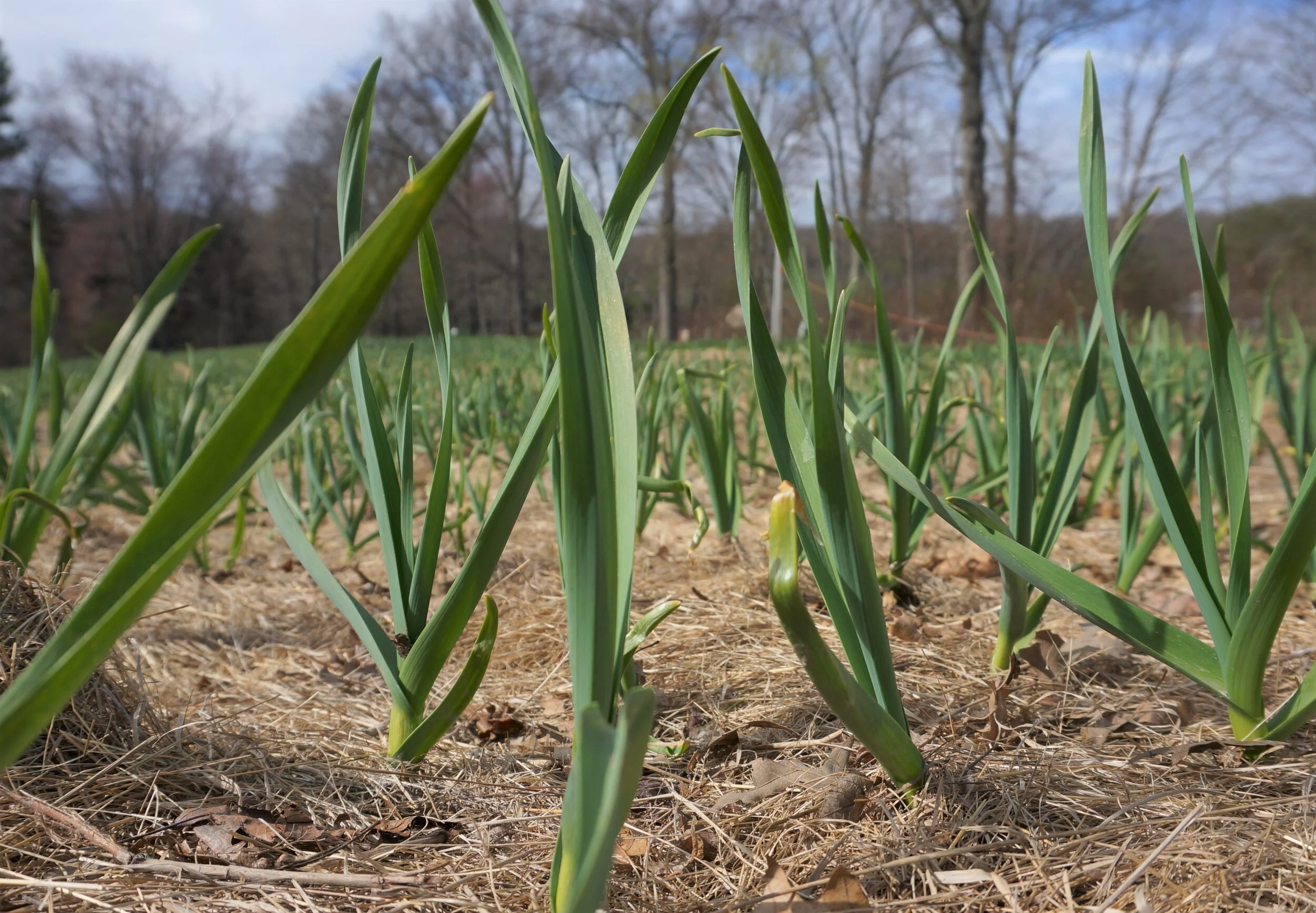
Image from stonepierpress.org.
Planting Garlic
Planting garlic is a straightforward process, but it requires attention to detail to ensure a bountiful harvest. The key to successful garlic planting lies in choosing the right time and following proper planting techniques. This section will guide you through the essential steps.
Whether you’re a beginner or an experienced gardener, these tips will help you get the most out of your garlic crop. Let’s start by understanding when to plant garlic for optimal growth.
When to Plant Garlic
The best time to plant garlic is in the fall, typically between late September and November. Planting in the fall allows the garlic to establish roots before the ground freezes, ensuring a strong start in the spring. (For more information on essential crops to plant in the fall, check out this guide on fall crops.)
In colder climates, aim to plant garlic about 4-6 weeks before the first hard frost. This timing gives the cloves enough time to develop roots without sprouting above the ground. In milder climates, you can plant garlic as late as December.
If you miss the fall planting window, you can still plant garlic in early spring. However, fall-planted garlic generally produces larger bulbs and better yields. For more information on what to plant during this season, check out this fall harvest guide.
How to Plant Garlic Cloves
Planting garlic cloves is simple, but it requires careful preparation. Follow these steps to plant your garlic:
- Break apart the garlic bulb into individual cloves. Be gentle to avoid damaging the cloves.
- Choose the largest, healthiest cloves for planting. Smaller cloves can be used for cooking.
- Plant each clove with the pointed end facing up and the flat end down.
- Push the clove into the soil about 2-3 inches deep.
Cover the cloves with soil and gently firm it down. Water the planting area thoroughly to help the cloves settle in.
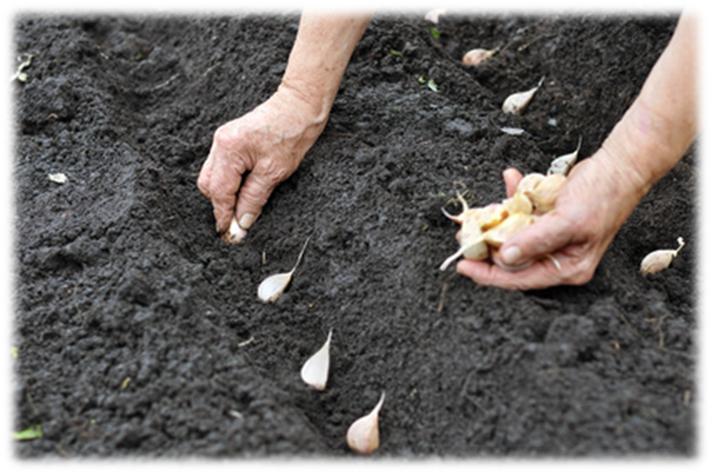
Image from garlicseed.ca.
Spacing and Depth Considerations
Proper spacing and depth are crucial for healthy garlic growth. Plant the cloves 4-6 inches apart in rows that are 12-18 inches apart. This spacing allows the garlic plants to develop without competing for nutrients and space. For more tips, check out these garlic growing tips for beginners.
If you’re planting multiple rows, ensure there’s enough room for air circulation. Good air circulation helps prevent fungal diseases and promotes healthy growth.
Watering Guidelines
Watering is essential for garlic, especially during the initial stages of growth. Keep the soil consistently moist but not waterlogged. Overwatering can lead to rot, while underwatering can stunt growth.
During the growing season, garlic requires about 1 inch of water per week. Adjust your watering schedule based on rainfall and soil moisture levels. As the garlic matures, reduce watering to encourage bulb formation and prevent rot.
Garlic Plant Care
Taking care of your garlic plants involves regular watering, mulching, fertilizing, and managing weeds and pests. Proper care ensures healthy growth and a bountiful harvest.
Watering and Mulching
Consistent watering is crucial for garlic, especially during dry spells. Water the plants deeply once a week, ensuring the soil remains moist but not waterlogged. As it gets closer to harvest time, you can reduce watering frequency to allow the bulbs to begin to harden and dry.
Mulching helps retain soil moisture, suppress weeds, and regulate soil temperature. Apply a 2-4 inch layer of organic mulch, such as straw or leaves, around the garlic plants. This practice also adds organic matter to the soil as the mulch decomposes.
Fertilizing Organically
Garlic is a heavy feeder, so providing the right nutrients is essential. Use organic fertilizers, such as compost or well-rotted manure, to enrich the soil. Apply a balanced organic fertilizer in early spring when the garlic starts to grow actively.
Additionally, side-dress the plants with compost or a nitrogen-rich fertilizer in late spring to support bulb development. Avoid over-fertilizing, as excessive nitrogen can lead to lush foliage but smaller bulbs.
Weed and Pest Management
Weeds compete with garlic for nutrients and water, so keeping the planting area weed-free is essential. Mulching helps suppress weeds, but you may need to hand-pull any persistent weeds that emerge.
Garlic is relatively pest-resistant, but it can still fall victim to certain pests like onion maggots, nematodes, and thrips.
Tiny onion thrips rasp pale grooves into garlic leaves, but they have many natural predators. Keep areas near garlic and onions mowed to reduce the weedy habitat thrips prefer. Monitor populations with sticky traps, and use a spinosad-based biological pesticide to control serious infestations.
Onion root maggots seldom infect garlic planted in soil where onion family crops have not been planted for two years, but the mobile adults may still lay eggs around the base of young plants. Crop rotation is the best prevention. Where pest pressure is severe, dust the area around plants with diatomaceous earth in late spring, which is when the egg-laying females are most active.
Dealing with Common Garlic Diseases
Garlic can be affected by diseases such as white rot, downy mildew, and rust. Prevent soilborne root rot diseases by growing garlic in well-drained, fertile soil. Avoid injuring the roots when weeding, because diseases often enter plants through broken tissue. Rotating crops and avoiding overhead watering will also help.
If you notice signs of disease, remove and destroy the affected plants to prevent the spread. Applying a copper-based fungicide can also help manage fungal diseases. Most importantly, ensure proper spacing and air circulation to reduce the risk of disease.
Harvesting Garlic
Knowing when and how to harvest garlic is crucial for obtaining the best flavor and storage life. Harvesting at the right time ensures that the bulbs are fully mature and packed with flavor.
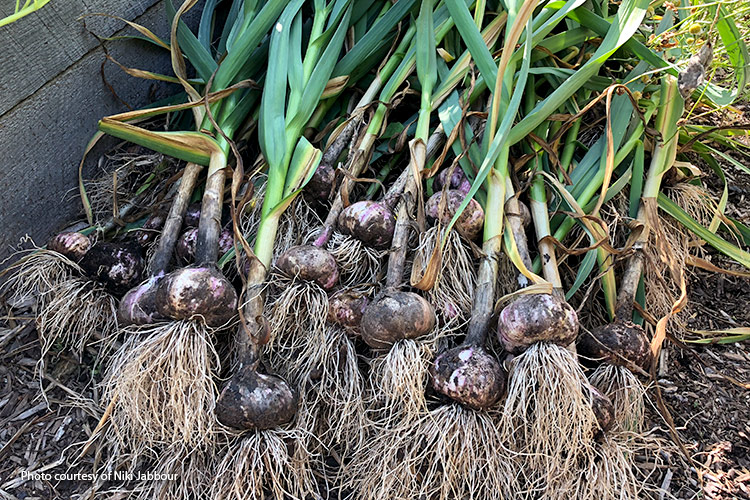
Image from www.gardengatemagazine.com.
When to Harvest
Garlic is typically ready for harvest in mid to late summer, about 8-9 months after planting. The exact timing depends on the variety and growing conditions.
One way to determine if your garlic is ready is by observing the foliage. When the lower leaves start to yellow and dry out, it’s a sign that the bulbs are maturing. However, don’t wait until all the leaves are brown, as this can indicate over-maturity and bulbs may be more prone to rot if you leave them in the ground too long.
How to Harvest Garlic
To harvest garlic, gently loosen the soil around the bulbs with a garden fork or shovel. Carefully lift the bulbs out of the ground, being mindful not to damage them.
Brush off excess soil, but avoid washing the bulbs, as moisture can lead to rot. Lay the harvested garlic in a single layer in a dry, well-ventilated area to cure.
Curing and Storing Garlic
Once you’ve harvested your garlic, the next step is curing and storing it properly to ensure longevity and maintain its flavor. Curing allows the garlic to dry out and develop its characteristic taste.
Lay the harvested garlic in a single layer in a dry, well-ventilated area. This could be a shaded spot in your garden or a well-ventilated garage. Avoid direct sunlight, as it can cause the bulbs to overheat and spoil.
- Allow the garlic to cure for 2-3 weeks.
- Check periodically to ensure the bulbs are drying evenly.
- Once the outer layers are papery and dry, trim the roots and cut the stems to about an inch above the bulb.
After curing, trim the roots and cut the stems to about an inch above the bulb. Store your garlic in a cool, dry place with good air circulation. A mesh bag or a basket works well. Avoid storing garlic in plastic bags or sealed containers, as this can trap moisture and lead to rot.
Properly cured and stored garlic can last for several months, providing you with a steady supply of flavorful cloves for your culinary needs!
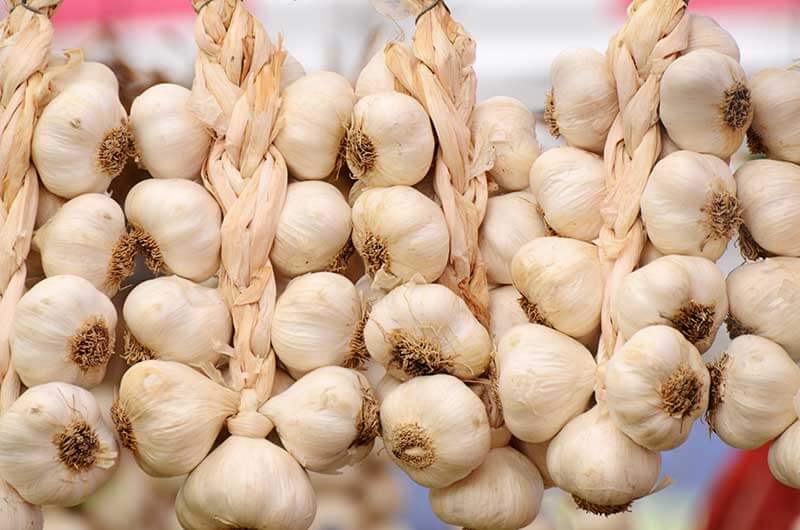
Image from www.gardentech.com.
Advanced Techniques
Once you’ve mastered the basics of growing garlic, you might want to explore advanced techniques to enhance your gardening experience. These methods can help you maximize your garlic yield and improve the overall health of your garden!
Companion Planting with Garlic
Companion planting is a gardening technique that involves growing certain plants together to benefit each other. Garlic is an excellent companion plant because it can deter pests and improve the growth of neighboring plants.
Here are some plants that benefit from being planted near garlic: kale, tomatoes, and carrots.
- Tomatoes: Garlic can repel aphids and other pests that commonly affect tomatoes.
- Carrots: Planting garlic near carrots can help deter carrot flies.
- Fruit trees: Garlic can repel borers and other pests that target fruit trees.
Avoid planting garlic near beans and peas, as it can inhibit their growth. By using companion planting, you can create a healthier, more productive garden ecosystem! For more tips, check out this guide on companion planting.
Growing Garlic in Containers
If you have limited garden space or prefer container gardening, you can successfully grow garlic in pots. Choose a container that is at least 12 inches deep and has good drainage.
Fill the container with a well-draining potting mix enriched with compost. Plant the garlic cloves as you would in the ground, spacing them 4-6 inches apart and burying them 2-3 inches deep.
Place the container in a sunny location and water regularly to keep the soil moist but not waterlogged. Container-grown garlic requires the same care as garden-grown garlic, including mulching, fertilizing, and pest management.

Image from www.greenhomediy.co.
Saving Seed Garlic for Future Planting
Saving garlic seed from your harvest allows you to continue growing garlic year after year without purchasing new seed garlic. Choose the largest and healthiest bulbs from your harvest to save for planting. (For more tips on seed saving, check out this seed saving masterclass.)
After curing, set aside these bulbs in a cool, dry place until the next planting season. When it’s time to plant, break apart the bulbs into individual cloves and follow the planting steps outlined earlier.
By saving your seed garlic, you can develop a strain of garlic that is well-adapted to your specific growing conditions, leading to better yields and healthier plants over time.
Conclusion
Growing organic garlic at home is a rewarding and sustainable practice that offers numerous benefits. By following the steps outlined in this guide, you can enjoy a bountiful harvest of flavorful, nutrient-rich garlic!
Essential Tips for Success
To ensure a successful garlic crop, keep these essential tips in mind:
- Choose the right garlic variety for your climate and taste preferences.
- Prepare the soil with plenty of organic matter and ensure good drainage.
- Plant garlic cloves in the fall for the best results.
- Mulch to conserve moisture, suppress weeds, and regulate soil temperature.
- Water consistently, especially during dry spells, but avoid overwatering.
By adhering to these tips and embracing organic gardening practices, you’ll be well on your way to growing healthy, robust garlic plants.
Encouragement to Begin Growing Your Own Garlic
Starting your own organic garlic garden may seem daunting at first, but with a little patience and dedication, you’ll find it to be a deeply satisfying endeavor. Garlic is a relatively low-maintenance crop that offers high rewards. Not only that, but it’s also a high-yield crop.
Since every clove planted yields a whole head of garlic, it’s easy to grow enough for your family in a small amount of space. For example, my husband and I grow enough garlic to last us an entire year in just one 4’x8′ bed – and we cook with garlic almost every single day!
- Begin by sourcing high-quality organic seed garlic.
- Follow the planting and care instructions outlined in this guide.
- Experiment with different garlic varieties to find your favorites.
- Share your harvest with friends and family to spread the joy of homegrown garlic.
Remember, every step you take towards growing your own food contributes to a healthier, more sustainable lifestyle. So, roll up your sleeves and get planting!
Frequently Asked Questions
Here are some common questions about growing organic garlic. If you’re interested in other fall crops, check out this essential fall crops guide.
When Should I Plant Garlic in Different Climates?
In colder climates, plant garlic 4-6 weeks before the first hard frost in the fall. In milder climates, you can plant garlic as late as December. Fall planting generally yields better results, but early spring planting is also an option if you miss the fall window.
Can I Grow Organic Garlic Indoors?
Yes, you can grow garlic indoors, but it requires specific conditions. Use a deep container with good drainage and place it in a sunny spot. Ensure the soil remains consistently moist, and provide adequate light, either from a sunny window or a grow light.
What Are the Most Common Garlic Pests?
Garlic is relatively pest-resistant, but it can still be affected by pests such as:
- Onion maggots
- Nematodes
- Aphids
To manage pests organically, practice crop rotation, use diatomaceous earth, and introduce beneficial insects like ladybugs.
How Do I Know When My Garlic is Ready to Harvest?
Garlic is typically ready for harvest in mid to late summer, about 8-9 months after planting. Look for the lower leaves to start yellowing and drying out. Harvest when most of the upper leaves are still green to avoid rot.
Featured Image from gardenerspath.com.

Related Posts
-
 What Is the 70/30 Rule in Gardening? (Complete Answer)
- Growing Tomatoes: Determinate Vs. Indeterminate Explained
- 7 Organic Gardening Secrets for Vegetable Growing Success
- How to Prepare Soil for Spring Planting Using Organic Amendments
- 5 Tips for Starting a Sustainable Vegetable Garden
- Interview With a Desert Gardener


