The Unsung Heroes of Organic Pest Control: Why Lacewings Matter

These elegant predator insects will feed on a number of different pests in your organic garden. Here’s how to use lacewings effectively for natural pest control…
Key Takeaways:
- Lacewing larvae can devour up to 200 aphids per week, making them one of the most efficient natural pest controllers in organic gardening.
- These beneficial insects target more than just aphids—they also feast on mealybugs, whiteflies, thrips, and small caterpillars without harming your plants.
- Unlike chemical pesticides, lacewings integrate perfectly into garden ecosystems, supporting long-term soil health and biodiversity.
- Strategic planting of nectar-rich flowers and herbs can naturally attract lacewings to your garden.
- Both the green and brown lacewing species offer significant pest management benefits with slightly different hunting strategies and preferences.
Imagine tiny predators patrolling your garden day and night, hunting down destructive pests without harming a single leaf of your precious plants. That’s exactly what lacewings do, yet these incredible insects rarely get the recognition they deserve in the organic gardening world! Their delicate appearance belies their voracious appetite for garden pests that would otherwise devastate your carefully tended crops and ornamentals.
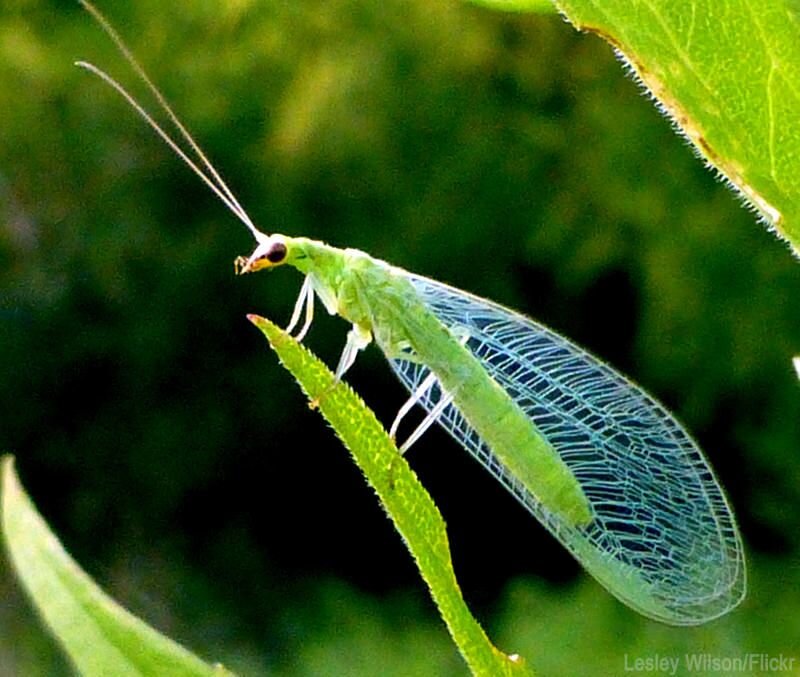
Image from www.beebetternaturally.com.
Specialists have observed that gardens with healthy lacewing populations consistently show lower pest damage rates compared to those relying solely on intervention methods. These beneficial insects work silently in the background, maintaining the delicate balance of your garden ecosystem while you sleep. Their presence represents the cornerstone of truly sustainable pest management.
Why Lacewings Are Nature’s Perfect Pest Fighters
Lacewings embody everything organic gardeners seek in natural pest control—efficiency, selectivity, and sustainability. Unlike broad-spectrum chemical solutions that kill indiscriminately, lacewings target problematic insects while preserving beneficial ones. Their hunting behavior evolved over millions of years to precisely control pest populations without disrupting the broader ecosystem. This remarkable specialization makes them uniquely valuable for gardens where ecological balance is prioritized.
What truly sets lacewings apart is their complete lifecycle integration into garden systems. Adults feed primarily on nectar, pollen, and honeydew, causing no damage to plants, while their offspring become voracious predators. This dual lifestyle means they contribute to both pollination and pest control, providing multiple benefits from a single insect species. Their self-sustaining populations require minimal intervention once established, creating a long-term solution rather than a temporary fix.
The economic value of lacewings cannot be overstated. A single female lacewing may lay hundreds of eggs during her lifetime, each potentially developing into a larva capable of consuming hundreds of pests! This multiplication effect creates an army of free pest control agents working continuously throughout the growing season. For organic gardeners operating on tight budgets, this natural assistance represents significant savings over purchasing and reapplying commercial organic pesticides.
The Secret Life of Lacewings: ID Guide and Lifecycle
- Adults have translucent, netted wings with distinctive green or brown bodies
- Eggs are laid on distinctive stalks to protect them from predators and cannibalism
- Larvae resemble tiny alligators with prominent mandibles for grasping prey
- Complete metamorphosis occurs through egg, larva, pupa, and adult stages
- Adults typically live 4-6 weeks, while the complete lifecycle spans about 4-6 weeks in warm weather
Learning to identify lacewings at various life stages helps gardeners recognize and protect these beneficial insects. The beauty of these creatures extends beyond their practical value—their delicate appearance and fascinating behaviors add another dimension of wonder to the gardening experience. Observing lacewings at work connects gardeners to the intricate relationships that make organic growing methods so rewarding!
What Lacewings Look Like
Adult lacewings possess a delicate, almost ethereal beauty that makes them instantly recognizable once you know what to look for. Their most distinctive feature is their pair of large, transparent wings with an intricate network of veins that resemble fine lace—hence their common name. Green lacewings (Chrysoperla spp.) display a slender, pale green body about 15-20mm long, with long antennae and distinctive golden eyes that sometimes appear metallic in certain light. Brown lacewings (Hemerobius spp.) share a similar body structure but with brown to grayish coloration that helps them blend into woody environments. Both varieties hold their wings roof-like over their bodies when at rest, creating a distinctive profile.
From Egg to Predator: The Lacewing Lifecycle
The lacewing lifecycle begins with one of nature’s most ingenious egg-laying strategies. Female lacewings deposit small, oval eggs at the end of thin, silken stalks about 1cm long attached to plant surfaces. This remarkable adaptation protects eggs from predators and prevents newly hatched larvae from cannibalizing siblings. Within 3-6 days, tiny larvae emerge and immediately begin hunting. These voracious juveniles, often called “aphid lions,” undergo three growth stages (instars) over 2-3 weeks, shedding their exoskeletons as they grow. After reaching full size, larvae spin silken cocoons in protected locations, emerging as adults after 10-14 days. The complete cycle from egg to egg-laying adult typically spans 4-6 weeks during warm weather, allowing multiple generations throughout the growing season.

Image from www.farmbrite.com.
Green vs. Brown Lacewings: Different Species, Similar Benefits
While green lacewings (family Chrysopidae) often steal the spotlight in garden literature, their cousins the brown lacewings (family Hemerobiidae) deserve equal recognition. Green lacewings are more commonly sold commercially and recognized by gardeners due to their bright coloration and prevalence in temperate regions. Their larvae are generalist predators with a particular fondness for aphids, though they’ll happily consume a wide range of soft-bodied insects.
Brown lacewings, though less well-known, offer distinct advantages in certain garden situations. These species tend to tolerate cooler temperatures better than their green counterparts, making them valuable pest controllers during spring and fall when many green lacewings may be less active. Brown lacewing larvae also show a greater preference for hunting in dense foliage and tree canopies, accessing pest populations that might be missed by other predators. Some studies suggest brown lacewings may be more effective against certain scale insects and mealybugs than green lacewings.

Brown lacewing image from earthstar.blog.
Both species complement each other perfectly in diverse garden ecosystems. Their slightly different hunting preferences and activity patterns mean that together, they provide more comprehensive pest management than either would alone. Encouraging both types creates a more resilient beneficial insect population that can respond to varying pest pressures throughout the growing season.
Pest Control Champions: What Lacewings Eat
The feeding habits of lacewing larvae represent one of nature’s most efficient pest management strategies. These voracious predators employ a unique hunting technique that involves grasping prey with their curved mandibles and injecting digestive enzymes that liquefy the victim’s internal tissues. This allows the larva to extract maximum nutrition from each pest it captures, fueling its rapid growth and ensuring its effectiveness as a biological control agent.
Aphids Beware: A Lacewing’s Favorite Meal
Aphids constitute the primary target and preferred meal for hungry lacewing larvae, earning these beneficial insects the nickname “aphid lions.” The relationship between lacewings and aphids demonstrates perfect evolutionary timing—lacewing populations naturally increase in response to aphid outbreaks, providing a self-regulating control mechanism. What makes lacewings particularly effective against aphids is their ability to locate even small colonies by detecting the honeydew secretions these pests leave behind. A single lacewing larva systematically hunts through aphid colonies, often consuming every individual before moving to new hunting grounds.
This aphid-controlling capability addresses one of organic gardening’s most persistent challenges. Aphids reproduce at astonishing rates, with females giving birth to live young that can themselves reproduce within days. This exponential growth quickly overwhelms many control methods, but lacewing larvae match this reproductive potential with their consumption capacity. Even better, lacewings target aphids regardless of species, controlling the dozens of different aphid types that might attack various garden plants.
Beyond Aphids: Other Pests Controlled by Lacewings
While aphids may be their preferred prey, lacewing larvae readily attack numerous other garden pests. Their diverse menu includes thrips, whiteflies, small caterpillars, leafhoppers, insect eggs, small beetles, and virtually any soft-bodied insect small enough to capture. This broad appetite makes lacewings particularly valuable in gardens facing multiple pest challenges simultaneously. Rather than requiring different solutions for each pest problem, lacewings provide comprehensive protection across many plant varieties.
Mealybugs and scale insects—notoriously difficult to control with organic methods due to their waxy protective coverings—are also vulnerable to lacewing predation. The larvae’s strong mouthparts can penetrate these defenses, reaching the soft bodies beneath. Spider mites, another challenging pest due to their tiny size and rapid reproduction, also fall prey to young lacewing larvae, which are small enough to navigate the fine webbing these arachnids produce.
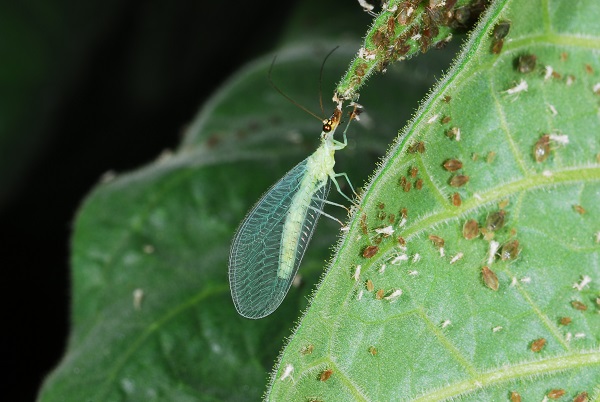
Image from entomology.mgcafe.uky.edu.
How Many Pests Can One Lacewing Eat?
The consumption capacity of lacewing larvae ranks among the most impressive in the insect world. A single larva can devour 200-500 aphids during its two-week development period, with daily consumption rates of 30-50 aphids or equivalent prey biomass. This extraordinary appetite translates to remarkable pest control efficiency—just a dozen lacewing larvae can completely clear aphid infestations from a small vegetable plant. Their hunting efficiency increases as they grow, with third-instar (final stage) larvae capable of consuming significantly larger prey and covering more territory than newly hatched individuals.
What makes these consumption rates even more impressive is the lacewing’s ability to survive periods of prey scarcity by reducing its metabolic rate and development speed. Unlike many predatory insects that die off when prey becomes limited, lacewings can extend their larval period during lean times, continuing to provide pest control services until conditions improve. This adaptability ensures their persistent presence throughout the growing season, providing continuous rather than sporadic pest management.
Lacewings vs. Chemical Pesticides: The Environmental Impact
The stark contrast between lacewing-based biological control and chemical pesticide application extends far beyond simple pest management effectiveness. When gardeners choose to rely on lacewings, they’re embracing a fundamentally different relationship with their garden ecosystem—one that works with natural processes rather than attempting to override them. This philosophical shift represents the heart of successful organic gardening, viewing pest management as ecosystem stewardship rather than a battle against nature.
Health Risks of Chemical Pesticides
Even pesticides marketed as “organic” or “natural” can carry significant risks to human health and beneficial organisms. Many botanical insecticides contain compounds that, while naturally derived, can irritate skin, eyes, and respiratory systems or trigger allergic reactions in sensitive individuals. These substances often require careful handling, protective equipment, and specific application timing to minimize exposure risks. Children and pets are particularly vulnerable to pesticide residues on plants and surrounding soil, with potential developmental impacts from even low-level exposures.
Lacewings, by contrast, present absolutely no health risks to humans, pets, wildlife, or beneficial insects. There are no reentry periods after “application,” no concerns about residues on harvested produce, and no protective equipment needed when working in areas where lacewings are active. This safety profile makes lacewing-based pest management particularly appropriate for gardens where children play, edible plants are grown, or immunocompromised individuals may have contact with the environment.
Cost Comparison: Lacewings vs. Chemical Solutions
When calculating the true cost of pest management strategies, savvy gardeners look beyond the initial price tag. Chemical pesticides typically require repeated applications throughout the growing season, with each treatment representing both a financial expense and time investment. Many formulations degrade quickly in sunlight or wash away with rain, necessitating frequent reapplication. Over a single growing season, even modestly-sized gardens may require several bottles of commercial pesticides, with costs potentially accumulating to $50-150 annually.
Lacewings, by comparison, represent an investment rather than an expense. A one-time purchase of 1,000 lacewing eggs (approximately $25-35) can establish a self-sustaining population that reproduces throughout the growing season and potentially returns year after year in mild climates. Even in regions where overwintering is challenging, the season-long protection provided by a single lacewing release often outperforms multiple chemical applications. The mathematics becomes even more favorable when considering the reduced plant losses from pest damage and the elimination of waiting periods between application and harvest.

Image from organiccontrol.com.
Long-Term Ecosystem Benefits of Natural Predators
The ecological advantages of lacewing-based pest management extend far beyond the immediate control of target pests. Unlike chemical interventions that create temporary population voids quickly refilled by pest resurgence, lacewings establish lasting population dynamics that regulate pest numbers over time. This approach prevents the boom-and-bust cycles common with chemical controls, where dramatic pest reductions are followed by equally dramatic rebounds once predator populations have been eliminated. Learn more about lacewing’s role in a healthier garden.
Lacewings also contribute to soil health indirectly by eliminating the need for pesticide applications that may impact beneficial soil microorganisms. The complex web of fungi, bacteria, and microscopic animals that compose healthy soil can be disrupted by repeated chemical treatments, potentially reducing plant nutrition and disease resistance. By preserving this underground ecosystem, lacewings support plant health from the roots up, creating more resilient gardens that withstand environmental stresses and produce higher-quality yields.
Perhaps most significantly, lacewings support pollinator populations that are essential for fruit and vegetable production. Many chemical pesticides—even those permitted in organic gardening—can harm or kill bees, butterflies, and other pollinating insects when improperly applied. By switching to lacewing-based pest management, gardeners protect these crucial allies, ensuring better pollination rates and more abundant harvests. For more natural pest control options, consider using insect netting and row covers for physical protection.
5 Ways to Attract Lacewings to Your Garden
Creating a lacewing-friendly environment represents one of the most sustainable approaches to establishing these beneficial insects in your garden. While purchased releases provide immediate pest control, a properly designed habitat attracts wild lacewings and encourages them to complete their entire lifecycle on your property. This strategy creates a self-perpetuating population that requires minimal ongoing intervention, embodying the ideal of working with nature rather than against it. For more tips on natural pest control, check out the best organic whitefly control methods.
1. Plant These Flowers to Feed Adult Lacewings
Adult lacewings require carbohydrate-rich foods like nectar and pollen to fuel their reproductive activities. Creating dedicated insectary plantings—areas specifically designed to support beneficial insects—provides these resources throughout the growing season. Focus on plants with small, accessible flowers that offer exposed nectar sources lacewings can easily access with their relatively short mouthparts.
The umbel-shaped flower clusters of the carrot family (Apiaceae) rank among the most attractive plantings for adult lacewings. Dill, fennel, coriander, Queen Anne’s lace, and angelica all provide ideal feeding platforms with their flat-topped flower arrangements. Complement these with composite flowers like cosmos, zinnias, and sunflowers, which offer landing pads and abundant pollen. Herbs including mint, catnip, oregano, and thyme not only attract lacewings but serve double-duty in the kitchen, making them perfect additions to vegetable garden borders!
Top 10 Lacewing-Attracting Plants
1. Dill (Anethum graveolens)
2. Sweet alyssum (Lobularia maritima)
3. Coriander/Cilantro (Coriandrum sativum)
4. Cosmos (Cosmos bipinnatus)
5. Fennel (Foeniculum vulgare)
6. Yarrow (Achillea millefolium)
7. Sunflowers (Helianthus annuus)
8. Catnip (Nepeta cataria)
9. Goldenrod (Solidago spp.)
10. Angelica (Angelica archangelica)

Image from www.theseedcollection.com.au.
2. Create Shelter with Native Plants and Ground Cover
Beyond food sources, lacewings require protected resting sites and overwintering locations to establish permanent populations. Gardens with structural diversity—varying plant heights, densities, and textures—provide the microhabitats these delicate insects need to shelter from weather extremes and predators. Native shrubs and perennials often offer ideal lacewing habitat, having co-evolved with local beneficial insect populations for thousands of years.
Maintain areas of undisturbed plant material throughout the seasons rather than conducting thorough “clean-ups” that remove potential shelter. Ornamental grasses, woody perennials with hollow stems, and dense evergreen shrubs all provide critical overwintering sites for adult lacewings. Even something as simple as allowing leaf litter to accumulate beneath shrubs creates protective microclimates where beneficial insects can survive winter conditions, ready to emerge when temperatures rise in spring.
3. Eliminate Harmful Pesticides
Perhaps the single most important step in attracting and maintaining lacewing populations is eliminating broad-spectrum pesticide use. Even organic-approved substances like pyrethrin, neem oil, and insecticidal soaps can harm or kill lacewings when directly contacted. Adult lacewings are particularly vulnerable to these treatments, while eggs and pupae may survive but emerge into a toxic environment. This sensitivity extends to drift from neighboring properties and residues on plants, making pesticide elimination a community-level concern for truly effective biological control.
When intervention becomes necessary, choose the most selective treatment options possible and apply them with precision to minimize impacts on non-target organisms. Bacillus thuringiensis (Bt) formulations targeting specific caterpillar pest groups, manual removal of pest insects, physical barriers like floating row covers, and spot treatments with insecticidal soaps all allow for pest management with minimal disruption to lacewing populations. This selective approach preserves the natural enemies that provide long-term control while addressing immediate threats to plant health.
4. Provide Water Sources
Like all insects, lacewings require reliable water sources, especially during hot, dry periods when natural moisture becomes limited. Small, shallow water features with landing sites allow adult lacewings to safely drink without drowning. Bird baths with partially submerged stones, shallow dishes filled with pebbles and water, or commercial insect watering stations all serve this purpose effectively. Position these water sources near flowering plants frequented by adult lacewings to create complete habitat zones that meet all their biological needs.
Morning dew and natural plant moisture often provide sufficient hydration during moderate weather, but supplemental water becomes critical during drought conditions. Regular light irrigation that moistens foliage without saturating soil creates the humid microclimate many beneficial insects prefer, supporting not only lacewings but other natural enemies including predatory mites, minute pirate bugs, and parasitoid wasps that complement lacewings in comprehensive pest management.
5. Install Lacewing Houses
Dedicated lacewing shelters represent a proactive approach to attracting and retaining these beneficial predators. Commercial lacewing houses feature narrow slits that accommodate the insects’ slender bodies while excluding larger predators, creating protected resting and overwintering sites. Alternatively, DIY versions can be constructed from untreated wood with 1/4-inch gaps between boards, bundled hollow reeds, or repurposed materials that provide similar protected spaces.
Position these structures near areas with aphid-prone plants but protected from direct rainfall and strong winds. South or east-facing orientations typically provide optimal conditions, with morning sun warming the structure and encouraging early-season activity. Unlike some beneficial insect houses that require specific depths and diameters, lacewing accommodations need only provide narrow, protected crevices accessible to their slender bodies. Multiple small houses distributed throughout the garden often outperform a single large structure by creating microhabitat networks that support dispersed predator populations. For more insights, check out this article on lacewing, nature’s tiny ally for a healthier garden.
How to Buy and Release Lacewings When You Need Them
While creating habitat for wild lacewings represents the ideal long-term strategy, purchased releases provide immediate intervention when pest populations threaten garden health. The commercial beneficial insect industry offers lacewings in various life stages, each with specific advantages and application methods. Understanding these options helps gardeners make informed purchasing decisions that maximize effectiveness while minimizing costs.
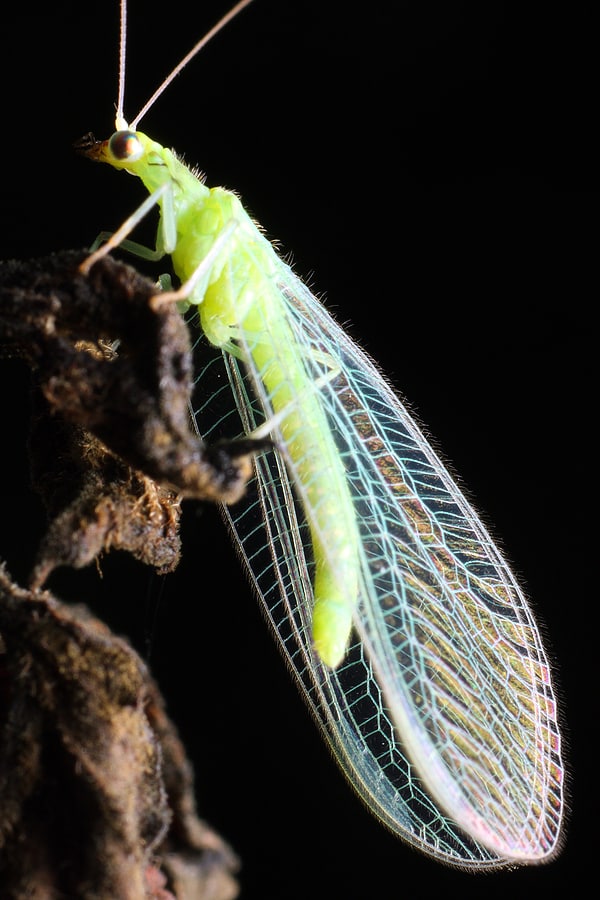
Image from harvesttotable.com.
Eggs, Larvae, or Adults: Which Life Stage to Buy
Lacewing eggs represent the most commonly available and economical purchase option. Typically shipped on cards or in vials mixed with rice hulls or vermiculite carrier, these eggs hatch within 3-5 days after arrival, producing larvae ready to hunt immediately. The primary advantage of egg shipments lies in their affordability—typically $15-30 per thousand—and their resilience during transportation. However, newly hatched larvae face risks from predators like ants and spiders before they can establish effective hunting patterns.
Pre-hatched larvae provide more immediate pest control but at significantly higher cost—often 2-3 times the price of eggs for equivalent numbers. These shipments bypass the vulnerable hatching period but require extremely prompt application as the voraciously hungry larvae may begin cannibalizing each other if confined without adequate prey. Adult lacewings rarely appear in commercial offerings due to their fragility during shipping and their focus on reproduction rather than predation, making them less effective for immediate pest management needs.
Best Release Times and Methods
Timing lacewing releases to coincide with pest presence but precede major infestations yields optimal results. Early detection through regular plant inspections allows for proactive releases when pest populations first appear but before they cause significant damage. Evening applications prove most effective as cooler temperatures reduce immediate dispersal, while darkness protects newly released lacewings from bird predation during their vulnerable adjustment period.
For egg releases, distribute cards or carrier material in small piles throughout affected planting areas, focusing on locations with confirmed pest activity. Position these deposits near the center of plants rather than at edges, using clothespins or twist-ties to secure cards to stems if necessary. Protect release sites from direct rainfall for 48-72 hours to prevent washing away unhhatched eggs. For larvae, similar distribution patterns apply, but with even greater attention to placing them directly amongst pest populations where they can begin feeding immediately.
How Many Lacewings Do You Need Per Square Foot?
Release rates depend on pest density, crop value, and infestation severity. For preventative releases in low-risk situations, 1-3 eggs per square foot provides adequate protection for most garden plants. When dealing with active infestations, increasing this to 5-10 eggs per square foot delivers more immediate control. Intensive productions like greenhouses or high-value specialty crops may warrant 10-15 eggs per square foot to ensure comprehensive coverage.
These quantities refer to the treatment area specifically, not the entire garden. Target releases to zones with confirmed or historically problematic pest activity rather than broadcast application across all plantings. This focused approach concentrates predators where they’re most needed while reducing overall purchase requirements. Multiple smaller releases often outperform single large applications by establishing overlapping generations that provide continuous protection throughout the growing season.
Lacewings as Part of an Integrated Pest Management Plan
The true power of lacewings emerges when they operate as part of a comprehensive, ecologically-based pest management strategy. Integrated Pest Management (IPM) approaches combine multiple control tactics including biological controls, cultural practices, physical barriers, and—as a last resort—selective chemical interventions. Lacewings form a cornerstone of the biological control component, but their effectiveness multiplies when supported by complementary methods, such as using insect netting and row covers for protection.
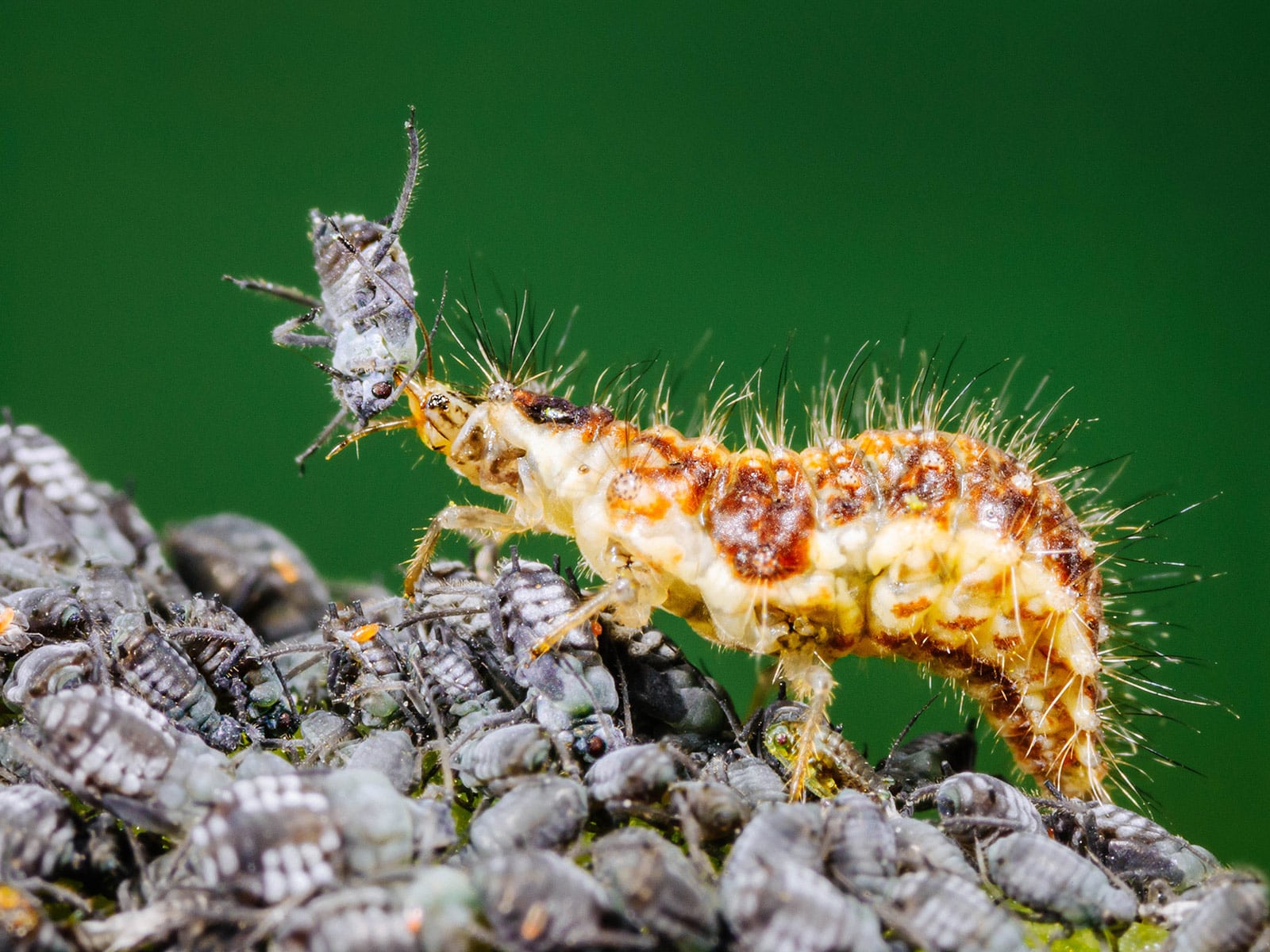
Image of lacewing larvae from gardenbetty.com.
Strategic companion planting creates plant communities that naturally deter pests while supporting beneficial insects. Aromatic herbs like rosemary, thyme, and sage repel many common pest species through their volatile compounds, while simultaneously providing adult lacewing habitat. Polyculture designs—intermixing different plant species rather than creating monoculture blocks—confuse pest insects and slow their spread by disrupting host-finding mechanisms. These approaches create an environment where lower lacewing populations can maintain effective control by preventing pest outbreaks before they begin.
Regular monitoring constitutes another critical element in lacewing-based IPM systems. Weekly inspections using hand lenses or magnifying glasses help gardeners identify pest populations early while confirming the presence and activity of lacewing eggs, larvae, and adults. This information guides intervention timing and intensity, preventing both unnecessary treatments and delayed responses. Record-keeping across growing seasons helps identify recurring patterns in pest pressure and lacewing activity, allowing for increasingly precise management strategies tailored to specific garden conditions.
IPM Decision-Making Process
- Monitor regularly for pests and beneficial insects
- Identify specific pest species accurately
- Determine if population exceeds action threshold
- Select least-disruptive control method appropriate to current conditions
- Evaluate effectiveness through continued monitoring
- Adjust strategies based on results
Companion Beneficial Insects
Lacewings perform most effectively when operating alongside other beneficial predators and parasites, each targeting different pest life stages or species. Lady beetles (Coccinellidae) complement lacewings perfectly, with adults focusing on aphid hotspots while lacewing larvae hunt individual pests throughout the plant canopy. Predatory mites control spider mites and thrips too small for even young lacewing larvae to effectively target. Parasitoid wasps attack caterpillars and beetle larvae that mature lacewings might ignore. This diverse predator community creates multiple layers of protection, with each species occupying specific ecological niches that together provide comprehensive pest management.
Seasonal Timing for Maximum Effectiveness
Aligning lacewing management with seasonal pest cycles maximizes their impact while minimizing required interventions. In most temperate regions, aphid populations typically surge during spring as new growth emerges, making this a critical window for early-season lacewing establishment. Purchased releases in April-May supplement any overwintering adults, creating first-generation larvae that coincide perfectly with these initial pest outbreaks.
Midsummer often brings different pest challenges as thrips, whiteflies, and spider mites flourish in hot, dry conditions. Maintaining adult lacewing populations during this period requires consistent irrigation and flowering plants that continue blooming through summer heat. Supplemental releases may prove necessary if pest pressure intensifies or predator populations decline during extreme weather events.
Fall represents the final critical period in lacewing management as adults seek overwintering sites. Creating undisturbed areas with adequate protection from winter conditions encourages lacewings to remain on-site rather than migrating elsewhere. Leaving some perennial plants uncut, maintaining leaf litter in defined areas, and providing dedicated insect houses all increase successful overwintering rates, reducing or eliminating the need for purchased releases the following spring.
- Early spring: Monitor for overwintered adults and earliest aphid colonies
- Late spring: First release if natural populations appear insufficient
- Early summer: Ensure continuous flowering plants for adult feeding
- Midsummer: Second release if pest resurgence occurs
- Late summer: Maintain water sources during dry periods
- Fall: Create overwintering habitat before first frost
Success Stories: Real Gardens Transformed by Lacewings
The community garden at Riverside Park struggled for years with persistent aphid infestations that decimated their leafy greens and stunted tomato production. Chemical-free by charter but facing potential crop failure, they implemented a comprehensive lacewing strategy combining three scheduled releases with dedicated insectary plantings around the perimeter. Within one growing season, aphid damage decreased by approximately 80%, while overall harvest yields increased by nearly 35%. Most significantly, the following year required only one early-season release as overwintered lacewings established self-sustaining populations that provided season-long protection.
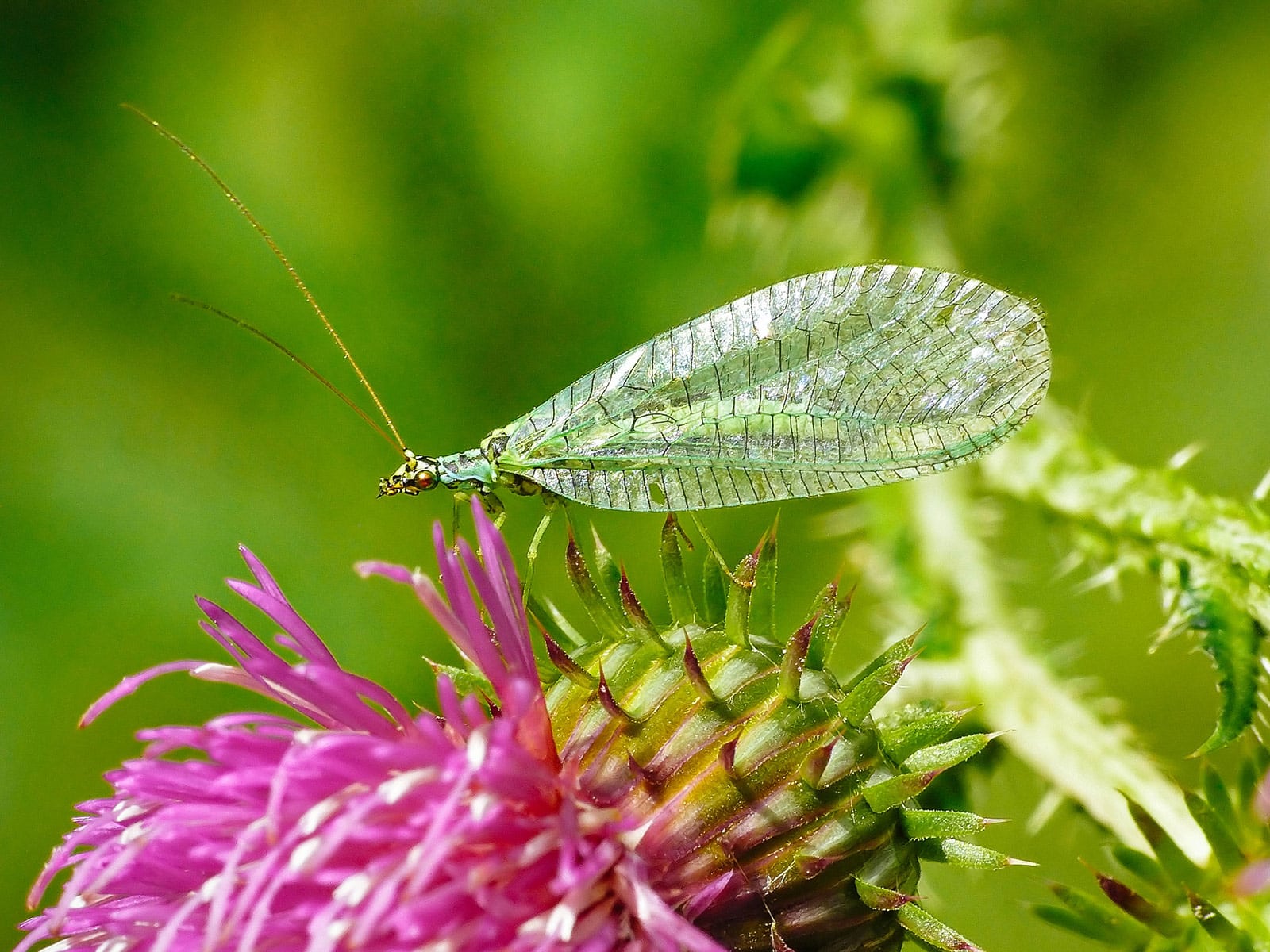
Image from gardenbetty.com.
On a larger scale, Blue Meadow Farm, a five-acre organic vegetable operation, replaced their weekly neem oil spray regimen with an integrated lacewing approach after facing increasing aphid resistance to botanical treatments. Their strategy combined monthly lacewing releases with strategic plantings of dill, fennel, and sweet alyssum throughout production areas. Labor costs decreased significantly as the weekly spray schedule ended, while produce quality improved without the occasional phytotoxicity the neem applications sometimes caused on sensitive crops. Three years into the program, the farm now maintains year-round lacewing populations without purchased releases, demonstrating the long-term sustainability of biological control investments.
Protect Your Garden’s Natural Allies
As you implement lacewing-based pest management in your garden, remember that you’re not simply deploying a living pesticide—you’re fostering relationships within a complex ecological community. The decisions you make about garden management, plant selection, and intervention strategies all shape the environment these beneficial insects experience. By approaching pest management with patience and ecological mindfulness, you can create conditions where nature’s systems can function as intended, reducing the need for human intervention while improving overall garden health and productivity.
Frequently Asked Questions
As more gardeners discover the benefits of lacewings, certain questions consistently arise about their implementation and management. The following answers address the most common concerns, providing practical guidance for successfully integrating these beneficial insects into various gardening systems.
Are lacewings harmful to humans or pets?
Lacewings are completely harmless to humans, pets, and wildlife. Unlike some beneficial insects that may occasionally bite when handled (such as ladybugs or minute pirate bugs), lacewings possess no defensive mechanisms that could irritate skin or cause allergic reactions. Adults feed exclusively on nectar, pollen, and honeydew, while larvae target only small invertebrate prey. Their presence in gardens, homes, or on plants poses absolutely no health risk to people or animals of any age.
How long do lacewings stay in a garden after release?
Released lacewings typically remain active in gardens for 2-4 weeks following introduction, though this depends significantly on habitat quality and prey availability. Adults may disperse if insufficient flowering plants are available to support their nutritional needs, while larvae remain relatively stationary but may die without adequate prey. Under ideal conditions with appropriate habitat and consistent prey populations, released lacewings reproduce to establish ongoing populations that persist throughout the growing season and potentially for years with proper overwintering sites.
Can lacewings survive winter in cold climates?
Adult green lacewings can successfully overwinter in regions with moderate winters (USDA zones 6-10) when provided with adequate protected habitat such as leaf litter, hollow plant stems, or dedicated insect houses. In these conditions, adults enter a reproductive diapause—a physiological state similar to hibernation—emerging when temperatures consistently exceed 50°F (10°C) in spring. Brown lacewings generally demonstrate greater cold hardiness, with some species successfully overwintering even in zone 4-5 conditions.
Gardeners in colder regions (zones 3-5) typically rely on annual reintroduction rather than overwintering populations. However, microclimate creation through wind barriers, thermal mass features like stone walls, and strategically placed evergreen plantings can create protected pockets where some adults successfully survive even in challenging winter conditions. These overwintered individuals provide valuable early-season pest control before purchased releases become necessary.
Do lacewings damage plants or vegetables?
Lacewings cause absolutely no damage to plants at any life stage. Adult lacewings feed exclusively on nectar, pollen, and honeydew secretions, accessing these resources without harming plant tissues. Larvae are strictly carnivorous, consuming only other insects and never feeding on plant material. Their feeding activities benefit plants indirectly by reducing pest populations that would otherwise cause damage through sap extraction, leaf mining, or tissue consumption. This exclusively beneficial relationship makes lacewings ideal for use even in sensitive plantings like seedlings, herbs, and delicate ornamentals.
How quickly will lacewings control an aphid infestation?
Visible reduction in aphid populations typically occurs within 7-10 days following lacewing introduction, with substantial control achieved by 14-21 days under favorable conditions. This timeline varies based on initial pest density, release rate, temperature, and plant architecture. Warm conditions (65-85°F/18-29°C) accelerate both lacewing development and feeding rates, leading to faster control. Heavy infestations may require higher release rates or repeated introductions to achieve complete management, especially on large or complex plants where larvae require time to locate all pest colonies.
For immediate intervention in severe infestations, combining lacewing releases with compatible organic treatments often provides the most effective solution. Insecticidal soaps or horticultural oils applied to heavily infested areas reduce pest numbers immediately, while introduced lacewings prevent resurgence and provide ongoing control. When using this approach, allow sprays to dry completely before releasing lacewings to prevent direct contact with wet residues that might harm the beneficial insects.
Understanding that biological control operates differently than chemical interventions helps set appropriate expectations. Rather than the immediate knockdown chemical pesticides might provide, lacewings deliver sustained, progressive control that builds over time. This approach ultimately proves more durable as it prevents the resurgence cycles common with chemical controls while supporting overall garden ecosystem health.
Featured Image from www.tend.com.

Related Posts
-
 Bad Bugs: Organic Japanese Beetle Control Methods & Natural Solutions
- How to Control Pests with Crop Rotation In Home Gardens
- How to Test Your Compost for Pesticide & Herbicide Contamination
- How to Control Squash Vine Borers Organically
- How to Control Potato Beetles Organically
- [Infographic] How to Plant a Naturally Pest-Resistant Garden


